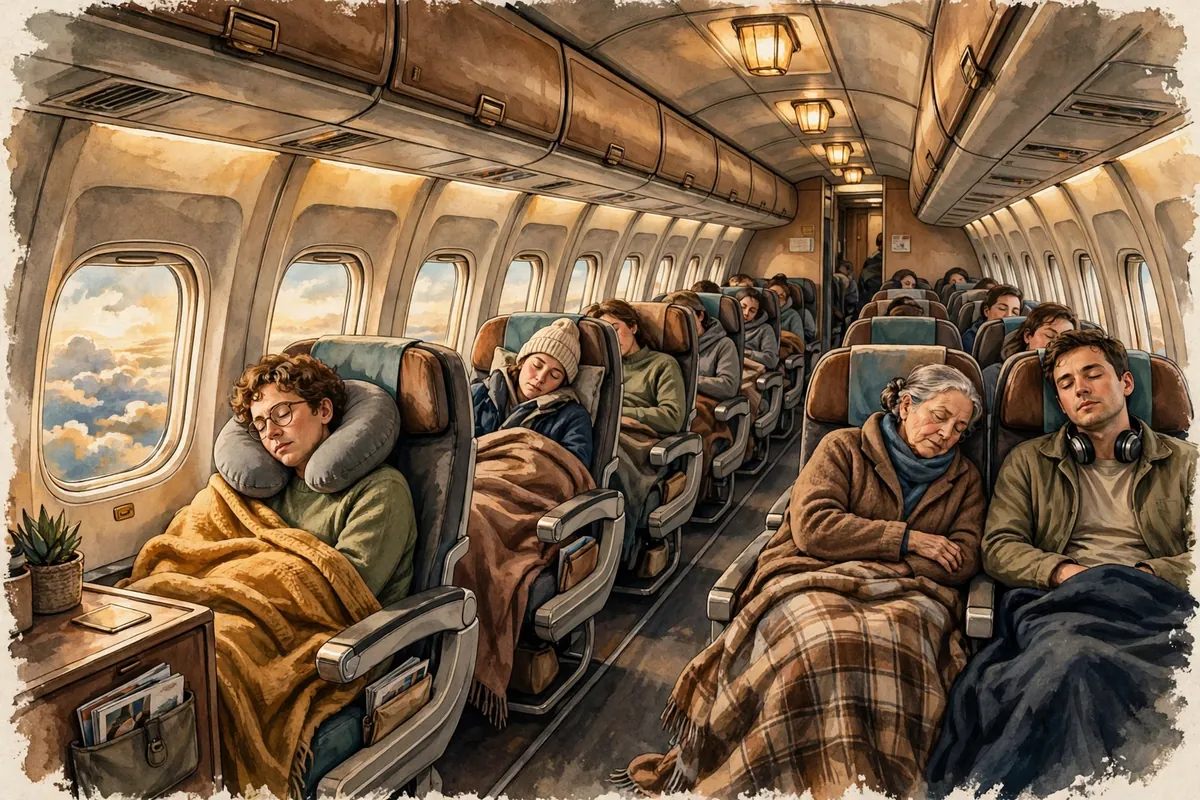
It's one of the small indignities of air travel. You slip off your shoes somewhere over the ocean, settle in for a movie or two, and when the plane starts its descent, your shoes suddenly feel like they belong to someone else. Your ankles look puffy, and your socks have left little grooves in your skin.
Here's the short answer: it's mostly about sitting still. When you stay seated for hours, gravity pulls fluid down into your lower legs and feet, and your calf muscles aren't doing their usual job of pushing it back up. Doctors call this kind of swelling dependent edema, and it can happen in perfectly healthy people who sit or stand in one position for a long time.
Your Calves Do the Heavy Lifting
Your heart pumps blood down to your feet easily enough. Getting it back up is the hard part, since that trip runs uphill against gravity. Your leg muscles help. Every time you walk, they squeeze the veins in your legs and push blood back toward the heart.
When you sit still, that pumping slows way down. Blood moves more slowly and starts to pool in the leg veins. The extra pressure pushes fluid out of the tiny blood vessels and into the surrounding tissue. That trapped fluid is the puffiness you see around your ankles.
It's Not Only Planes
Airplanes get the blame, but the same thing can happen on a long car or bus ride, at a desk, or during a shift spent standing in one spot. Reduced mobility of any kind means less calf muscle activity, which leads to this gravity-driven swelling.
Cabin pressure is often mentioned, too. Airliners don't keep the cabin at sea-level pressure. Instead, the air inside is held at a level equal to an altitude of no more than 8,000 feet. Most passengers handle that without trouble, though it's why ears pop during climb and descent. But you don't need altitude to get swollen feet. Sitting still for hours is enough on its own.
When Swelling Is a Warning Sign
Ordinary travel swelling usually goes away once you're up and moving again. But long periods of sitting, including long-haul travel, are also a known risk factor for deep vein thrombosis, a blood clot in a deep vein of the leg. Travel is an often cited but relatively uncommon cause of these clots, and older age is one of the strong risk factors.
Swelling is more concerning if it comes on suddenly, or if it comes with pain or shortness of breath. Those are reasons to get medical help right away. If you have risk factors for clots or swelling that doesn't settle down, talk to your doctor before your next long trip.
Keeping Your Feet Happier in the Air
The common-sense fix is to give those calf muscles some work. Suggestions often given to long-haul travelers include doing calf exercises in your seat, getting up to walk the aisle now and then, and choosing an aisle seat so it's easier to get up. Some travelers with higher risk are advised to wear compression stockings, but that's a decision for you and your doctor.
So if your shoes feel snug after a long flight, your body is just showing you how much work your legs normally do. A short stroll down the aisle is a small price for landing with feet that still fit your shoes.