A tickle, a gasp, and then: achoo. A sneeze is over almost before you know it's happening. But in that split second, a surprising amount of air, mucus, and saliva leaves your body. Just how fast is it all going?
The answer depends on who's measuring, and the numbers have grown as cameras got better. Older measurements put a sneeze's top speed at about 10 miles per hour, with a visible plume traveling around 2 feet. Newer high-speed studies found exhaled air moving at roughly 22 to 67 miles per hour, carrying droplets as far as about 26 feet.
Filming a Sneeze in Slow Motion
Much of the newer picture comes from Lydia Bourouiba, a scientist at the Massachusetts Institute of Technology who studies how diseases spread through the air. In 2016, she used two high-speed video cameras, recording thousands of frames per second, to watch sneezes unfold.
Her work drew on footage of more than 100 sneezes, focusing on the roughly 150 milliseconds it takes a sneeze to burst into the air. That's less than a fifth of a second.
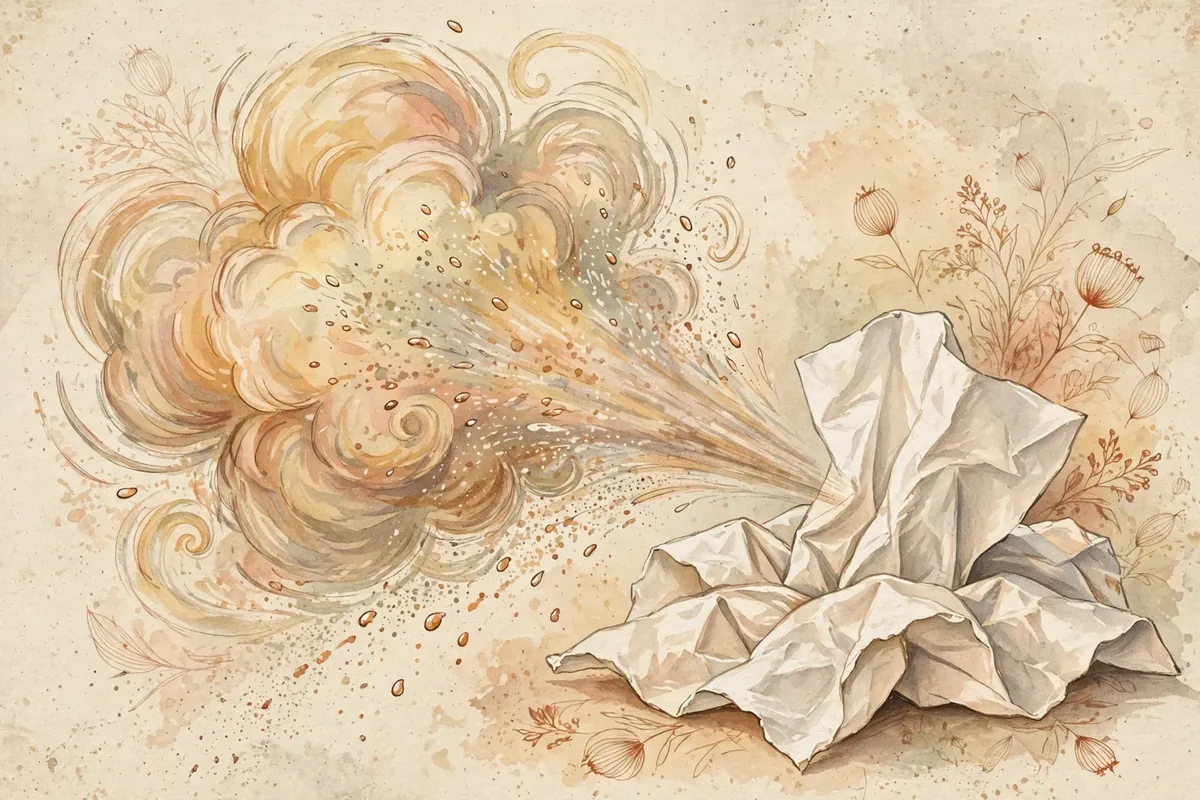
What the cameras showed wasn't a simple spray. A sneeze turned out to be a turbulent cloud of gas carrying droplets. The cloud grows as it moves away from the face, pulling in surrounding air. The sheet of fluid balloons out, stretches into long threads, and finally breaks apart into smaller droplets.
Why the Cloud Matters
That cloud changes how far a sneeze can reach. Inside it, droplets are shielded and can last longer than they would on their own. Bourouiba showed that exhalations can reach speeds of 10 to 30 meters per second, letting droplets travel up to about 8 meters, or roughly 26 feet.
Temperature and humidity play a part, too. As the droplets eventually evaporate, they can leave behind tiny residues that may linger in the air for hours, drifting along with air from heating and cooling systems.
A single sneeze can produce around 40,000 droplets. That's why it's recommended to sneeze into a tissue or the inside of your elbow rather than your hand. Looking down while you sneeze also helps steer the droplets away from where people breathe.
What Happens Inside You
A sneeze is a reflex with two parts. First, irritated nerve cells in the nose send a signal along the trigeminal nerve to the brainstem. Then the brainstem fires off commands to muscles throughout your body.
You take a big breath in as your diaphragm and rib muscles contract. Then your chest and belly muscles squeeze hard, forcing the air out in an explosive burst. Your eyelids usually close at the same moment, though the popular idea that you can't sneeze with your eyes open isn't accurate.
Don't try to bottle one up, either. Holding in a sneeze by pinching your nose or holding your breath isn't recommended, because the pressure puts stress on your lungs and airways. One computer simulation suggested a held-in sneeze creates a burst of pressure about 24 times that of a normal one.
Strange Sneeze Triggers
Dust and pollen aren't the only culprits. Some people sneeze when they step out into bright sunlight, a trait called the photic sneeze reflex. A sudden drop in temperature, a breeze of cold air, or even a very full stomach can set some people off, too.
So the next time you feel one coming, reach for a tissue or turn toward your elbow. That little achoo is a genuinely high-speed event, and the people around you will appreciate the courtesy. If sneezing or allergies bother you often, talk to your doctor.