Imagine a winter day when it's bitterly cold and snowy outside. You could go to work, shop for groceries, grab lunch, catch a train, and visit a museum without ever putting on a coat. In one Canadian city, that's not a fantasy. It's an ordinary Tuesday.
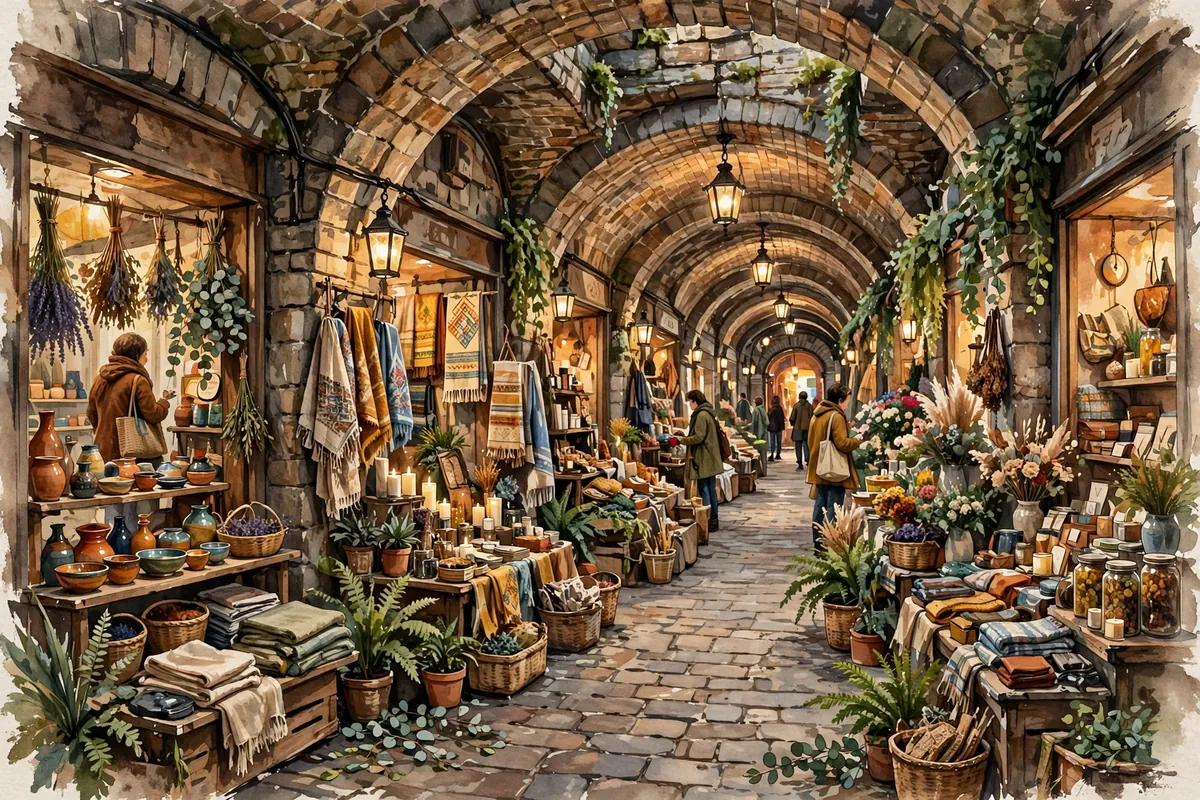
Here's the short answer: Montreal has what's known as the Underground City, officially called RÉSO. It's a network of tunnels and passageways connecting office towers, hotels, shopping centers, universities, concert halls, and the city's Metro subway. Altogether, it covers about 20 miles of tunnels beneath the busiest part of downtown, and in winter, well over half a million people are estimated to use it every day.
How It Started
The idea came from urban planner Vincent Ponte. The first piece opened in 1962 with Place Ville Marie, an office tower and underground shopping mall built to cover an unsightly pit of railway tracks near Central Station. Tunnels linked it to the station and to the Queen Elizabeth Hotel.
The big growth spurt came with the Montreal Metro, which opened in 1966, just in time for the Expo 67 world's fair. New tunnels joined Metro stations to hotels, office towers, shopping complexes, and train stations, forming the core of the underground city.
A City Within a City
The network is laid out in a rough U-shape, with two main north-south routes connected by an east-west route. It spreads across about 4.6 square miles of the most densely populated part of Montreal and has more than 120 outside entrances, not counting the roughly 60 Metro entrances beyond its official limits. Its best-known stretch runs through the center of downtown, between the Peel and Place-des-Arts stations on the Metro's Green Line and the Lucien-L'Allier and Place-d'Armes stations on the Orange Line.
It's mostly climate controlled and well lit, which makes it a lifesaver during Montreal's long winters. Several major universities and the Montreal Museum of Fine Arts even have their own separate tunnel systems.
Here's a surprising detail: not all of it is actually underground. Many key passageways and entrances are at street level, and there's even one skybridge. So it's really more of an indoor city than a truly buried one, though large shopping areas do lie completely below ground.
A Name With a Double Meaning
In 2004, the downtown network was rebranded as RÉSO. The name sounds just like réseau, the French word for network. The O at the end is styled after the Montreal Metro logo, and maps with the RÉSO symbol help people find their way through the maze.
Toronto's Rival Underground
Montreal isn't the only Canadian city that went underground. Toronto has the Path, a network of tunnels and walkways that links more than 70 downtown buildings over about 19 miles. In 2016, Guinness World Records named it the largest underground shopping complex in the world, with more than 1,200 shops and services and about 4 million square feet of retail space.
Over 200,000 residents and workers use the Path every day, and about 30,000 homes sit within walking distance of it. In 2023, Montreal's network overtook it in length.
So if you ever visit Montreal in January, don't let the snow scare you off. Just head downstairs. A whole warm, bustling city is waiting under your feet, and you won't even need your mittens.