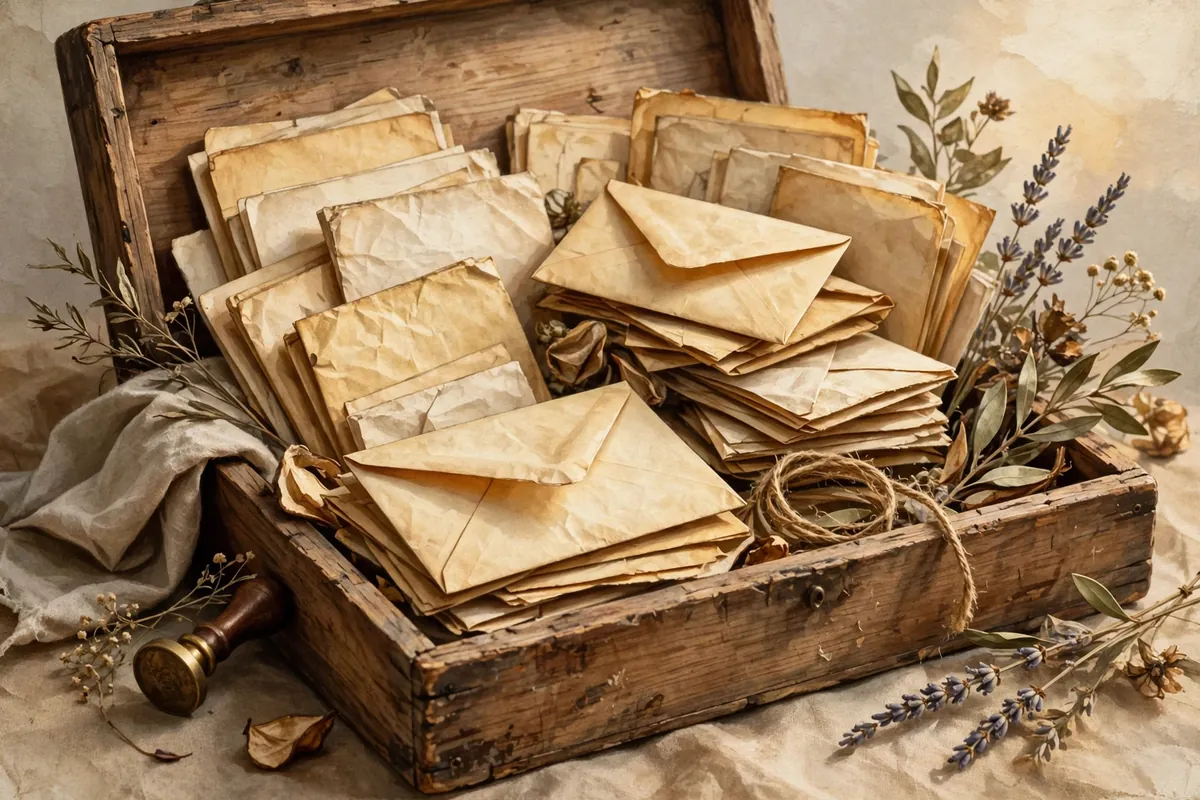
There's something lovely about a stack of old letters or a yellowed newspaper clipping. The color hints at the years that have passed. But it's also a sign that the paper is slowly falling apart, and that raises a question: why does paper change color in the first place?
The short answer is that much of the paper made from wood contains substances that break down over time. The biggest culprits are lignin, a natural material in wood, and acid left in the paper from how it was made. As these break down, especially with exposure to light, air and heat, the paper turns yellow and becomes brittle.
What's Hiding in Wood Pulp
Wood is made mostly of cellulose, the main ingredient in paper, along with a smaller amount of hemicellulose and roughly 30 percent lignin. Lignin helps hold a tree together, but it's not good for paper because it deteriorates over time.
Paper makers can remove lignin by cooking wood chips in chemicals. Paper made this way is called wood-free paper, which sounds odd but simply means it doesn't contain lignin. Paper made by just grinding up wood, called mechanical pulp, keeps the lignin in. Even some chemically made paper keeps a little lignin. Kraft paper, for example, retains some and is brownish as a result, while sulfite paper comes out white.
Why Newspapers Yellow So Fast
Newspaper is the classic example. Newsprint is generally made by mechanical milling, without the chemical steps that remove lignin. That keeps it cheap, but the lignin makes newsprint turn yellow and brittle when it's exposed to air or sunlight. Traditionally, newsprint was made from softwood trees such as spruce, fir and pine, though more and more of it now comes from recycled fibers.
That's why a newspaper left in a sunny window can start to yellow quickly, while an envelope in a dark drawer lasts much longer. Light and heat both speed up the breakdown.
The Slow Fire in the Library
This decay has a dramatic name: slow fire. Paper made from wood pulp that still has its lignin succumbs to it. It turns yellow, becomes brittle and eventually crumbles.
Acidic wood-pulp paper became common in the late 1800s. Before that, a lot of paper was made from rags and other low-lignin fibers, which is one reason some much older documents look better than more recent ones. In the 1930s, chemist and librarian William Barrow published a report warning about acidic paper deteriorating in libraries, and paper makers began working on longer-lasting paper.
The Rise of Acid-Free Paper
The fix is acid-free paper, which has a neutral or slightly basic pH. During production, it may be treated with a mild base like calcium or magnesium bicarbonate to neutralize acids, and extra is added as a reserve against acids that might creep in later, even from pollution in the air. Making alkaline paper is also gentler on the paper machines themselves, because fewer corrosive chemicals are involved.
Today, much commercial paper is acid-free, largely because paper makers switched to calcium carbonate as a filler. The best alkaline paper is expected to last more than 1,000 years, and average grades about 500. So if you're saving family letters, keep them away from sunlight and heat, and consider acid-free folders. Your grandchildren will thank you.