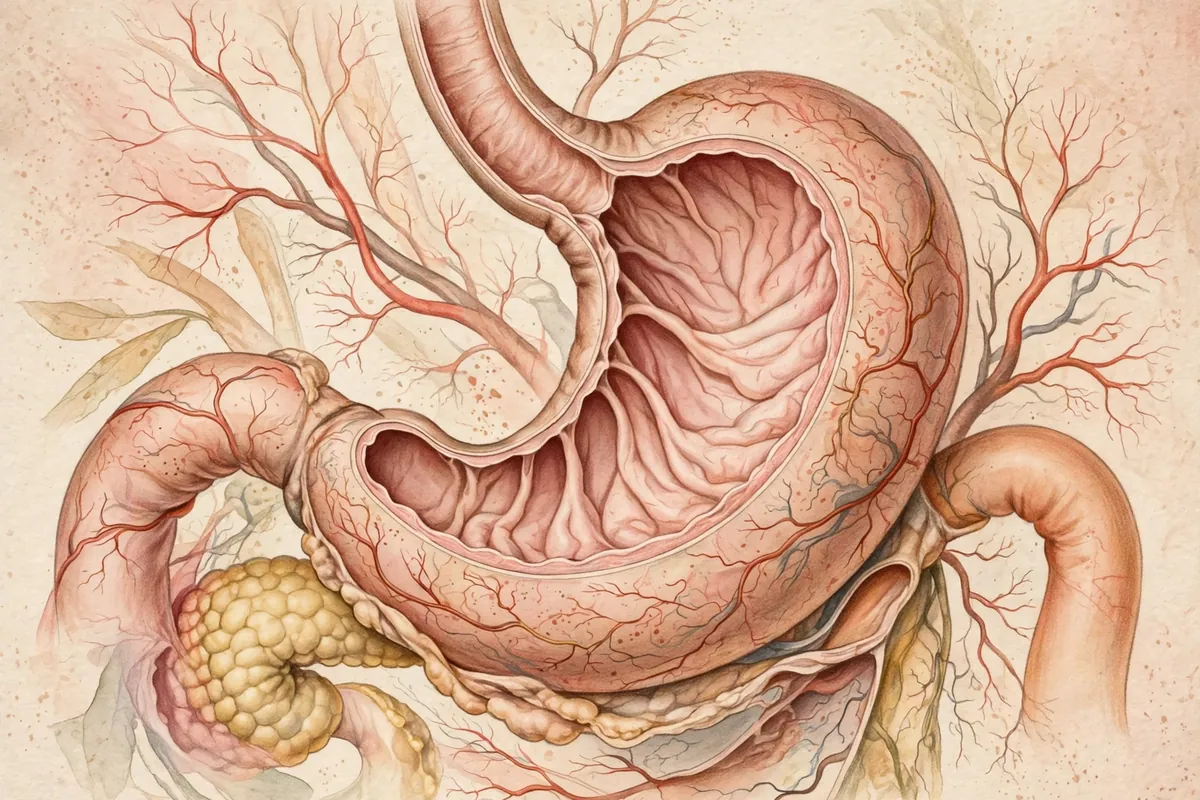
Your stomach is a pretty harsh place. It's filled with acid strong enough to break down a steak dinner and with enzymes built to chop proteins into pieces. But here's the puzzle: the stomach itself is made of protein-rich tissue too. So why doesn't it digest itself along with your lunch?
The short answer is a built-in shield called the gastric mucosal barrier. The stomach coats its inner wall with a thick, gel-like layer of mucus, and underneath that mucus it traps a thin layer of fluid rich in bicarbonate, a natural base, much like baking soda. The mucus slows the acid down, and the bicarbonate neutralizes any acid that sneaks through. Right against the stomach wall, the conditions stay close to neutral.
Just How Strong Is Stomach Acid?
The acid in question is hydrochloric acid, made by special cells in the stomach lining called parietal cells. In humans, stomach acid has a pH between 1 and 3. That's more acidic than in most other animals and similar to scavengers that eat carrion, which need strong protection against germs in their food.
A typical adult stomach produces about 1.5 liters of gastric juice a day. Some of it starts flowing before you even take a bite. About 30 percent of the acid for a meal is triggered just by anticipating food, smelling it, or tasting it. So yes, your stomach really does get ready when you smell dinner cooking.
A Shield That Never Stops Rebuilding
The mucus layer is made mostly of large molecules called mucins, along with water and salts. It protects against acid, and it also cushions the stomach wall from being scraped by rough bits of food.
Because food rubs away bits of mucus and strong acid causes it to clump and slough off, the layer is constantly being worn down and replaced. Three kinds of mucus-making cells keep the supply going. Beneath the mucus, cells in the lining release bicarbonate to keep a little pocket of near-neutral fluid, with a pH around 7, right against the wall.
There's one more line of defense. The cells lining the stomach are packed tightly together, with seals between them that make it hard for acid to slip through.
A Clever Safety Switch
The stomach has another trick for its most powerful enzyme, pepsin. Instead of making pepsin directly, specialized cells called chief cells release it in an inactive form called pepsinogen. Only when it mixes with stomach acid does it switch on and become pepsin, which then breaks proteins into smaller pieces.
Think of it as shipping a tool with the safety lock on. The enzyme doesn't go to work until it's out in the stomach, where it's supposed to be.
When the Shield Breaks Down
The barrier is tough, but it's not perfect. Things that can damage it include infection with a bacterium called Helicobacter pylori, alcohol, and anti-inflammatory pain relievers, including aspirin. When the shield is weakened, acid can reach the stomach wall and injure it, which can lead to ulcers. If you have ongoing stomach pain, talk to your doctor.
The bacterium has quite a story. For a long time, doctors believed nothing could survive in stomach acid, and ulcers were blamed on stress or spicy food. Then in 1982, Australian researchers Barry Marshall and Robin Warren found the bacterium in patients with ulcers. To prove it caused stomach inflammation, Marshall drank a beaker of the bacteria himself and got sick within days. The pair won the Nobel Prize in 2005.
So the next time you enjoy a big meal, give a little credit to the quiet, slippery layer doing its job. Your stomach spends every day surrounded by acid, and thanks to that shield, it hardly ever notices.