Think about the hardest-working parts of your body. Most of us picture the heart pumping all day, or the leg muscles on a long walk. But one of the biggest energy users sits quietly inside your skull, and it never really takes a day off.
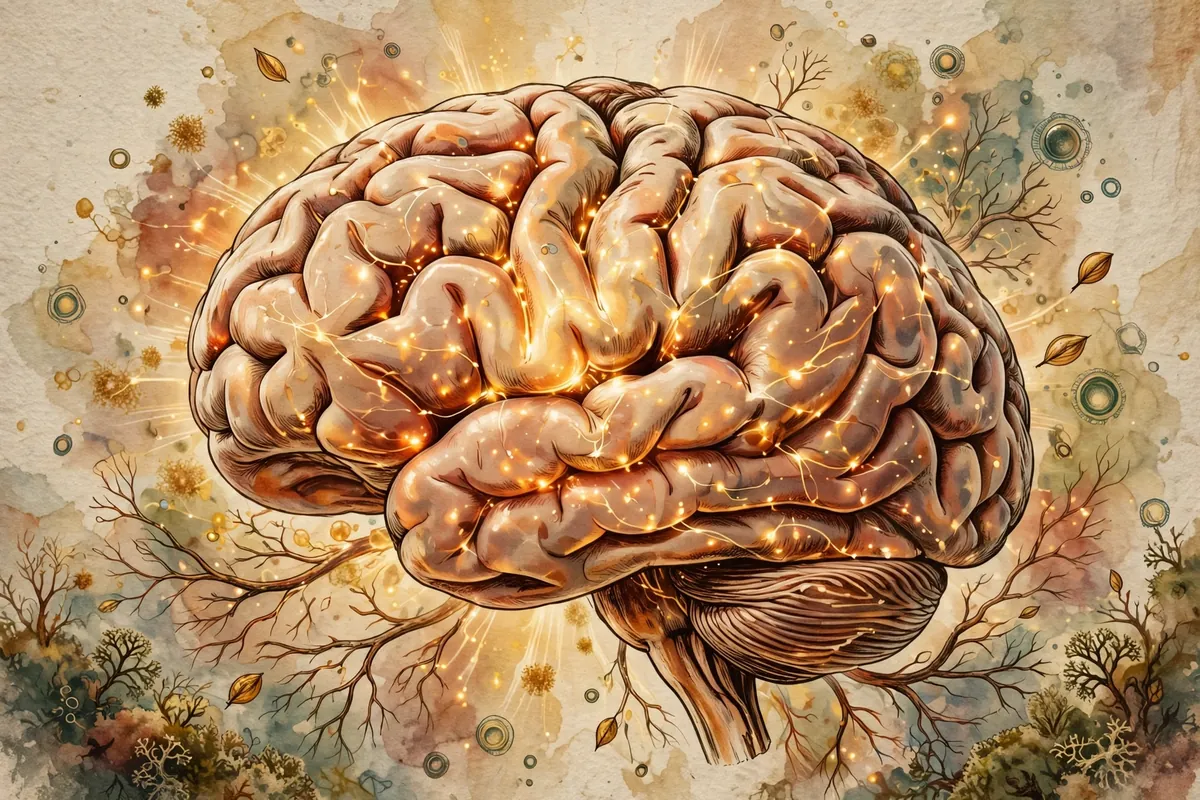
Here's the short answer. The adult human brain makes up only about 2% of your body weight, but it uses up to 20% of the energy your body consumes. That's more than any other organ. It's a small organ with a very big appetite.
A Small Organ With Big Needs
The average adult brain weighs about 2.6 to 3.1 pounds. For that modest size, it gets a remarkable share of the body's resources. It receives about 15% of the blood pumped by the heart, about 20% of the oxygen the body uses, and about 25% of the glucose, or blood sugar, the body burns.
When you haven't eaten for a while and aren't moving much, the brain uses roughly 60% of the glucose in your blood. That's why a steady fuel supply matters so much. When blood sugar drops too low, as can happen in hypoglycemia, a person can lose consciousness.
Where Does All That Energy Go?
Your brain contains more than 86 billion nerve cells, called neurons, plus roughly as many supporting cells. The neurons are constantly connecting and sending signals to one another, releasing chemical messengers in response to nerve impulses. Keeping that vast network running takes a steady flow of fuel.
Surprisingly, the brain's energy use doesn't change much over the course of the day. Active regions do use somewhat more energy than quieter ones. That small difference is actually what brain scanners like PET and fMRI detect when they produce images of the brain at work.
The brain can also switch fuels when it needs to. It normally runs on glucose, but during fasting, long endurance exercise, or very low-carbohydrate eating, it can use substances called ketone bodies instead. During exercise, it can even use lactate.
Busting the Ten Percent Myth
You may have heard that we only use 10% of our brains. That's a myth, and the brain's energy bill is one of the best arguments against it. An organ this expensive to run wouldn't make sense if most of it sat idle. If large parts were unnecessary, natural selection would have favored people with smaller, more efficient brains.
Brain scans back this up. No matter what you're doing, all areas of the brain show activity. Some areas are busier than others at any moment, but even during sleep, every part shows some level of activity. Only serious damage leaves a brain with truly silent areas.
A likely origin of the myth goes back to the reserve energy theories of Harvard psychologists William James and Boris Sidis. The idea that we have untapped potential stuck around long after the science moved on.
A Hungry Young Brain
The brain's energy needs aren't the same at every age. One preliminary study found that the brain's metabolic needs peak at about five years old. Scientists are still studying exactly how those needs change as we grow.
So the next time someone claims we only use a tenth of our brains, you'll know better. That three-pound organ works around the clock, quietly burning through a big share of your fuel to keep you thinking, remembering, and even dreaming.