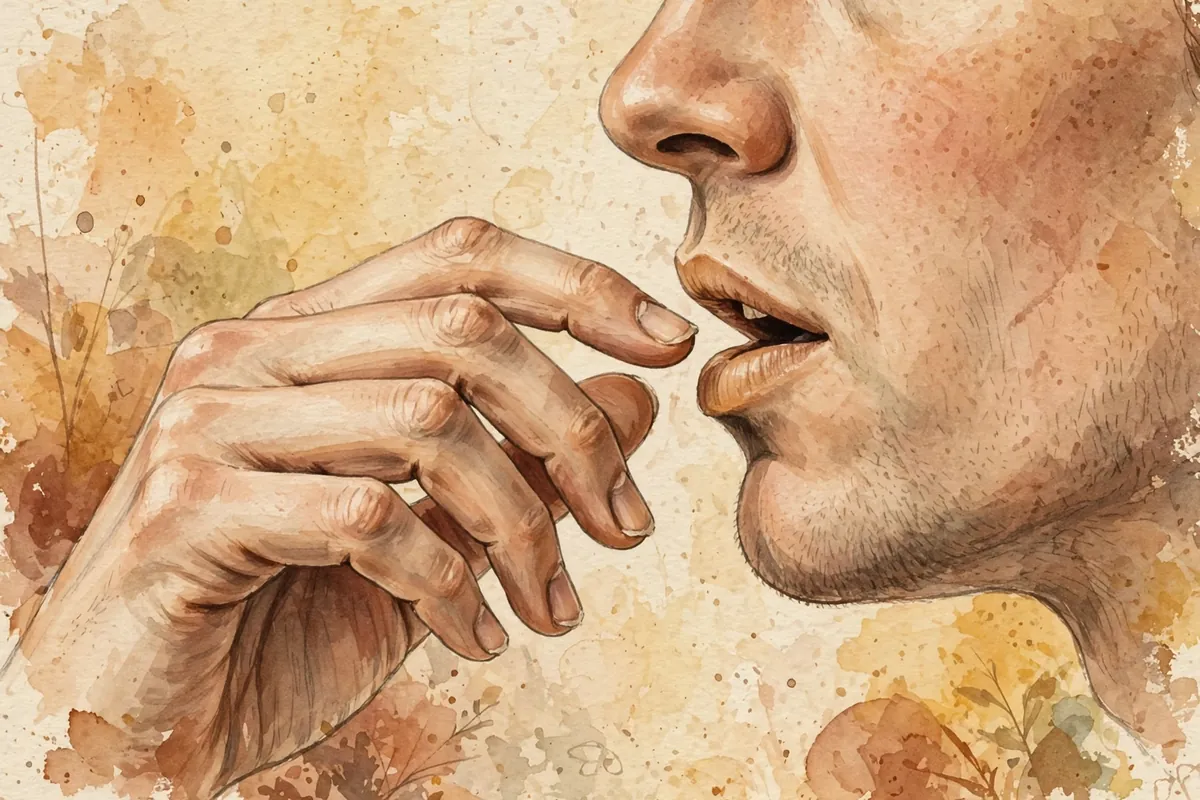
You're watching the final minutes of a close game, or waiting for a phone call that matters, and suddenly you realize you've been chewing on a fingernail. You didn't decide to do it. Your hand just found its way there.
The short answer: nobody knows for sure why we do it. Nail biting is extremely common, showing up in roughly 20 to 30 percent of people, and it has long been linked to anxiety and emotions. Scientists group it with other repetitive habits like skin picking and hair pulling, but the exact cause of these habits is still unknown.
A Habit With a Long History
Nail biting has a formal name: onychophagia. It's sometimes described as a parafunctional activity, a fancy way of saying the mouth is being used for something other than speaking, eating, or drinking. Pen chewing and cheek biting fall into the same category.
The link between nail biting and nerves is old. The earliest known reference to nail biting as a sign of anxiety dates back to late 16th-century France. People have apparently been gnawing their nails over their worries for a very long time.
Who Bites Their Nails?
Nail biting is especially common among young people. When researchers look specifically at people between three and 21 years old, the share rises to about 37 percent. Habits in this family most often start in late childhood or the early teen years.
Researchers file nail biting under a group called body-focused repetitive behaviors. That group also includes nail picking, skin picking, cheek biting, and hair pulling, and these habits often show up together. Emotions seem to play a role in how strongly they appear, and scientists are investigating whether genes are involved too.
Most nail biting is just a habit. Doctors note that the line between an ordinary habit and a more serious problem isn't always clear, and only more severe cases are treated as a disorder.
Why It's Worth Breaking
Biting can damage the skin around the nail, opening the door to infections. Hands also carry germs, so nail biting can move bacteria straight to the mouth. Over many years, it can even harm the nail bed and leave nails deformed.
It can affect the teeth and gums, too. And many nail biters say the habit makes them feel embarrassed, to the point of avoiding handshakes.
What Tends to Help
The most common and inexpensive approach is a clear, bitter-tasting nail polish. It usually contains denatonium benzoate, the most bitter chemical compound known. The awful taste is a quick reminder to stop.
For stubborn cases, behavioral methods have shown promise. Habit reversal training teaches people to notice the urge and swap in a different action. Another technique, called decoupling, has people make a different movement just before the hand reaches the mouth, which interrupts the habit.
One lesson for parents stands out. Punishing children for nail biting has not been shown to work better than a placebo, and it may even make the biting happen more often. If nail biting is causing pain, infections, or worry, talk to your doctor.
Go Easy on Yourself
If you're a nail biter, you're in very large company. It's one of the most common habits there is, and plenty of people have managed to break it with time and the right tricks.
A little bitter polish, a lot of patience, and a kind word to yourself can go a long way.