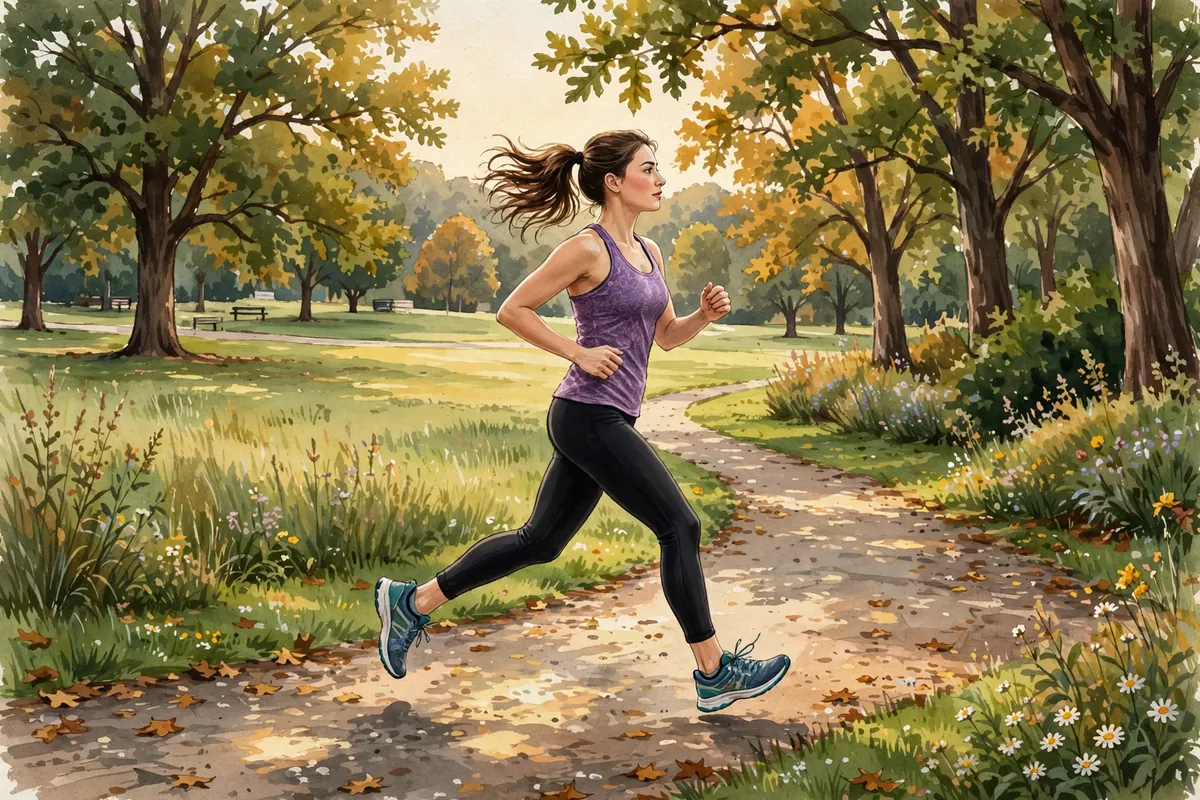
You head out for a jog or a fast walk feeling fine. Twenty minutes later you catch your reflection in a shop window, and your face is as red as a tomato. It can look alarming, but for most people it's completely normal. So what's going on?
The short answer: your body is getting rid of heat. Working muscles produce a lot of warmth, so your body widens the blood vessels near the skin and sends more warm blood there, where heat can escape into the air. All that extra blood close to the surface is what makes your face look red.
Your Muscles Are Little Heaters
Muscles aren't very efficient engines. When they work, only about a quarter of the energy they use turns into movement. The rest comes out as heat.
One measurement gives a sense of scale. A single working muscle doing a steady, repeated movement like straightening the knee produces roughly three times as much heat as useful motion. Put lots of muscles to work at once, like in a jog, and your body suddenly has a lot of extra heat to deal with.
Opening the Vents
To cool off, your body uses a trick called vasodilation. The small blood vessels near the surface of your skin widen, sending more warm blood toward the skin, where heat can be released into the air around you.
Your brain runs this system. A region deep in the brain called the hypothalamus acts like a thermostat. When you're too warm, it signals the blood vessels in your skin to open up. When you're cold, it does the opposite and squeezes them down to hold heat in.
Your face often shows this most clearly. That rosy glow is warm blood flowing just under the skin, doing its job as a radiator.
Sweat Finishes the Job
Blood flow is only half of the cooling team. The other half is sweat. As sweat evaporates from your skin, it carries heat away with it. That cools the skin and the blood vessels just beneath it, and the cooler blood heads back to your core.
Humans are remarkably good at this. We have lots of sweat glands and very little body hair, so air can move across the skin and sweat can evaporate easily. Increased blood flow to the skin during exercise helps as well, especially since we stand upright. Many animals simply let their body temperature climb during a short sprint. Humans can shed heat on the go, which may have helped our ancestors outlast animals that overheated during a long chase.
Flushing Versus Blushing
That exercise glow is technically called flushing, and it's different from blushing. Blushing is milder, usually limited to the cheeks, face, or ears, and is triggered by emotions like embarrassment. Flushing is a stronger redness that can spread beyond the face.
A red face after a workout is usually nothing to worry about, but keep drinking water, because losing lots of fluid makes it harder for your body to stay cool. If redness comes with dizziness, confusion, or nausea, stop and cool down, and talk to your doctor about any symptoms that worry you.
So the next time your cheeks turn pink on a walk around the park, take it as a small compliment to your body. It's not embarrassed. It's just very good at keeping its cool.