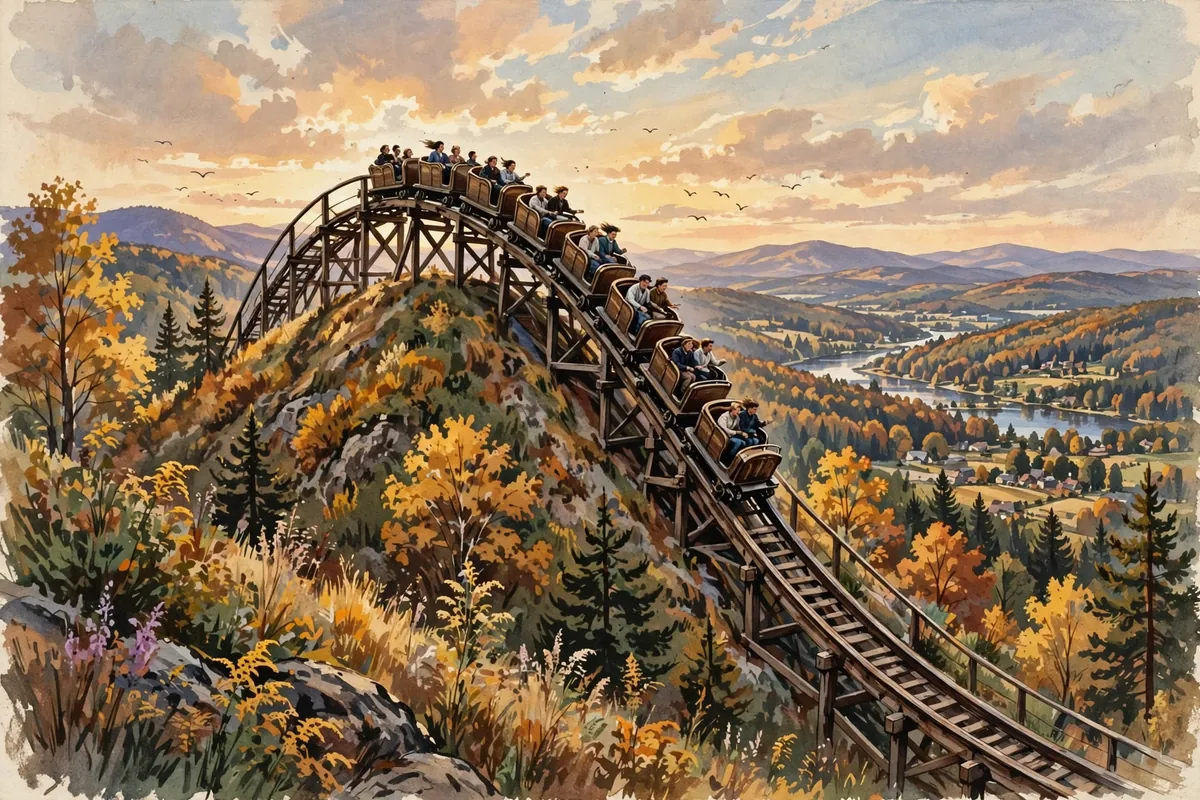
The coaster clanks to the top of the first hill, hangs there for a heartbeat, and then tips over the edge. Suddenly you're lifting out of your seat, your grip tightens on the bar, and your stomach seems to flip upside down. It's terrifying and wonderful at the same time.
That feeling comes from a sudden change in the forces acting on your body. When the train races over a hill and starts down, your body wants to keep moving upward for a moment. The seat stops pressing against you, so you briefly lose the sensation of your own weight. Coaster fans call it airtime.
Why You Suddenly Feel Weightless
Here's a surprising thing about weight: what you feel isn't really gravity itself. The sensation of weight comes from contact with whatever is holding you up, like a floor, a bed, or a seat pushing back against you.
On a coaster, that changes in an instant. As the train switches from climbing to diving, inertia keeps your body heading up for a split second while the car follows the track down. When the train's downward acceleration matches gravity, riders feel zero g. If the train drops even faster, the force turns negative, and you get lifted right out of your seat.
Your inner ear notices, too. Tiny calcium carbonate particles called otoliths sit in fluid inside your ear and sense up-and-down acceleration, like the start of an elevator ride. When you plunge, they send your brain a vivid message that you're dropping.
Floater or Ejector?
Coaster designers think about this feeling very carefully. Airtime usually comes in two flavors. Floater airtime is slower and gentler, like drifting upward. Ejector airtime is sudden and strong, popping riders up off their seats before bringing them back down.
There are limits, of course. For the negative forces that cause airtime, designers generally aim for a maximum of about 1.5 to 2 g. For the positive forces that press you into your seat, the usual maximum is about 4 to 6 g. Those ranges are considered safe for most people.
How long the floating lasts depends on the train's speed, gravity, and how sharply the track curves at the top of each hill. Tall hypercoasters and big wooden coasters are especially known for it.
Record-Breaking Air
Some rides are built to serve up as much of that feeling as possible. In 2001, Guinness World Records recognized Superman: Escape from Krypton at Six Flags Magic Mountain for a then-record six and a half seconds of airtime.
That mark was left in the dust when Steel Vengeance opened at Cedar Point in 2018. It set the record for the most airtime on a roller coaster, at 27.2 seconds.
Astronauts Feel It, Too
The same physics helps train astronauts. Special airplanes fly up-and-down arcs called parabolas, giving passengers about 25 seconds of weightlessness on each one. A flight typically includes 40 to 60 of these arcs.
Not everyone enjoys it. About two thirds of passengers get airsick, which earned the planes their unofficial nickname: the vomit comet.
So the next time your stomach does a somersault at the top of a hill, you'll know what's going on. Your body is briefly floating free, your inner ear is sounding the alarm, and somewhere a ride designer is smiling. Enjoy the float, and hang on to your hat.