Grandpa Decided Domino Was Ready to Learn How to Shake
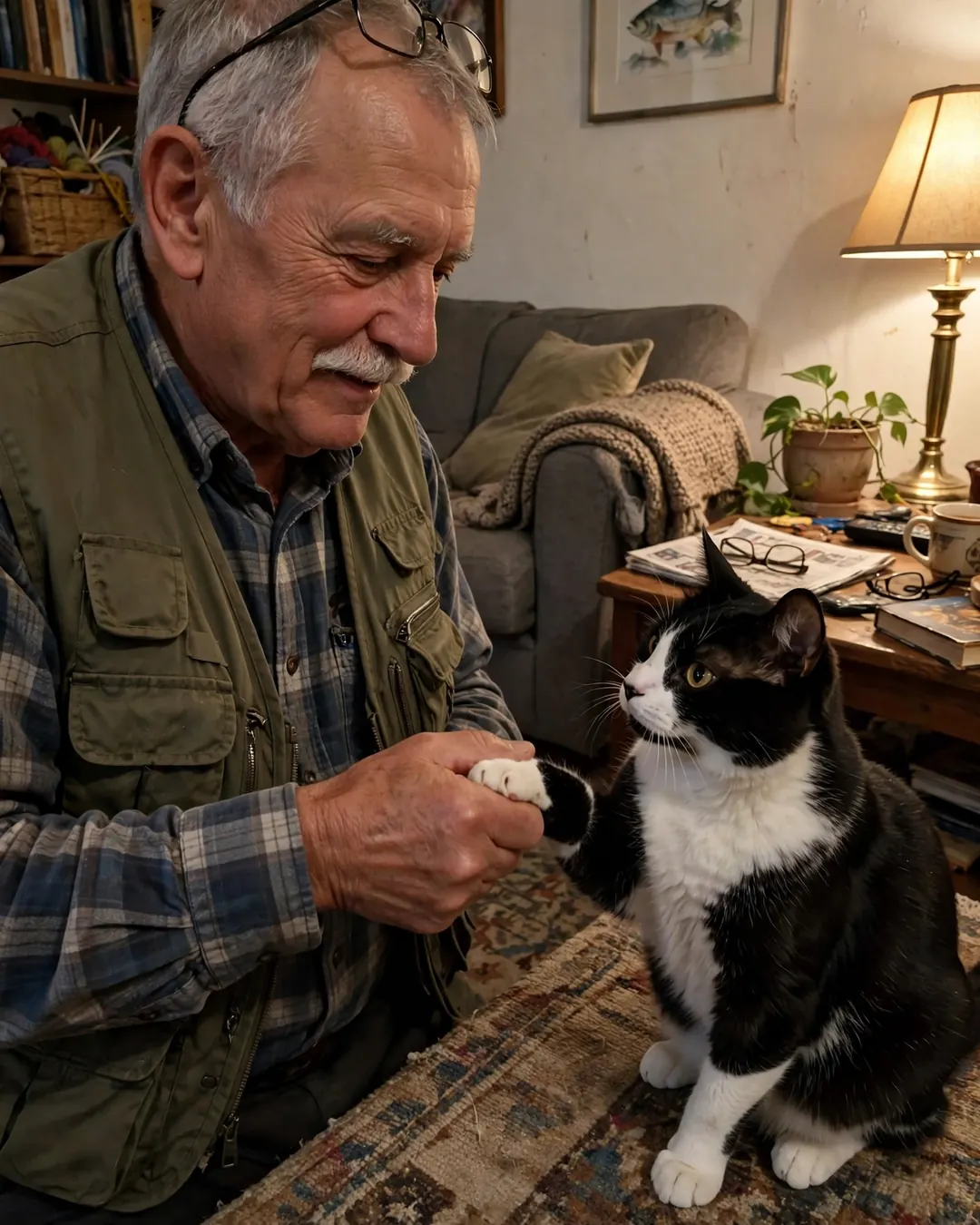
A brass lamp glows warmly in the corner, lighting a side table piled with books, a coffee cup, and a spare pair of glasses. On the patterned rug in the middle of the room, a lesson is underway. Grandpa leans forward with his reading glasses pushed up on his head, gently holding one of Domino's white front paws in his fingers. Domino sits upright and attentive, gazing at the paw as if double-checking that it's still attached, but he's not pulling away, and that counts as progress.
Yes, cats can learn tricks, and teaching them can be good fun for both of you. The key is positive reinforcement: reward the behavior you want with a tiny treat or praise the moment it happens. For "shake," many people start by waiting for the cat to lift a paw naturally, then rewarding it right away, gradually adding a word or hand signal. Some owners use a clicker to mark the exact moment. Keep sessions very short, just a few minutes, and end on a success. Cats generally don't respond well to scolding or force, so patience is everything. Training also provides mental stimulation, which is especially helpful for indoor cats.
Grandpa clearly has the patience part covered. Whether Domino will perform on command for guests remains to be seen; cats tend to decide for themselves when they feel like showing off.
Even if the trick never sticks, a quiet evening holding paws on the rug isn't a bad outcome.