Grandpa Put On His Favorite Old Record. His Aussie Had Thoughts About It.
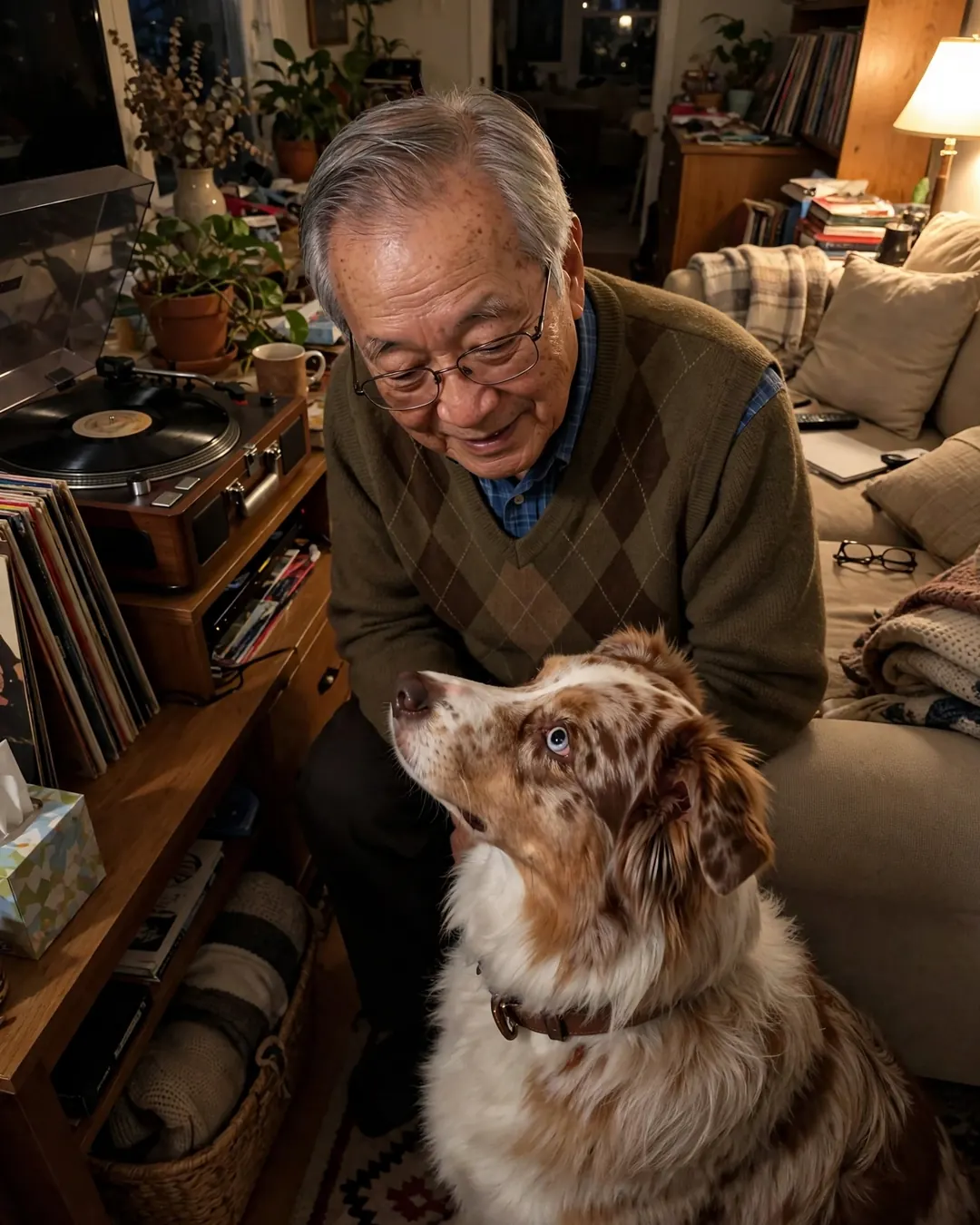
A record turns slowly on the turntable, its yellow label spinning, while a shelf below bulges with well-worn album sleeves. Kenji, in a green argyle sweater vest and glasses, leans forward from his seat with a soft, crinkly smile, as if he is telling Maple the story behind this particular song. Maple sits upright on the patterned rug, head lifted toward him, her speckled ears relaxed and her expression one of total attention. Around them the living room glows: a lamp in the corner, potted plants by the window, a coffee mug, a plaid throw on the couch, and a spare pair of reading glasses left on the cushion.
Many owners notice that their dogs seem to settle when soft music plays, and it is a common tip to leave calm music on for a dog who gets anxious when left alone. Dogs hear a wider range of sounds than people do and can be sensitive to loud volumes, so gentle background music at a modest level is the friendliest choice. Every dog is different, though. Some snooze through anything, while others perk up at certain instruments or voices. Watch your dog's body language: loose ears, a relaxed mouth, and slow blinks are good signs, while pacing, panting, or leaving the room suggest the volume or the song is not working for them.
Whether Maple prefers jazz, old ballads, or simply the sound of Kenji humming along, she has clearly found her favorite seat in the house. It happens to be right next to him.