Kenji Set Up His Easel to Paint the Garden. His Real Subject Was Lying in the Grass.
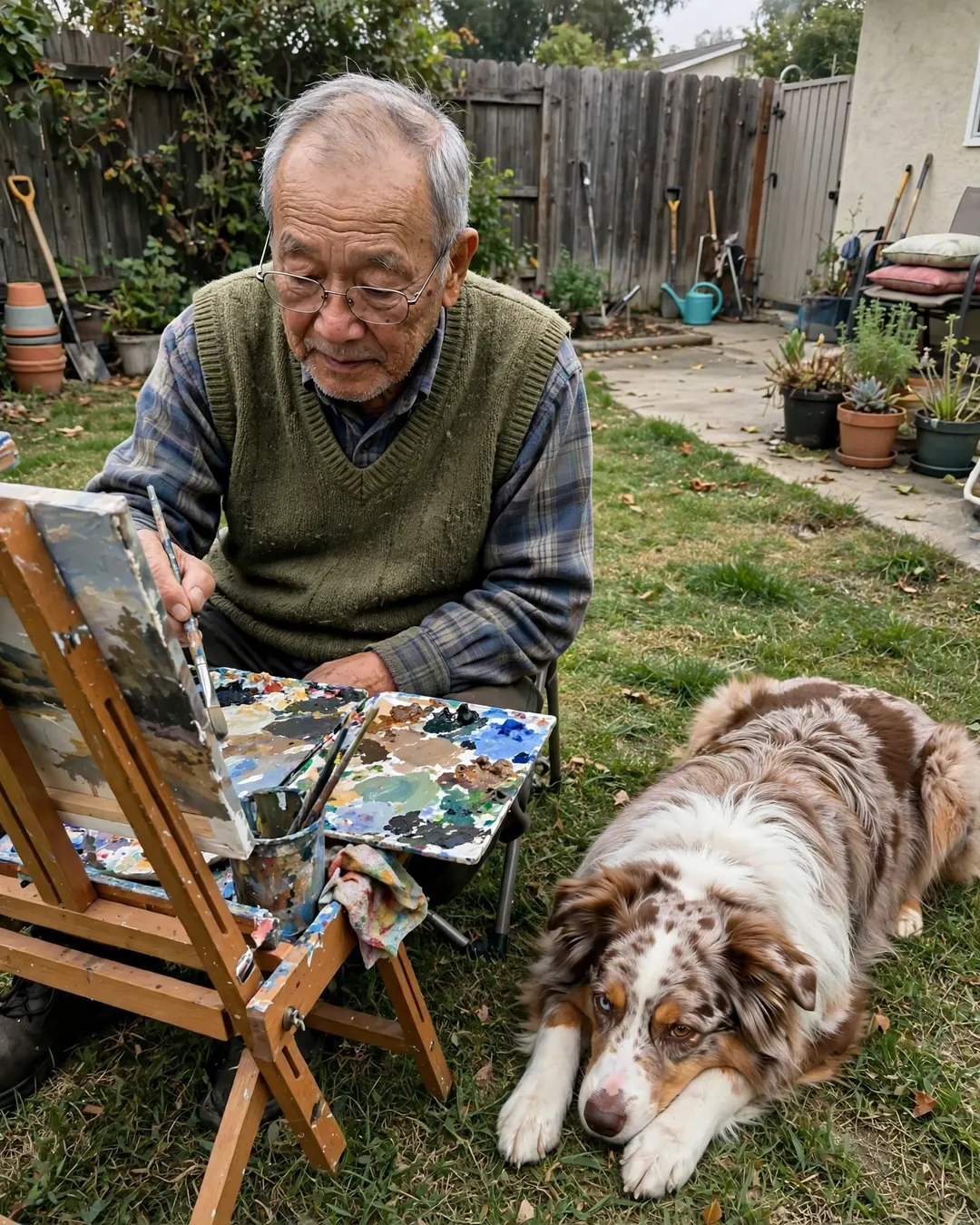
Out on the lawn, a wooden easel holds a canvas half-filled with soft blues and greens. Kenji sits low on a stool in a green sweater vest and plaid shirt, a thin brush in one hand and a palette crowded with daubs of color balanced on his lap. His eyes are on the work, his concentration gentle and steady. A few feet away, Maple lies stretched out on the grass, chin on her paws, gazing up with that soft, sleepy merle face. Garden tools lean against the weathered fence, potted plants line the patio, and a little watering can waits nearby for later chores.
Hobbies like painting can be a lovely fit for retirement, offering focus, creativity, and a reason to spend time outdoors. A calm dog nearby adds companionship without much fuss. Still, art supplies and pets need a little thought. Some paints, solvents, and brush cleaners can be harmful if a dog licks or chews them, and rinse water can tempt a thirsty pup. Keep jars and tubes up on a table, clean brushes away from where your dog drinks, and store everything when you are done. Water-based paints are generally easier to manage around animals than oil paints and their thinners. If your dog does swallow something from the art box, call your vet or an animal poison control line for advice.
Maybe the painting is of the garden, or maybe it will end up being a portrait of a certain speckled dog in the grass. Either way, Maple has made it clear she is happy to model.