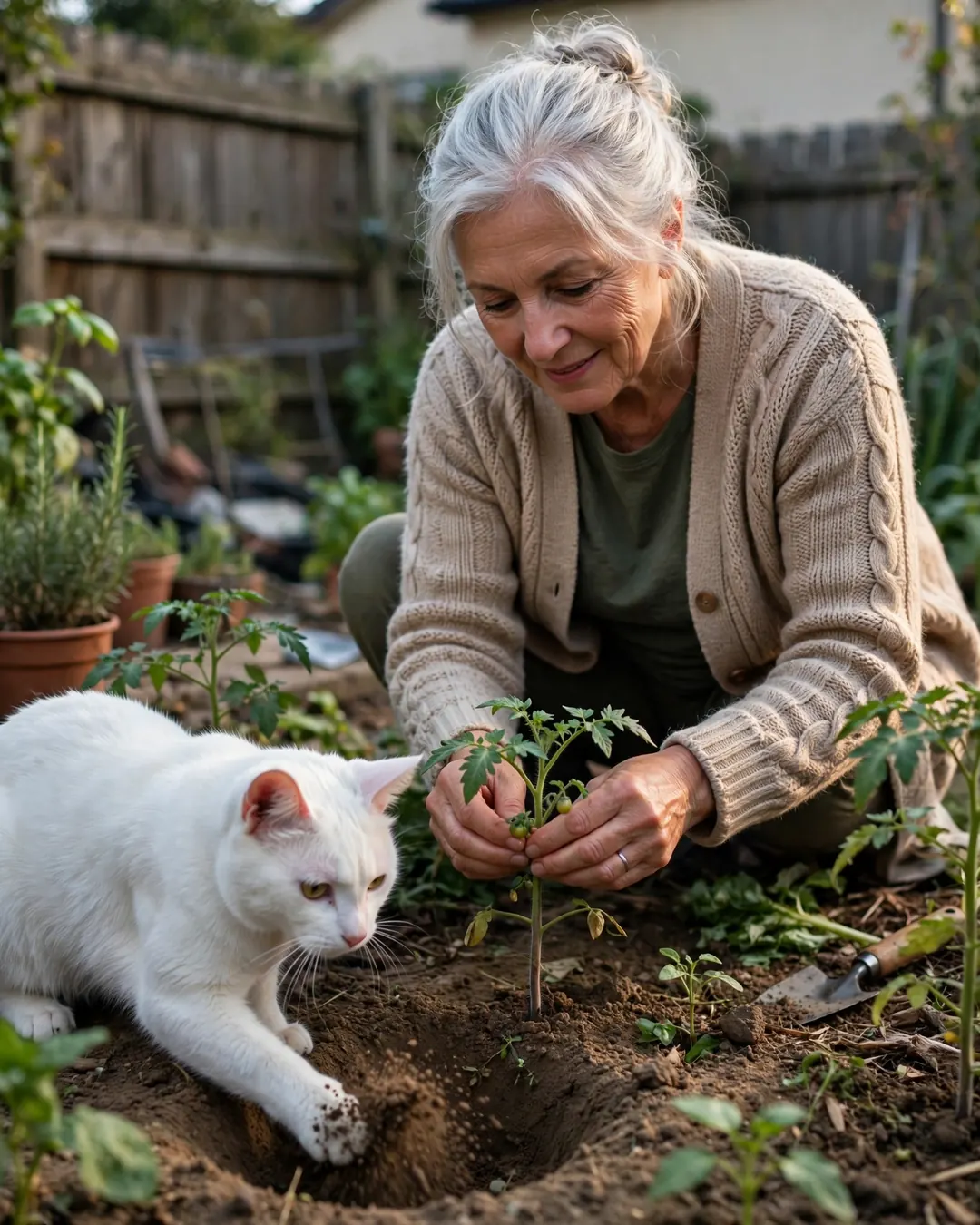
Grandma Dottie Planted Tomatoes. Pearl Decided to Dig a Hole Right Next to Her.
Evening light softens the garden, where rows of young tomato plants stand in freshly turned soil and pots of herbs line the fence. Dottie kneels in the dirt in her cable-knit cardigan, silver hair pinned in a loose bun, cupping a delicate seedling in both hands as she settles it into place. She's smiling, and it's easy to see why. Right beside her, Pearl is hard at work on a project of her own, one white paw scooping deep into the soil, nose pointed down, digging a hole with complete dedication and a dusting of dirt on her pristine fur.
Digging is a deeply rooted cat behavior, tied to their instinct to bury waste and explore loose ground, which is why freshly worked garden beds are so appealing. Unfortunately, that can turn a vegetable patch into a litter box. Covering new plantings with chicken wire, mulch, or pinecones can help discourage digging, as can offering a cat its own patch of loose sand nearby. It's also wise to know that tomato leaves and stems are generally considered toxic to cats if eaten. Store fertilizers and pest products securely, since they can be harmful to curious pets.
Pearl's hole isn't likely to grow anything. But Dottie doesn't seem to mind the help, and the evening garden feels a little more cheerful with a white cat at work in it.