Grandpa Harold Started Swaying to an Old Song. Pudding Asked to Cut In.
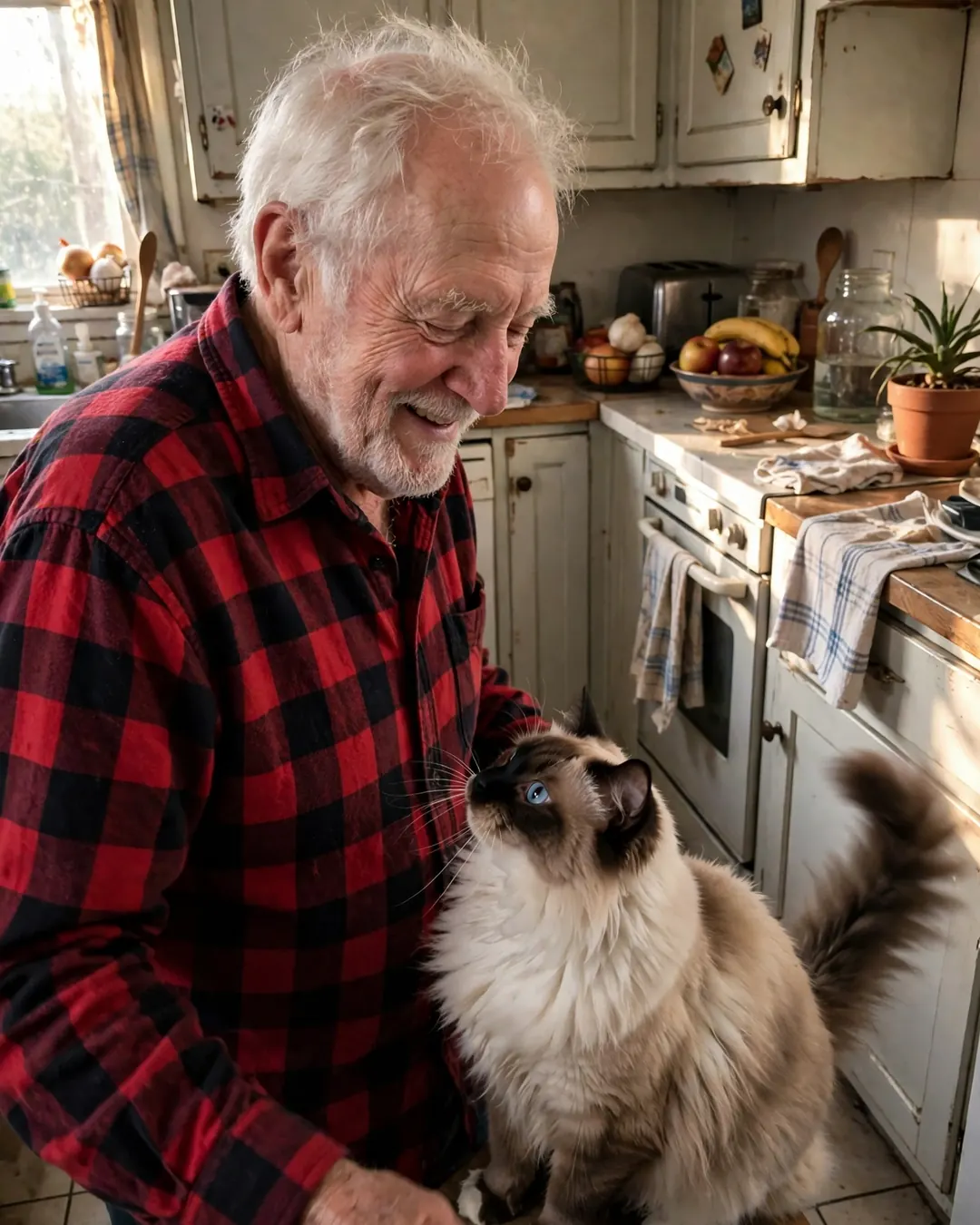
The radio is probably playing something old and sweet, because Grandpa Harold is swaying in the middle of his sunny kitchen with a soft, crinkly-eyed smile. His dance partner has risen to the occasion, quite literally. Pudding stretches up against his red plaid shirt, pressing her chocolate face into his side, eyes half closed in bliss, her fluffy tail curled high behind her. The kitchen around them is cheerful and well-loved, with a toaster, a bowl of bananas and apples, a potted plant, checkered dish towels hanging from the oven, and morning light streaming through the window.
That head-pressing move is called bunting, and it's one of the sweetest gestures in a cat's vocabulary. Cats have scent glands on their cheeks, chins, and foreheads, and rubbing against a person deposits their scent, essentially marking you as part of their family. It often signals comfort, trust, and affection. Ragdolls are especially known for these kinds of gentle, physical displays, which is part of why they're so popular with families. When a cat bunts, a soft scratch under the chin or along the cheeks is a lovely way to respond. Just watch your footing if your cat weaves between your legs.
Pudding may not know any official dance steps, but she knows exactly how to make Harold's morning. A sunny kitchen, a sweet song, and a cat who insists on joining in make for a pretty perfect start to the day.