Grandpa Earl Was Lost in an Old Record. Pepper Kept Trying to Figure Out the Joke.
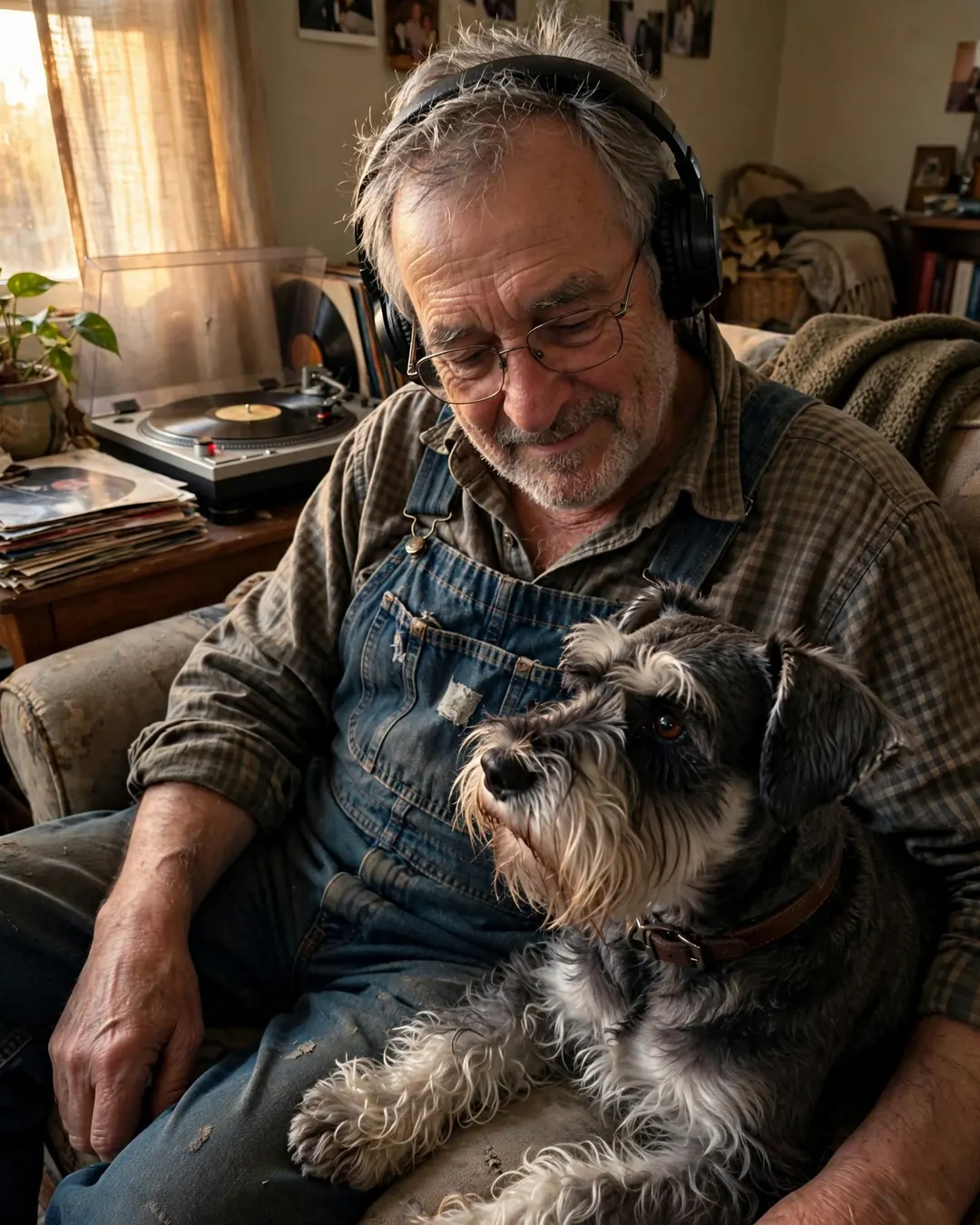
A record turns on a turntable by the window, a stack of album sleeves leaning beside it, and the late afternoon light is soft and amber through the curtains. Grandpa Earl has sunk deep into his armchair with a pair of chunky black headphones clamped over his gray curls, glasses slipping down his nose, a faraway, crinkly smile on his face. He is clearly back in another decade. Curled across his lap and tucked under one arm is Pepper, her chin raised, beard fluffed, eyes drifting sideways with the look of a dog wondering what is so funny. A worn leather collar sits loosely around her neck, and family pictures line the wall above.
Dogs are remarkably attentive to their people. They watch faces, listen to tone of voice, and pick up on body language, which helps explain why so many dogs seem to know when their owner is happy, relaxed, or upset. A smile, a soft voice, and loose, easy movements often signal to a dog that all is well, and many will settle more readily around a calm person. That attentiveness is part of what makes dogs such good companions, especially for people who live alone. Spending relaxed time together, even something as simple as listening to music side by side, strengthens that bond and gives both of you a peaceful moment in the day.
Pepper may not hear a single note through those headphones, but she can certainly read the smile. If Earl is this happy, she figures, the music must be very good indeed.