Grandma Started a Big Mountain Puzzle. Someone Pulled Up a Chair to Watch.
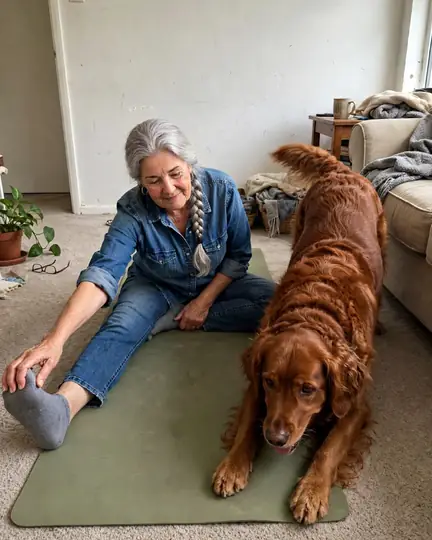
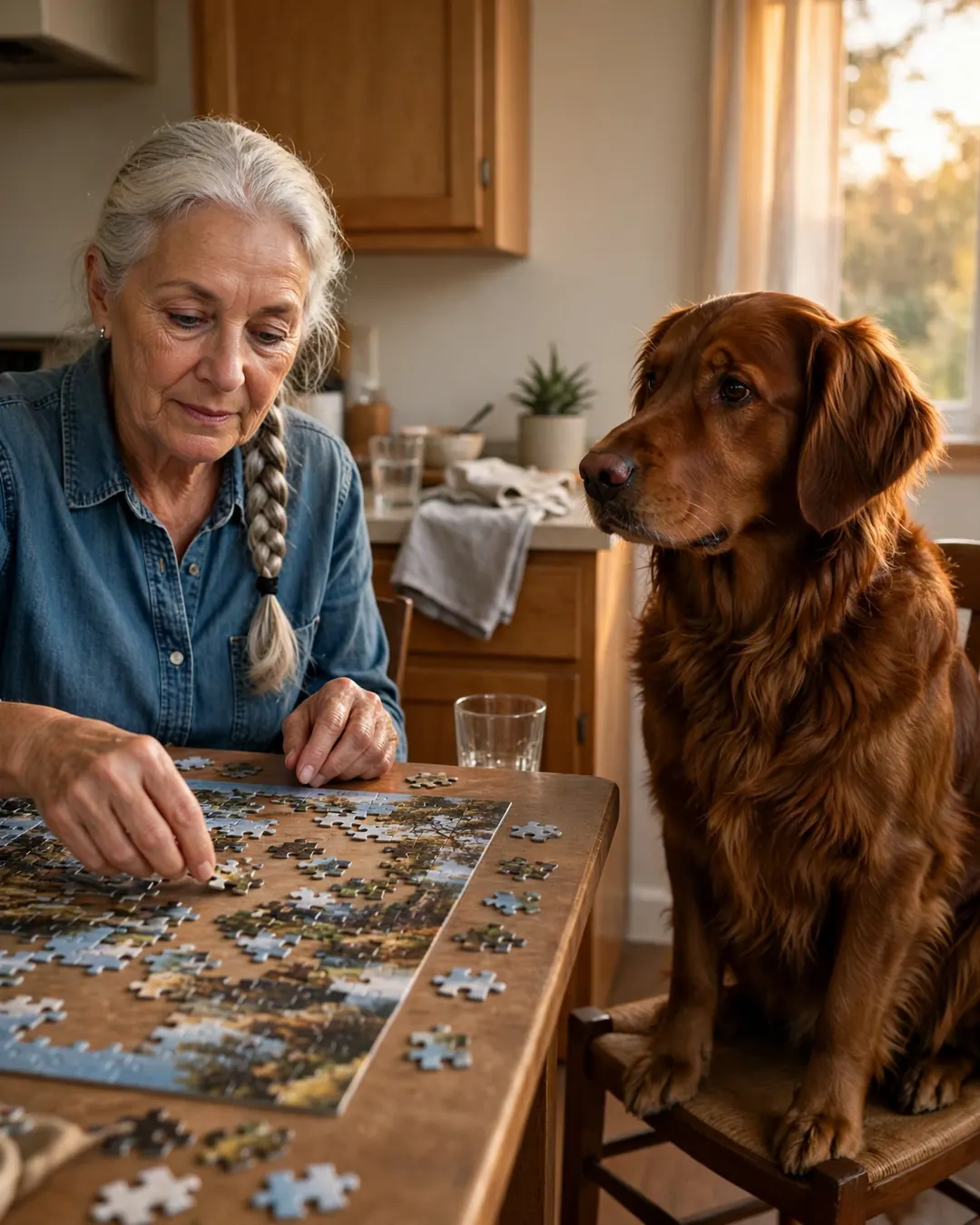
Golden late-day light spills through the kitchen window and across a half-finished jigsaw puzzle, a mountain-and-lake scene with a scatter of loose pieces still waiting at the edges. Ruth leans over the table in her denim shirt, braid hanging forward, pressing one piece into place with the focus of a surgeon. Across from her, perched on a wicker-seat chair as if he pulled it up himself, sits Rusty. His red-gold chest is puffed out, his paws are planted neatly together, and his gaze is fixed on the puzzle with deep, serious concentration. He is not helping, exactly, but he is absolutely supervising.
Puzzles, card games, crosswords, and other hobbies that make the brain work are popular with older adults for good reason: they are absorbing, social, and satisfying. Dogs benefit from the same idea. Mental exercise tires a dog out in a way a walk alone sometimes cannot, and intelligent breeds like Golden Retrievers especially enjoy having a job. Simple ideas include food puzzle toys, hiding treats around a room for a sniffing game, or short training sessions to learn a new trick. Ten minutes of thinking work can leave a dog relaxed and happy. One practical note for puzzle lovers: keep small pieces off the floor, because a curious dog may decide cardboard is a snack.
For now, Rusty is keeping his paws to himself and his nose politely above the table. When that last corner piece clicks into place, though, he will definitely expect some credit for the teamwork.