Grandpa Started Swaying to a Tune in the Kitchen. His Cat Had Something to Say.
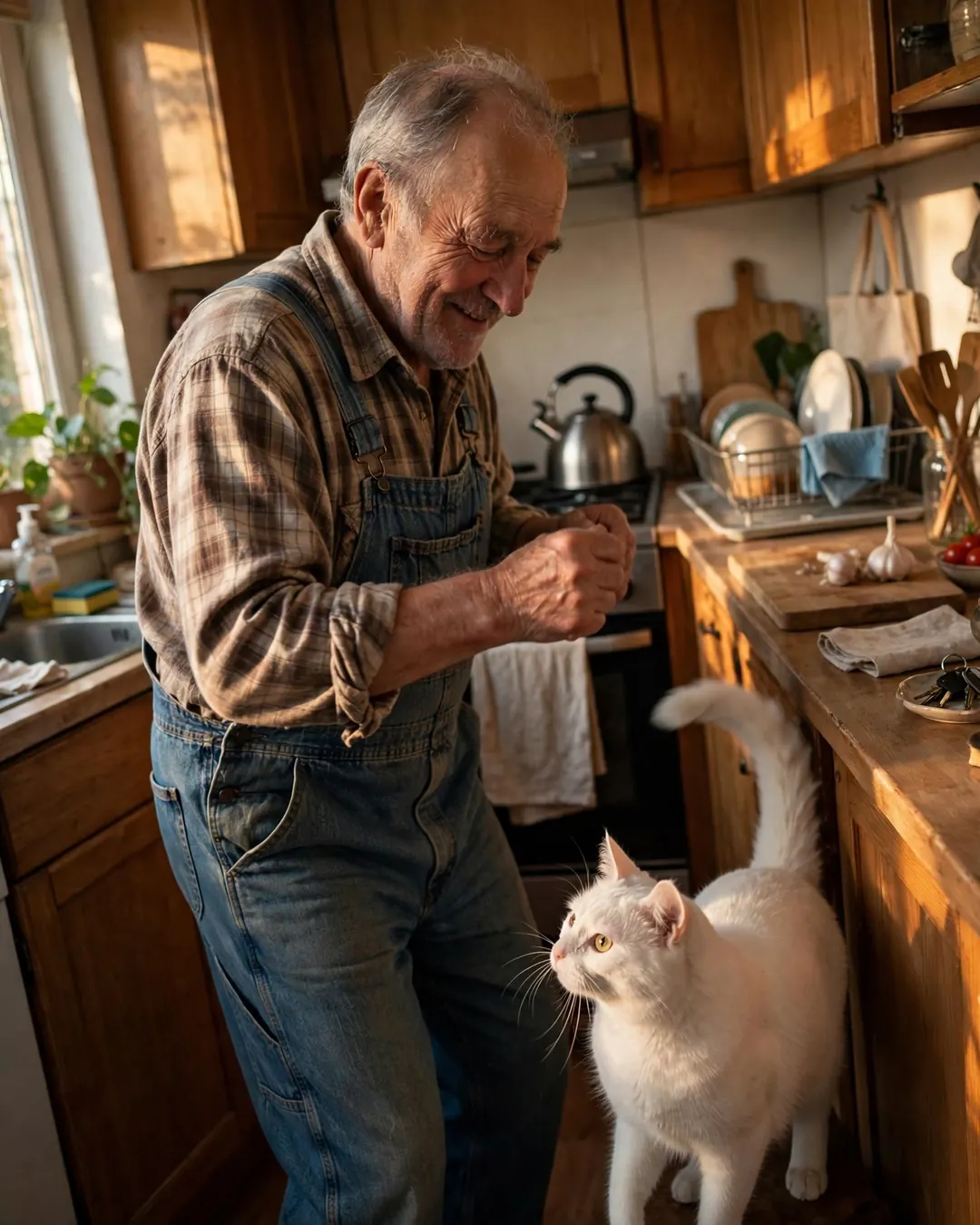
Warm light spills across honey-colored cabinets, a copper kettle and a dish rack full of plates, and Hank has started moving to some tune only he can hear. He sways in his plaid shirt and overalls, hands clasped near his chest, eyes crinkled shut in a happy grin. Down on the floorboards, Cotton has joined in her own way. She stands close at his feet, plumed tail swirled up high above her back and face tilted up toward him, her mouth slightly open as though she is chiming in. A cutting board with garlic and herbs and a sunny windowsill complete the scene.
If Cotton is talking, she is following a very human-focused habit. Adult cats rarely meow at one another; the meow is largely a sound they use with people. Over time, many cats develop a whole vocabulary for their owners, with different tones for greetings, requests for food, or wanting attention. Kittens meow to their mothers, and it seems that cats living with humans simply keep using that call because it works. Paying attention to when and how your cat vocalizes can tell you a lot about its needs and moods. A sudden change, such as much more yowling or a cat that goes unusually quiet, can be worth mentioning to your vet, especially in older cats.
Hank keeps swaying, Cotton keeps chattering, and this little kitchen has never felt more like a dance hall.