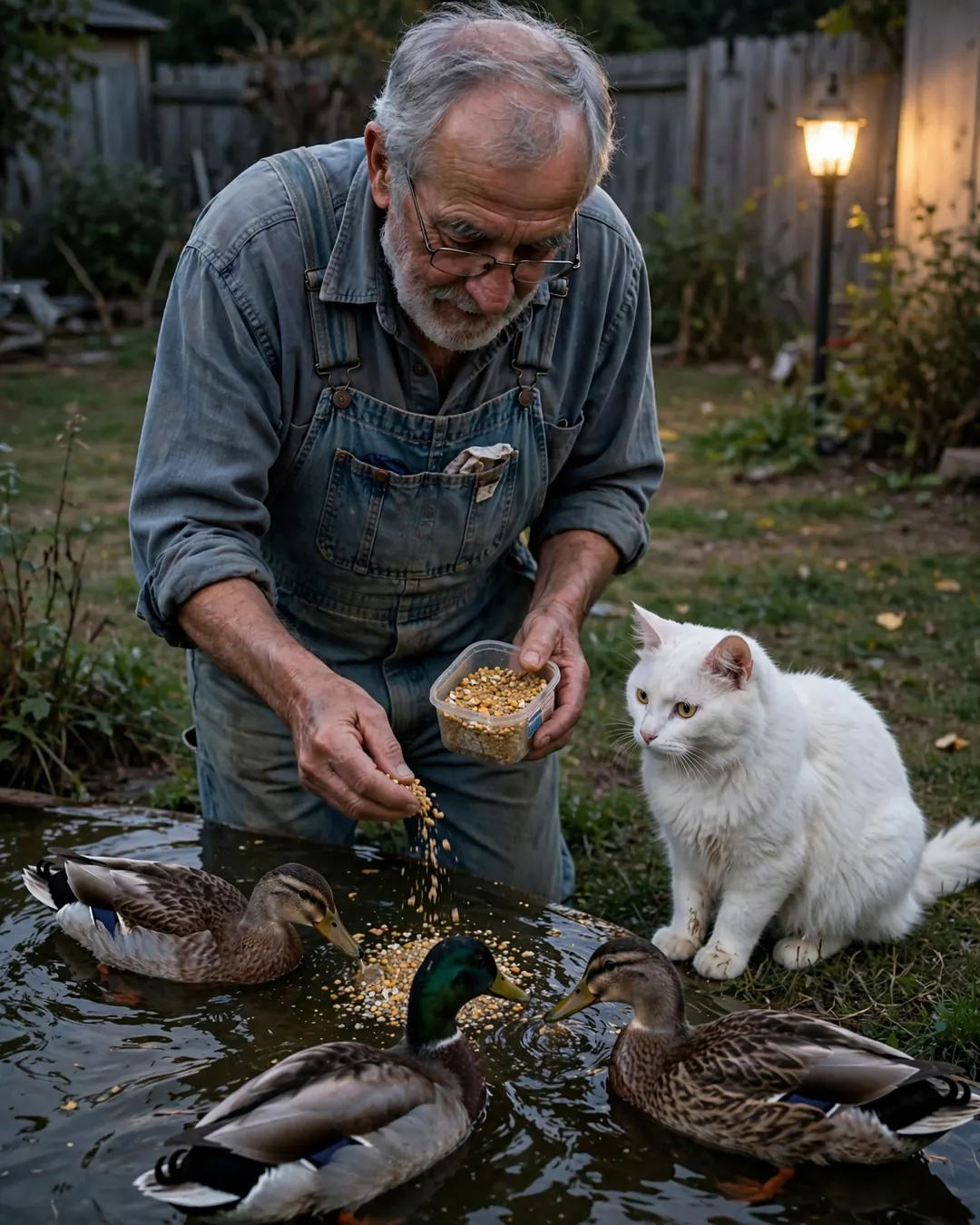
Four Ducks Paddled Up for Supper. The Cat on the Bank Surprised Everyone.
Dusk has crept over the backyard, a garden lamp is glowing by the fence, and the pond water has gone dark and glassy. Hank kneels at the edge in his chambray shirt and overalls, sprinkling grain from a plastic tub into the water, where a green-headed drake and three brown ducks paddle eagerly toward the floating seed. He watches them through his glasses with quiet satisfaction. Just a step away on the grass sits Cotton, white fur glowing in the low light, eyes on the ducks and posture remarkably relaxed for a cat so close to so many feathers.
Twilight is when cats truly come alive. Their eyes are built for low light, with large pupils that open wide and a reflective layer behind the retina, called the tapetum lucidum, that bounces light back through the eye. That layer is what makes cat eyes shine in headlights or a camera flash. It helps them see in conditions that look nearly dark to us, though they still cannot see in total darkness. Cats are also naturally most active around dawn and dusk, which is part of why evening outings make them so alert. Keeping cats indoors or close by after dark helps protect them from traffic, wildlife and getting lost.
The ducks get their supper, Hank gets a peaceful evening, and Cotton gets the best seat for the twilight show.