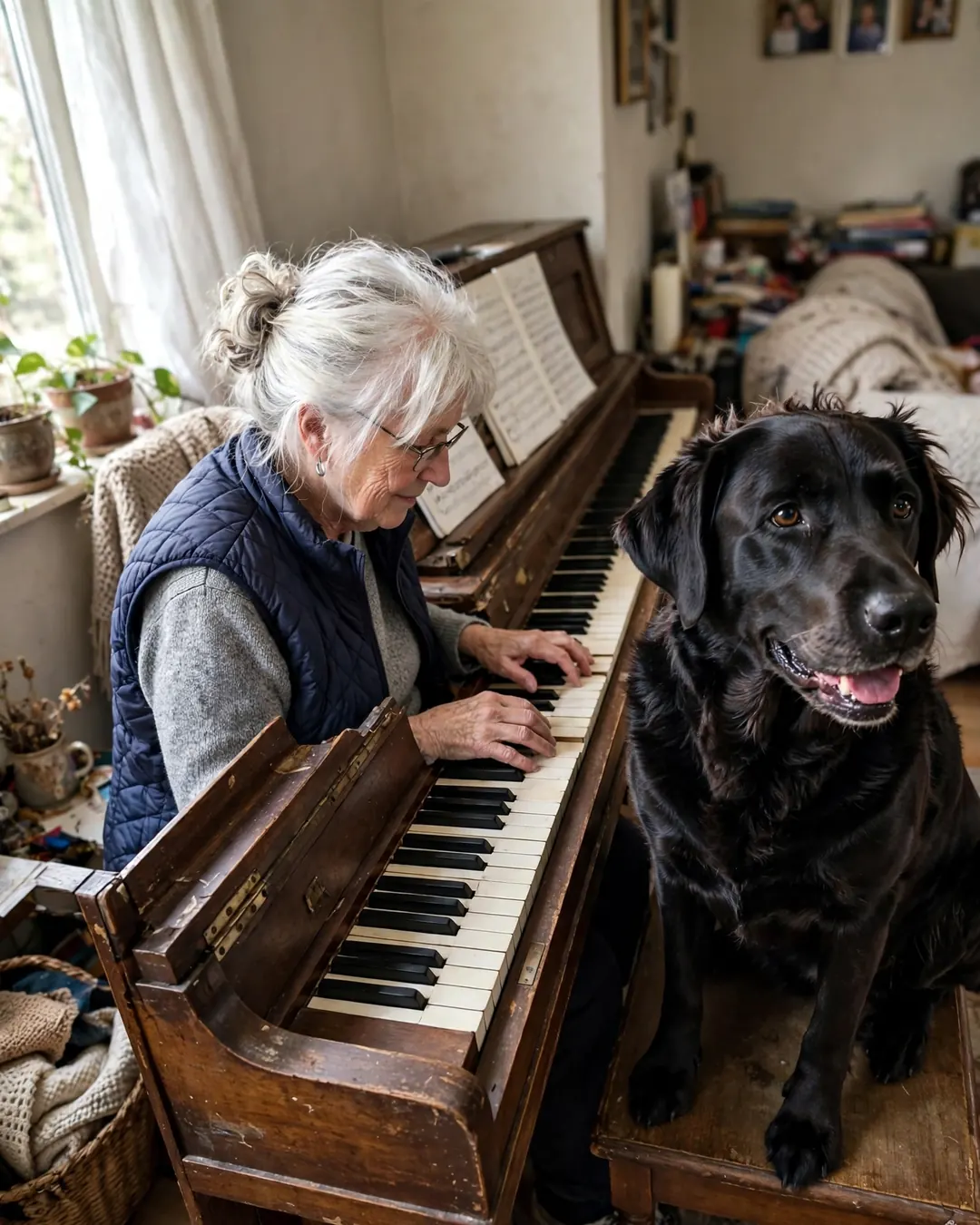
Dot Sat Down at the Piano and Her Duet Partner Hopped Up Too
The old upright piano has a few scratches and a warm, slightly out-of-tune sound, and Dot wouldn't change a thing about it. She sits with her fingers on the keys and her eyes on the sheet music, wearing a navy quilted vest over a grey sweater, her white hair gathered into a loose bun. Sitting upright on the end of the bench like a proud duet partner is Moose. The black Lab faces the room with his mouth open in a big, happy pant, pink tongue showing, ears relaxed, looking for all the world like he's waiting for applause. Plants line the windowsill, and family photos hang on the wall above.
Dogs can hear a wider range of frequencies than people, and many seem to notice music in their own way. Some studies have suggested calm, slow music may help dogs relax in stressful environments like shelters, while loud or chaotic sound can make them uneasy. Every dog is different, so watch your dog's body language. A relaxed, open-mouthed expression like Moose's, soft eyes, and loose ears are good signs. If a dog tucks its tail, yawns repeatedly, or leaves the room, it may prefer quieter surroundings. Letting them choose to stay or go is always the kindest approach.
Moose clearly loves his front-row seat. Whether it's the melody or just being next to Dot, he looks like the happiest musician in the house.