The Field Work Was Done, and the Truck Tailgate Became Something Else Entirely
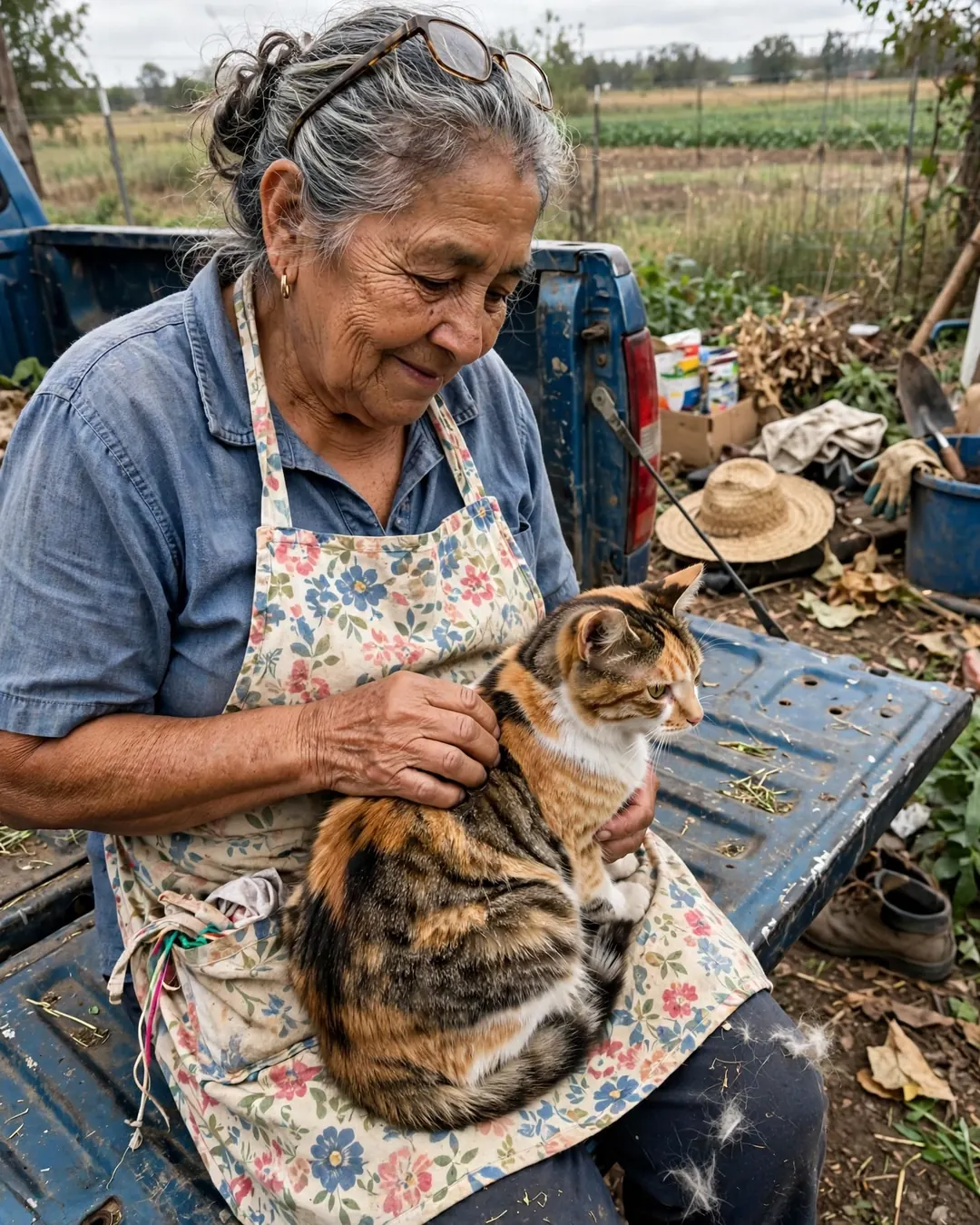
The work in the field is done for now, and the old blue pickup has become a resting place. Abuela Rosa sits on the open tailgate in a faded denim shirt and her floral apron, sunglasses pushed up on her head, a straw hat and a pair of boots tossed aside nearby. Canela is curled on her lap, front paws folded, getting slow strokes along her back while she gazes off toward the farmland. A few wisps of fur drift on the tailgate, and rows of green crops stretch toward a line of trees under a cloudy sky.
Stroking a cat is often as soothing for the person as it is for the pet. Many people find that the rhythm of petting and the sound of purring help them slow down and unwind, which is one reason pets are so often recommended as companions for older adults. Cats also tend to have strong preferences about where they like to be touched. Most enjoy gentle petting around the cheeks, chin, and the base of the ears, where they have scent glands, and along the back. Many are less keen on belly rubs or having their tail handled. Watching for cues helps: a relaxed cat may lean in, purr, or slow blink, while a twitching tail or rippling skin often means it is time for a break. Following those signals builds trust.
Out here, with nothing but open field and a quiet sky, there is no need to hurry. Rosa keeps petting, and Canela keeps purring, and the day slows down to match them.