Every Curl Grandpa Earl Carved Off Landed Right Under a Very Curious Nose
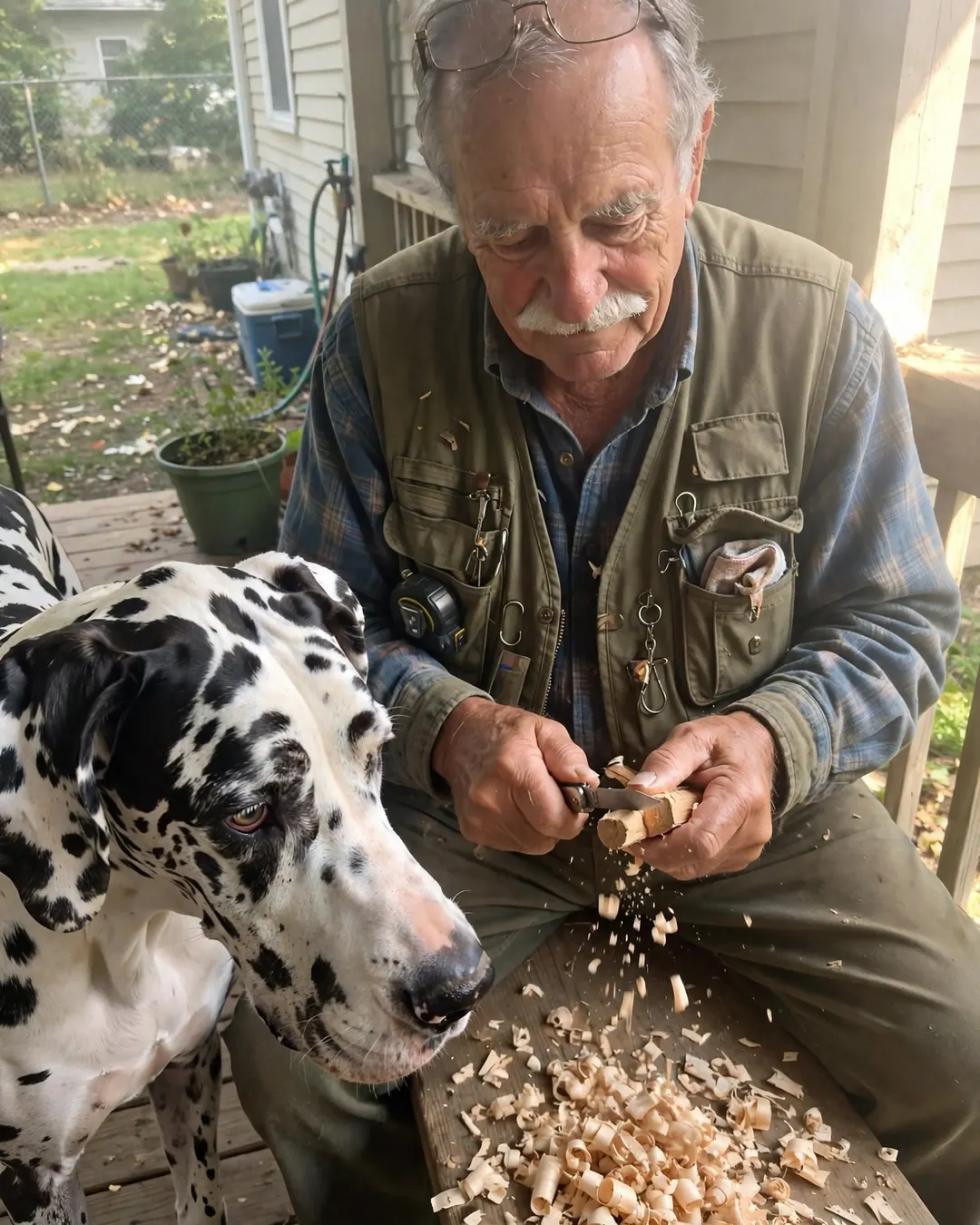
A small block of pale wood is slowly taking shape in Grandpa Earl's hands, and every stroke of his pocketknife sends another curl tumbling down to join the pile on the bench. He sits on the porch in his plaid shirt and fishing vest, sunglasses pushed up on his head, mustache set in a look of total concentration. At his elbow, Domino has rested his long harlequin muzzle right at the edge of the bench, black nose inches from the falling shavings, eyes cast down in deep fascination. Behind them, a garden hose, potted plants, and a bin sit beside the house, with autumn leaves scattered across the yard.
Dogs are naturally curious about anything that moves, smells new, or falls from above, and wood shavings check all three boxes. Still, wood isn't a good snack. Splinters can hurt a dog's mouth or digestive tract, and some woods, varnishes, and stains can be irritating or toxic. Sharp carving tools also need careful handling around a dog's nose. Woodworkers with dogs often sweep up shavings promptly and keep tools out of reach. Offering a sturdy chew toy made for large breeds while you work gives a big dog like a Great Dane something safe to focus on instead.
Whatever Earl is carving, Domino has watched every bit of it come to life. Maybe it'll turn out to be a little wooden dog with very long legs.