Her Favorite Song Came On, So Abuela Rosa Started Dancing. Mango Joined In His Own Way.
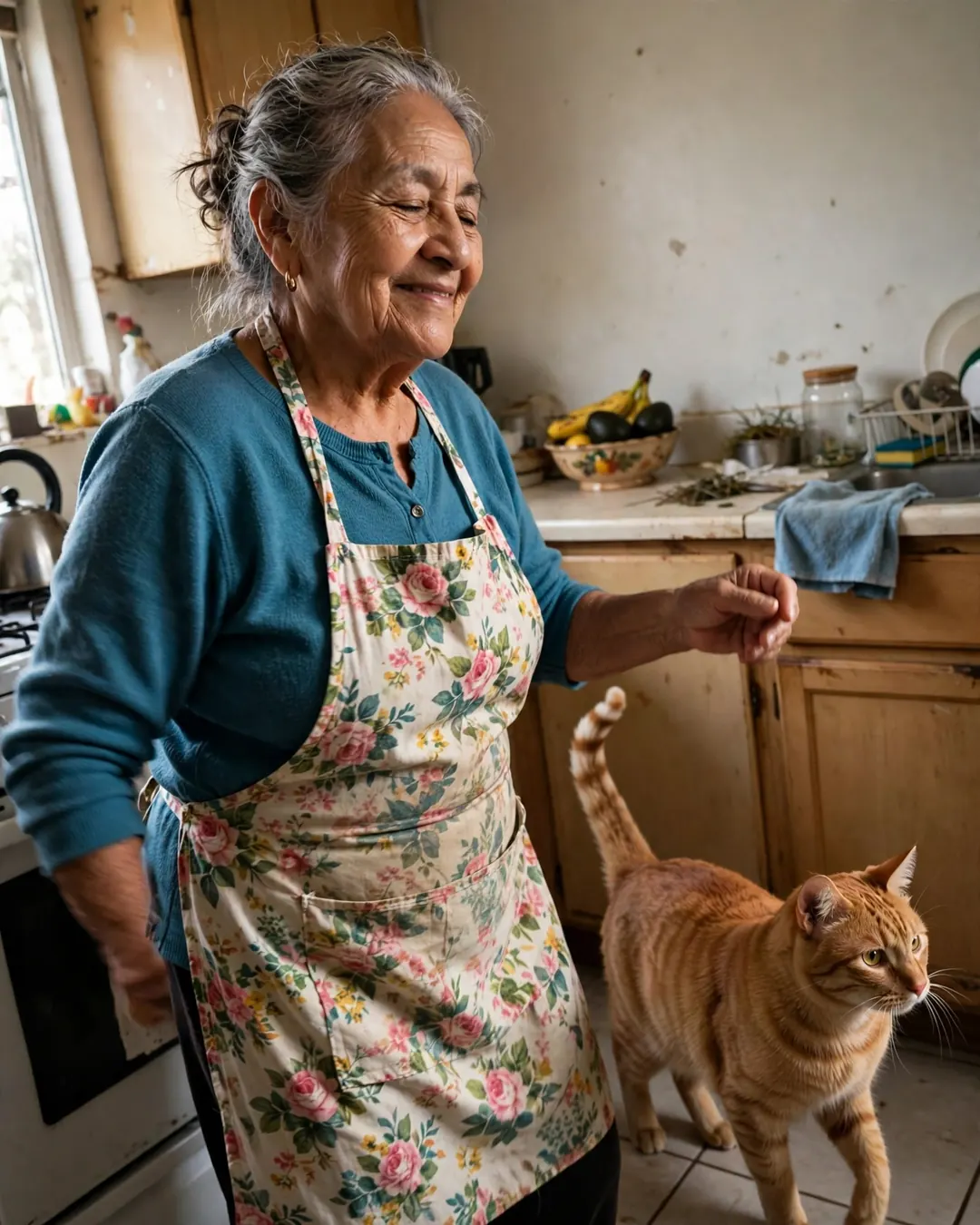
There must be a good song on the radio, because Abuela Rosa has stopped mid-chore to dance. Eyes closed, smile wide, she sways across the tile floor in her teal sweater and long floral apron, one hand held out as if leading an invisible partner. Mango has taken the job instead. He trots alongside her with his tail straight up and curling at the tip, looking off toward the door like a dance partner who is pretending not to be part of the show. Bananas, a dish towel, and glass jars crowd the counter behind them.
A cat's tail is one of the best ways to read its mood. A tail held high, especially with a little hook or curl at the end, is generally a friendly, confident greeting, the cat version of a happy wave. A puffed tail signals fear, and a tail lashing hard from side to side often means irritation, so that is the moment to give a cat space. Ears, eyes, and whiskers add to the picture. Learning these signals helps people know when a cat wants to join in and when it would rather watch from a distance.
Right now, Mango's tail says he is glad to be here, even if his face says he is far too dignified to dance. Abuela Rosa does not mind. She has the music, the kitchen floor, and her favorite orange shadow keeping step, and that is plenty for one happy afternoon.