Grandma Edie Went Out to Feed the Hens. Pebble Insisted on Coming Along.
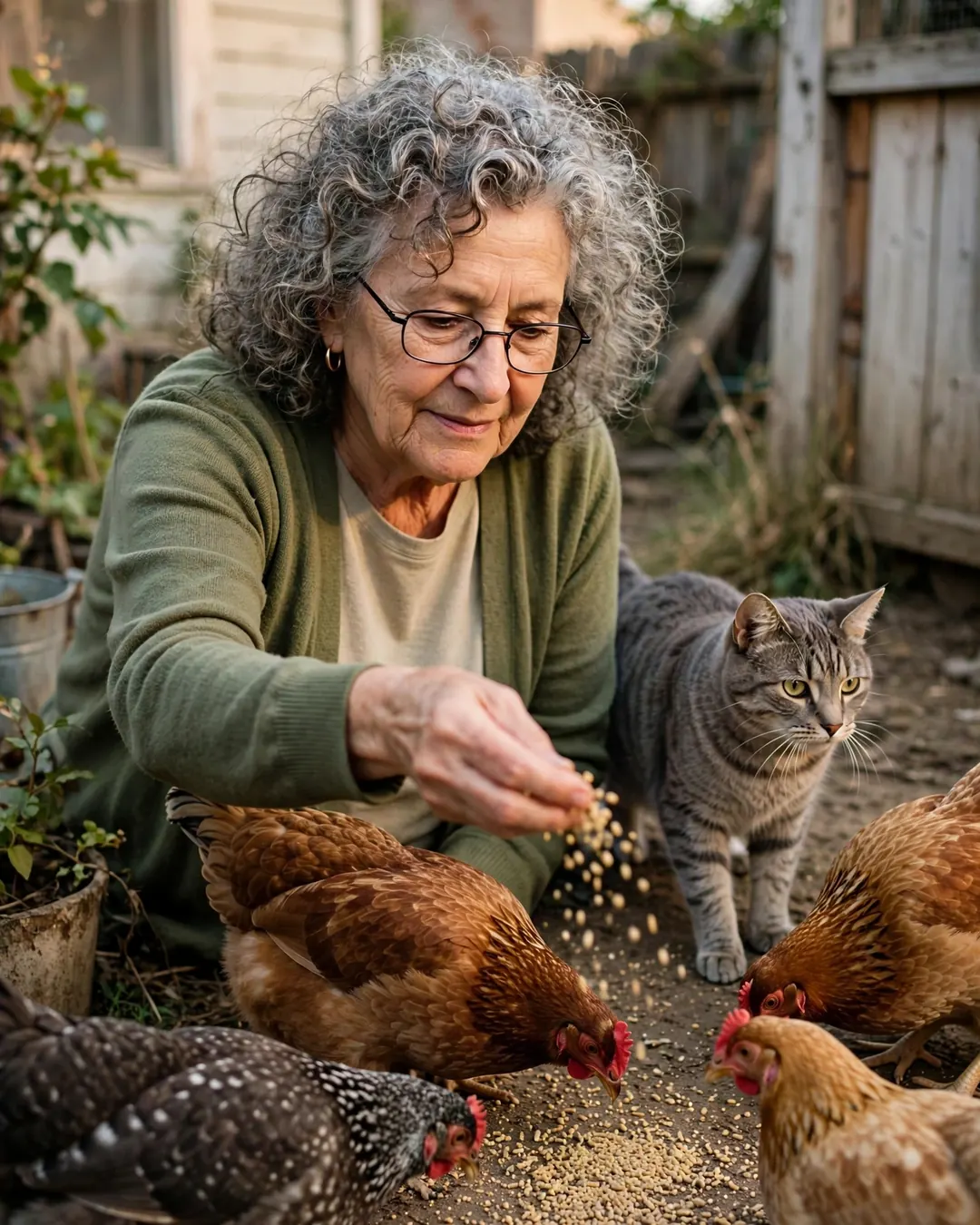
Golden late-day light slants across the backyard, catching every loose curl of Grandma Edie's silver hair. Bundled in an olive cardigan, she crouches low and lets a shower of grain fall from her fingers, and the hens rush in, speckled and russet, pecking in quick bursts. Pebble, her sleek gray tabby, has wandered right into the flock, standing tall on the packed dirt and eyeing the scene with mild curiosity. A weathered fence, a galvanized bucket, and a few potted plants frame this tidy little homestead corner.
Backyard chickens have become popular in many American towns, and a calm adult cat can often coexist with them. Grown hens are sturdy and quick to defend their space with a sharp peck, so many cats simply decide they are not worth the trouble. Still, cats can carry germs from the coop into the house, and chickens can spread salmonella to people, so washing hands after handling birds, feed, or eggs is always wise. Keep chick brooders well covered, since baby chicks are small enough to tempt any cat. Feed stored in a sealed metal bin also discourages mice, which cuts down on visitors of every kind.
For now, Pebble seems content to play the role of quiet supervisor while the hens do all the eating. Grandma Edie talks softly to all of them, birds and cat alike, and the yard hums with the comfortable sounds of an ordinary evening.