The Barn Door Was Ajar, and Two Curious Faces Pushed Into the Gap
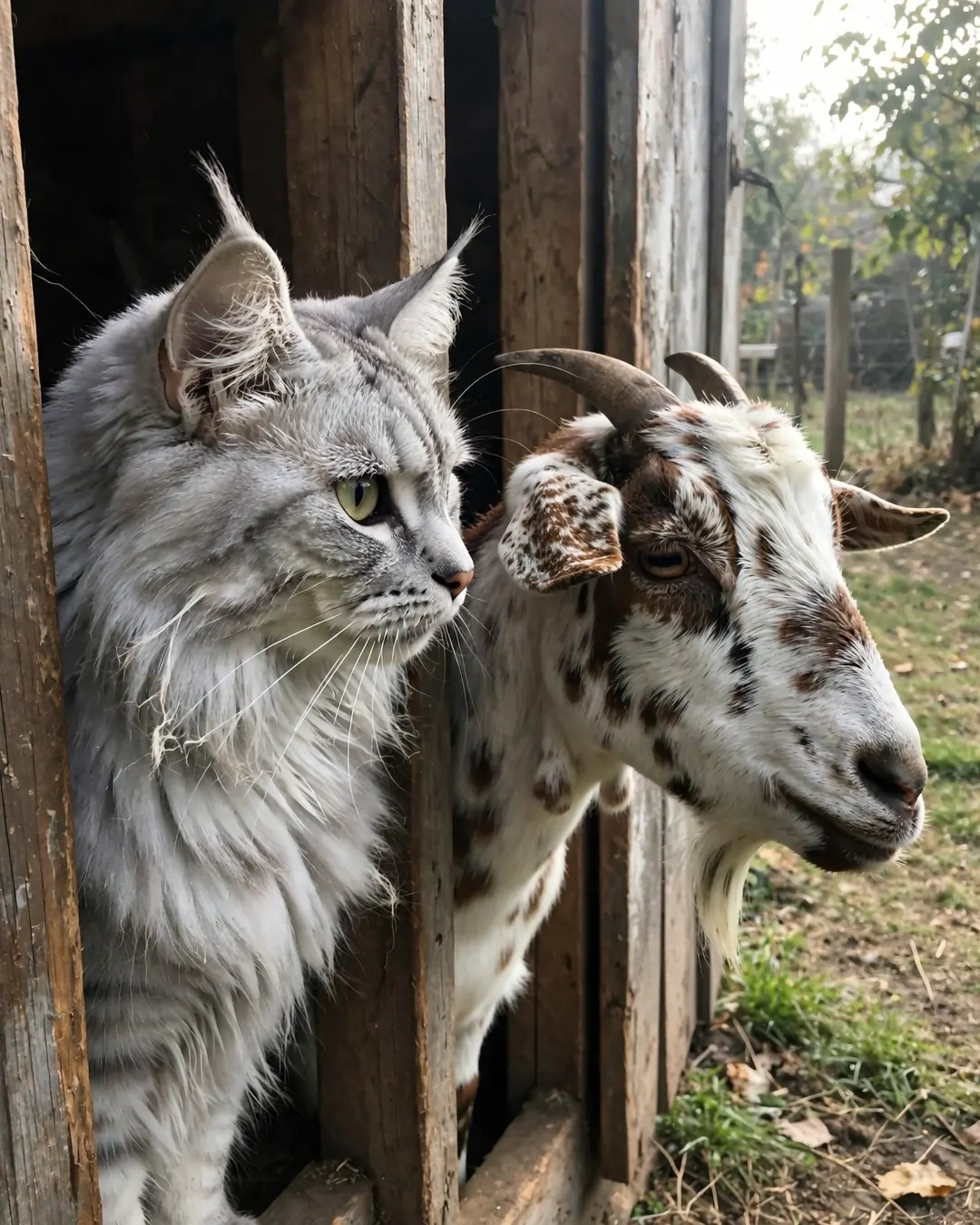
The old barn door stands ajar, and two curious faces have pushed their way into the gap to check on the world outside. On the left, a silver Norwegian Forest Cat with tufted ears and a thick, flowing ruff gazes out with sharp green eyes. Right beside him, a white goat splashed with chestnut and dark brown spots leans forward, her long curved horns sweeping back over her head and a wispy beard at her chin. Their cheeks are nearly touching. Beyond the weathered boards, a patch of green grass, a fence post, and a few fallen leaves catch the soft morning light.
Goat horns are not just for show. They are living structures with a bony core and a blood supply, and they help goats regulate body temperature as well as defend themselves and establish rank in the herd. Whether goats keep their horns is a decision many owners make with their vet, weighing breed, housing, and safety. Horned goats can get their heads stuck in woven wire fencing or feeders, so fences with larger openings or solid panels are often recommended. They can also accidentally injure other animals or people during play, so gentle handling and plenty of space help everyone stay safe.
These two seem perfectly comfortable sharing a doorway, horns and whiskers alike. Whatever caught their attention outside, they are clearly going to investigate it together.