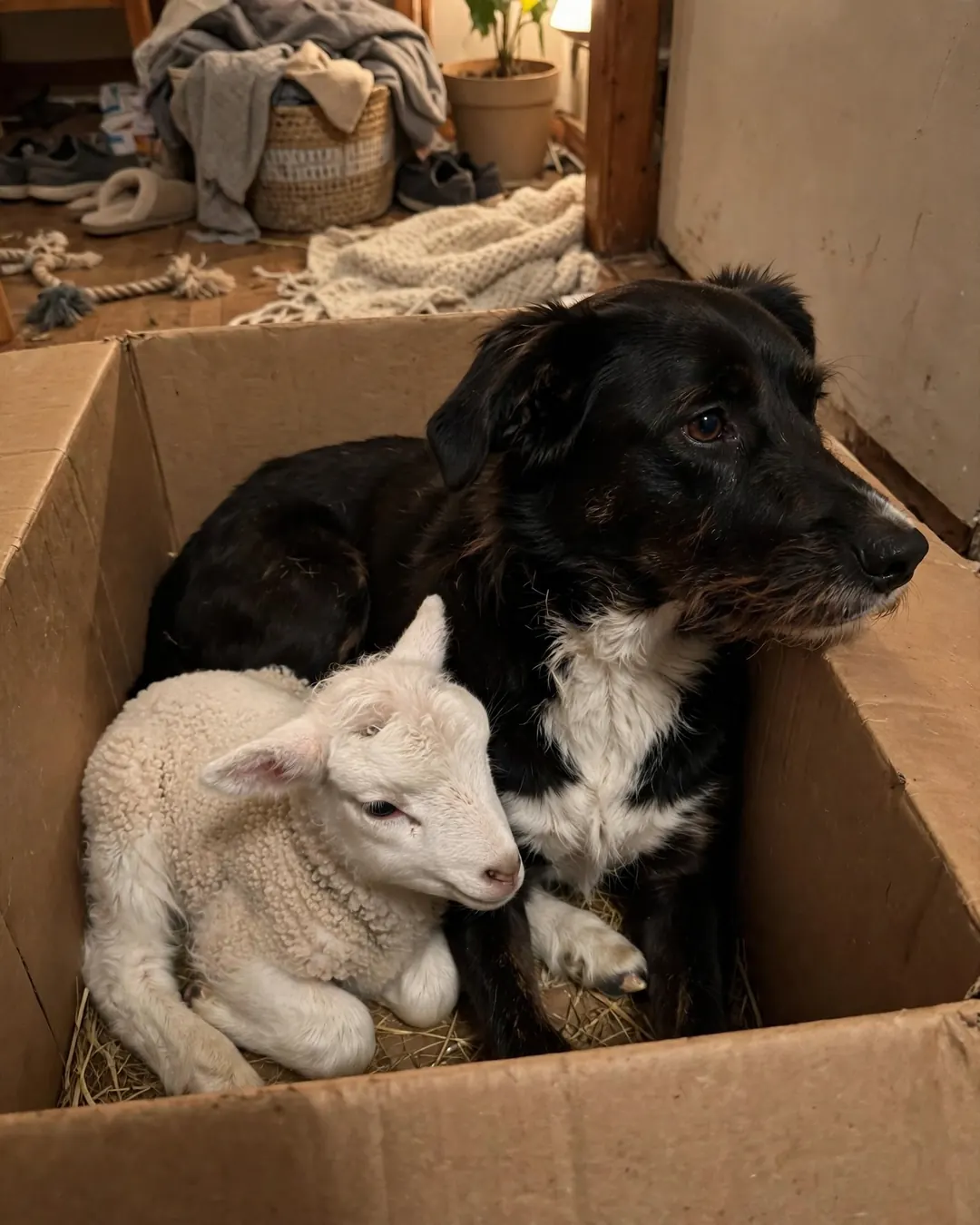
A Rescue Mutt Squeezed Into a Cardboard Box. Then the Box Got Fuller.
If it fits, they sits, and apparently that rule is not just for cats. A scruffy black rescue mutt with a white blaze on his chest has wedged himself into a big cardboard box lined with straw, and a fluffy white lamb has settled in right beside him, legs folded neatly underneath. The dog looks up with soulful brown eyes and slightly wiry whiskers, while the lamb gazes calmly ahead. Behind the box, the room is cozy and a bit cluttered: a basket heaped with sweaters, sneakers and slippers on the floor, a rope toy, a knit blanket, and a potted plant by a glowing lamp.
Mixed-breed rescue dogs come in every size, shape, and personality, and many make wonderful, adaptable companions. Because their backgrounds can be a mystery, it helps to let a new rescue settle in at its own pace. Many shelters and trainers describe a gradual adjustment, where a dog may be shy at first and reveal more of its true personality over the following weeks and months. Predictable routines, a quiet space of its own, and patient, reward-based training help a rescue feel secure. Your vet can also give a newly adopted dog a full checkup and get vaccinations up to date.
This pup, at least, seems to have settled in just fine. He has a box, a bed of straw, and a woolly roommate who does not hog the space. Sometimes home is less about the room and more about who is sitting next to you.