A Muddy Newfoundland Sat Proudly Beside the Hole He Had Just Dug
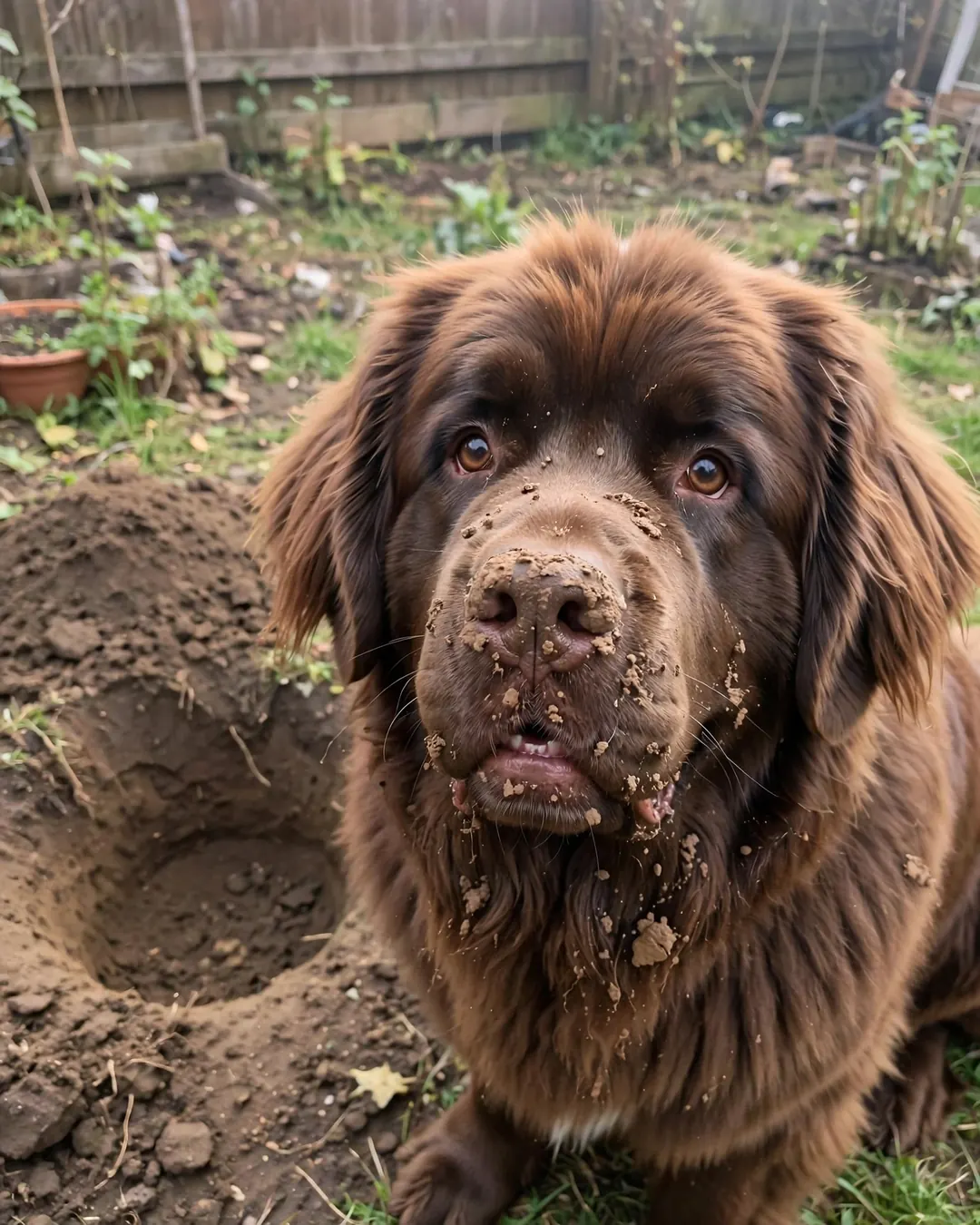
Mud clings to the nose, chin, and whiskers of a big brown Newfoundland, and a tiny smile plays across his face. He sits in a backyard garden next to a deep, freshly dug hole, the heaped soil still dark and crumbly. His amber eyes look up with the same soft sweetness as ever, and his thick, shaggy coat is speckled with earth.
Behind him, a wooden fence frames the yard, clay pots sit at the edge of the grass, and a few plants lean at the border of the garden. The sky is gray and calm. We'll call him Digger. He is huge, gentle, and apparently very interested in whatever might be beneath the flowerbed.
Digging is a natural dog behavior. Dogs dig to cool off, to hunt, to bury treasure, or just because it feels good, and larger working breeds like Newfoundlands can be powerful diggers. To keep your garden intact, offer a designated digging spot with loose soil and buried toys, and praise him when he uses it. Make sure he has shade, fresh water, and enough exercise, since digging can be a sign of boredom. Check your yard for hazards, such as fertilizers, cocoa mulch, or plants that are toxic to dogs, and keep these out of reach. Newfoundlands have a thick double coat, so they are happiest in cool weather. A good brushing after a dig helps keep that coat free of mats and burrs.
Digger sits beside his work, big and muddy and proud, certain that the hole will be useful someday.