Most vitamins have to come from food. You can't make vitamin C by sitting still, and no amount of daydreaming produces iron. Vitamin D is the oddball. Your body can make it on its own, using nothing more than sunshine falling on your skin.
Here's how it works in short. When a particular kind of ultraviolet light, called UVB, hits your skin, it reacts with a cholesterol-like substance there and starts turning it into vitamin D. Your liver and kidneys then convert it, in two more steps, into the active form your body uses. For most people, the skin supplies more vitamin D than food does.
Step One: A Reaction in Your Skin
Deep in the outer layer of your skin sits a compound called 7-dehydrocholesterol. When UVB rays strike it, the light breaks open part of the molecule and creates something called previtamin D3. That previtamin then rearranges itself on its own into vitamin D3, also known as cholecalciferol.
Only certain wavelengths of light do the job, and they're part of ordinary sunlight. That detail explains a common surprise: sitting by a sunny window doesn't help much. Window glass blocks nearly all UVB light, so you can feel the warmth without making much vitamin D at all.
Steps Two and Three: The Liver and Kidneys
The vitamin D made in your skin isn't ready to work yet. First, the liver converts it into a form called calcifediol. That's the one doctors usually measure in a blood test to check a person's vitamin D levels.
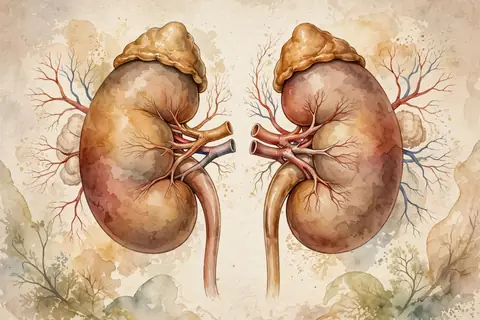
Next, the kidneys and certain immune cells convert calcifediol into calcitriol, the biologically active form. Calcitriol locks onto receptors found in tissues all over the body. One of its best-known jobs is helping your intestines absorb calcium, which your bones need. Because it behaves so much like a hormone, some scientists argue the name vitamin D is a bit of a misnomer.
Why Some People Make Less
Plenty of everyday things affect how much vitamin D your skin makes. People living far from the equator get less UVB in winter, and blood levels by the end of winter can be a third to half lower than at the end of summer. Air pollution, indoor living, clothing, and sunscreen also cut down on UVB reaching the skin.
Skin color matters too. Melanin, the pigment that makes skin darker, absorbs UVB and so slows vitamin D production. Age plays a role as well, because older skin makes less of the starting compound. Even so, older people can still make enough if enough skin gets sunlight.
Since sun exposure also carries a risk of skin damage and skin cancer, there's no one-size-fits-all answer for how much is right. If you're wondering about your own vitamin D, talk to your doctor.
From Cod Liver Oil to Fortified Milk
Long before anyone understood the chemistry, people noticed a pattern. In the 1800s, starting in Germany in the 1820s, doctors observed that young children given cod liver oil didn't develop rickets, a disease that softens bones. Spoonfuls of the famously fishy oil became a childhood ritual in northern Europe and the United States into the 1950s.
Researchers finally identified and named vitamin D in 1922. By the early 1930s, cow's milk was being fortified with it. Today, few foods naturally contain much vitamin D. Fatty fish are the best natural source, while eggs, cheese, and beef liver offer modest amounts.
So the next time you step outside on a bright day and feel the sun on your face, you can appreciate the quiet chemistry happening in your skin. It's one of the few vitamins you can make just by stepping outdoors.