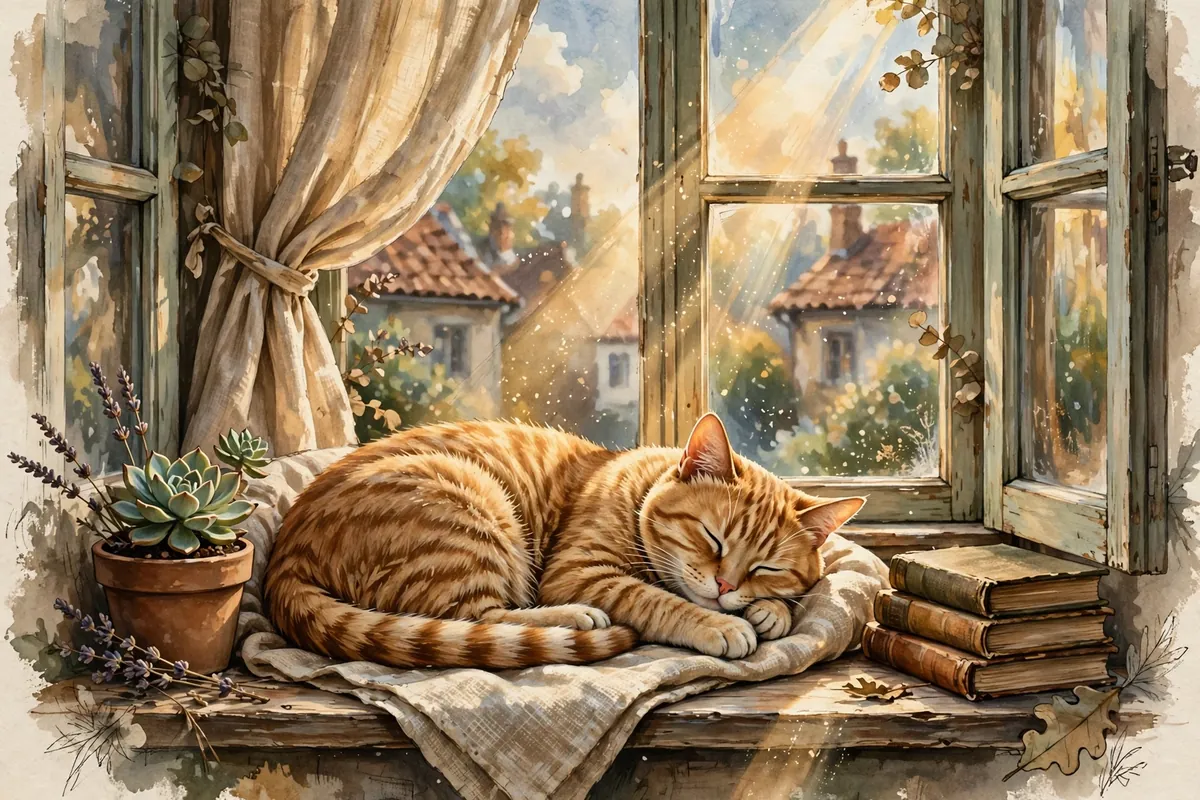
If you live with a cat, you've probably wondered whether it does anything besides sleep. It dozes on the bed, on the laundry, in a box and in that one perfect patch of sunlight. Some days it seems like your cat is awake only long enough to eat.
The short answer is that cats sleep a lot to save energy, and that's tied to their life as meat-eating hunters. Cats usually sleep between 12 and 16 hours a day, with 13 to 14 hours being about average. Some cats sleep as much as 20 hours, and they tend to sleep even more as they get older.
Built for Short Bursts
The house cat is an obligate carnivore, which means it needs a diet based mostly on meat. It has a strong, flexible body, quick reflexes, sharp teeth and claws made for catching small prey like mice and birds.
Cats hunt in one of two ways. Sometimes they stalk their prey actively, and sometimes they wait in ambush until a creature wanders close. Either way, hunting is a game of patience followed by a sudden, explosive pounce. Long rest periods help a cat save energy for those quick bursts of action.
Meat Eaters Sleep the Most
Cats aren't alone in this. Among mammals, scientists have noticed a link between what an animal eats and how long it sleeps. The daily need for sleep is highest in carnivores, lower in omnivores and lowest in plant-eaters.
Humans are omnivores, and we actually sleep less than many other omnivores. Next to a cat, we barely sleep at all.
Dawn, Dusk and Your Schedule
Cats are what biologists call crepuscular, meaning they tend to be most active around dawn and dusk. That's prime time for the small animals they would naturally hunt, and cats are built for it. They can see in about one sixth of the light that humans need, thanks in part to a reflective layer at the back of the eye.
That explains the cat who races down the hallway at 5 a.m. Still, house cats are flexible. Their behavior is shaped by the people around them, and many adapt to their owners' sleeping habits to some extent.
The Real Meaning of a Cat Nap
Ever wonder where the phrase cat nap comes from? It refers to the way cats often drift into a light sleep for just a short while. A cat can look completely out cold and still have its ears swiveling at every sound. It's a handy skill for an animal that wants to rest without missing a thing.
Cats do sleep deeply too. During short periods of rapid eye movement sleep, their muscles often twitch. Those little twitches suggest they may be dreaming, though nobody knows what about. A mouse chase seems like a pretty good guess.
Still a Little Bit Wild
Cats have changed surprisingly little since they started living alongside people. Their anatomy and behavior shifted only slightly during domestication, and they're still able to survive in the wild. That long, lazy afternoon nap is part of the same toolkit their wild relatives depend on.
Of course, if your cat's sleep habits change suddenly, it's worth a call to your vet. Otherwise, let the snoozing hunter be. It's just recharging for its next big adventure, even if that adventure is a trip to the food bowl.