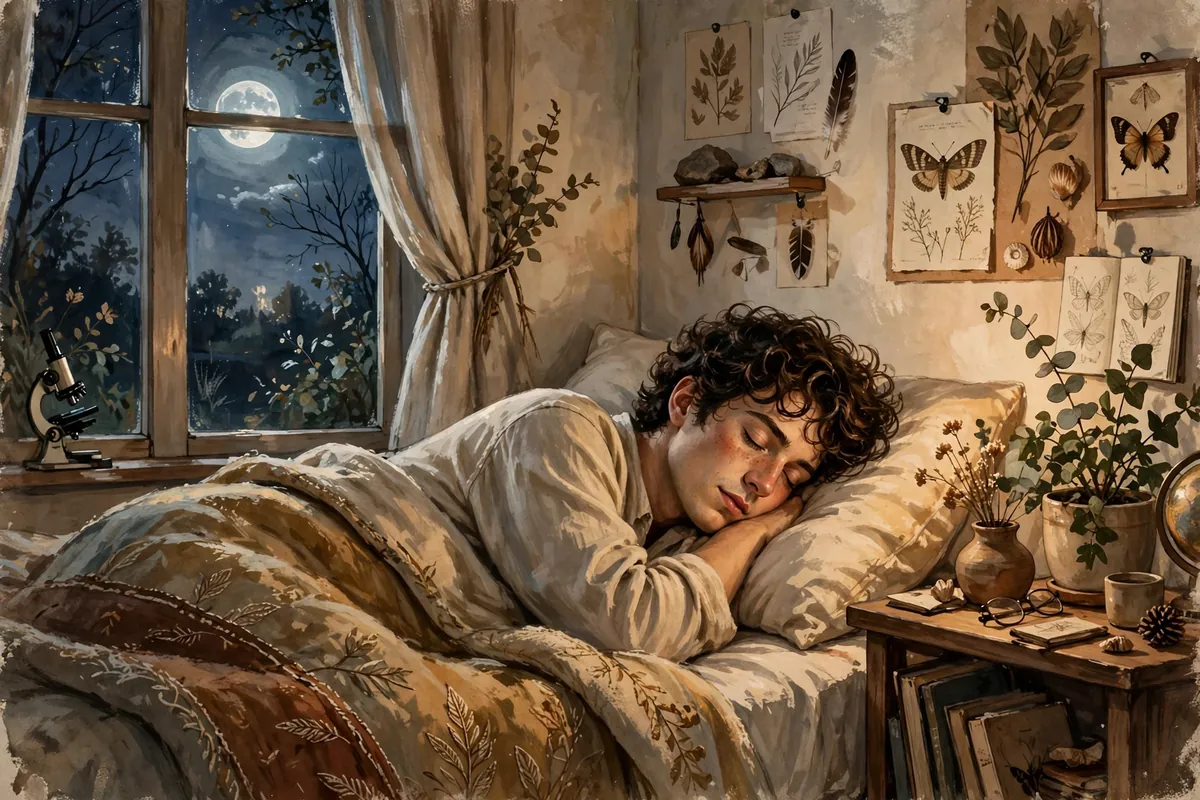
Maybe you've heard someone across the room suddenly say something perfectly clear in the middle of the night. Maybe that someone was you, and you only found out the next morning. Sleep-talking can be funny, a little eerie, or just plain confusing. So what makes us chatter when we're supposed to be out cold?
The short answer is that sleep-talking, which doctors call somniloquy, is a common and usually harmless sleep quirk. It can happen in any stage of sleep, but it most often happens during deep, non-dreaming sleep or during brief partial wake-ups from it. Things like stress, sleep deprivation, alcohol, and fever can make it more likely, and it seems to run in families.
Not Always Dream Talk
Many people picture sleep-talkers acting out their dreams. That can happen. When it occurs during REM sleep, the stage most linked with vivid dreaming, words spoken in a dream can slip out loud. Scientists call this a "motor breakthrough."
But here's the twist: during healthy REM sleep, the body is almost completely paralyzed. The brain shuts down most muscle activity, a state called REM atonia, which keeps us from acting out our dreams. That's why talking during REM sleep is usually considered part of a separate condition. Most everyday sleep-talking comes from deep non-REM sleep instead.
From Mumbles to Speeches
Sleep-talking comes in many styles. Some people mumble a few sounds. Others shout, and some deliver long speeches that are often hard to make out. It can even happen many times in one night.
One American songwriter turned it into an unusual claim to fame. Dion McGregor narrated his dreams aloud at conversational volume, and in 1964 Decca Records released an album of his sleep-talking called The Dream World of Dion McGregor. A book of transcripts, illustrated by Edward Gorey, came out the same year. McGregor also co-wrote a song that Barbra Streisand recorded, but his nighttime monologues are what people remember.
Who Talks in Their Sleep
Sleep-talking is especially common in childhood. About half of young children do it at least once a year, and 20 to 25 percent do it at least once a week. Many people talk in their sleep less often after about age 25, though some start for the first time as adults.
Family history seems to matter. Research going back to the 1960s found that sleep-talking parents are more likely to have children who sleep-talk. The true numbers are hard to pin down, though, because sleep-talkers usually don't remember doing it or don't know they do.
When to Pay Attention
On its own, sleep-talking is typically harmless, though it can wake up a bed partner and cause some confusion, especially if it sounds like real conversation. It can also show up alongside other sleep problems like sleepwalking, night terrors, or sleep apnea.
Sleep-talking that's dramatic, emotional, or profane may be a sign of another sleep disorder, and in rare cases adult-onset sleep-talking is linked to other medical issues. If your sleep-talking changes suddenly or comes with other symptoms, talk to your doctor.
Most of the time, though, a little midnight chatter is just one of the odd things our brains do on autopilot. If your partner reports that you gave a speech last night, you can take comfort in this: you're in very good company.