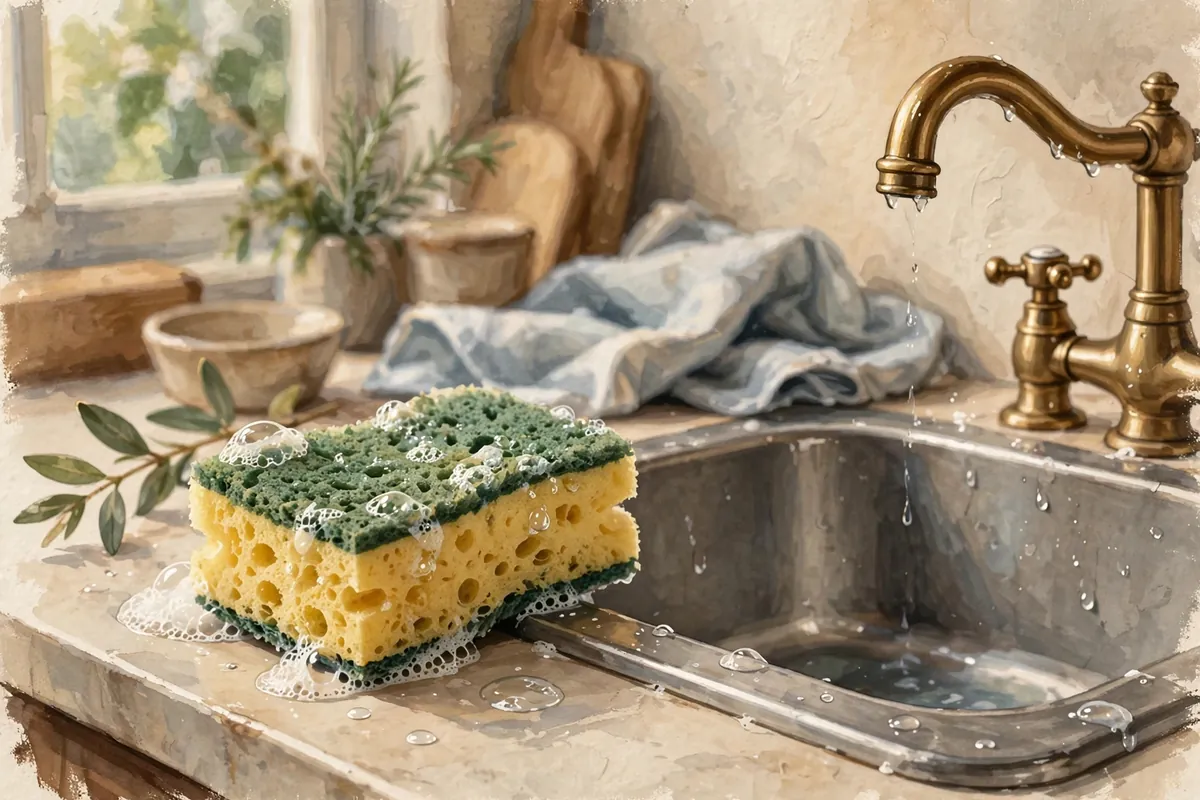
It's probably sitting next to your sink right now: a soft yellow block with a scratchy green layer on one side. We grab it a dozen times a day without a second thought. But the kitchen sponge has a much longer, stranger history than you'd guess.
The first sponges people used for cleaning were real sea sponges, harvested from the ocean. They were common in ancient Greece and Rome. The synthetic sponge in your kitchen only became possible in the 20th century, after the invention of polyester in the 1920s and the start of commercial polyurethane foam production in 1952.
Sponges in the Ancient World
The earliest known references to sponges used for hygiene come from ancient Greece. Athletes at the Olympic Games bathed with sea sponges soaked in olive oil or perfume before competing.
Sponges even show up in Homer's Odyssey. The god Hephaestus cleans his hands, face, and chest with one, and servants in the palace of Odysseus wipe down the tables with sea sponges after meals. The philosophers Aristotle and Plato mentioned sea sponges in their writings too.
The Romans used sponges widely for hygiene. Believing sponges had healing properties, they also used them to clean wounds. The word sponge itself comes from the ancient Greek word spongos. Even the New Testament mentions one: a sponge soaked in vinegar offered to Jesus at the crucifixion.
Diving for Sponges in Florida
Natural sponges became big business, even in America. In Tarpon Springs, Florida, the first local sponge business started in the 1880s. In 1905, John Cocoris introduced sponge diving there by recruiting divers and crews from Greece.
Sponge diving became one of Florida's leading maritime industries, worth millions of dollars a year. Disaster struck in 1947, when a red tide algae bloom wiped out the Gulf sponge fields, and many divers switched to shrimping. The sponges eventually recovered, and a small sponge industry still operates there today. The town's Greek heritage earned it the nickname Little Greece.
The Synthetic Takeover
Today most sponges are synthetic. The common soft yellow dish sponge is usually polyester, and the scratchy side often uses polyurethane. Cellulose sponges, made from wood fiber, are tougher and pricier. They're considered more eco-friendly because they're biodegradable.
Some scrubbers come from plants. The luffa, or sponge gourd, is a vine grown for its fruit, which can be dried into a fibrous sponge. Growers even breed varieties for the size and quality of the sponges they produce.
Natural sea sponges are still traded. Countries around the Caribbean and the Mediterranean are the biggest exporters, and Tunisia is the world's main exporter.
Keeping Your Sponge Clean
There's a downside to all that absorbency. A sponge left wet between uses can grow harmful bacteria. Studies have found some sponges can harbor Salmonella for more than a week. Letting your sponge dry out between uses helps.
A 2009 study found that both the microwave and the dishwasher were effective ways to clean sponges. If you use the microwave, make sure the sponge is thoroughly wet first. Some people who tried it at home with dry sponges started fires.
So the next time you wipe a counter, remember that your trusty sponge is part of a tradition that stretches back to Olympic athletes and Greek divers. It just got a lot more colorful along the way.