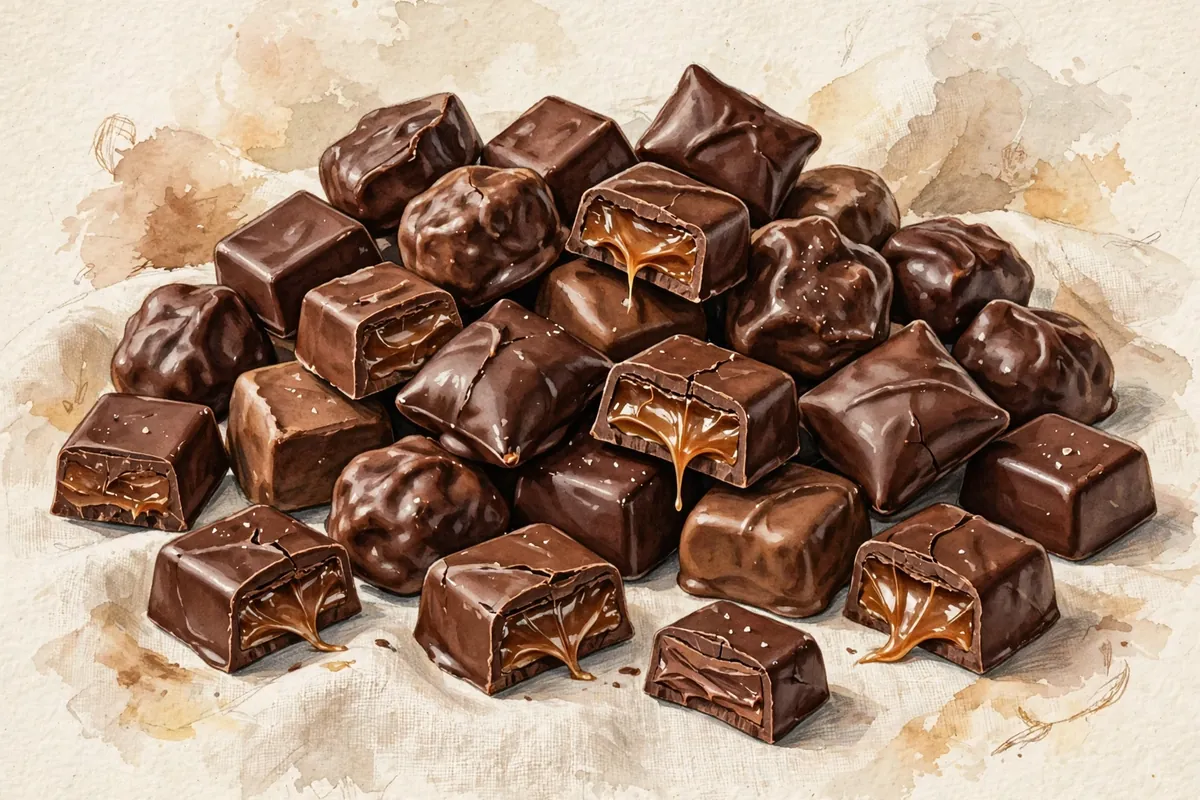
For many Americans, a Tootsie Roll is pure nostalgia: a chewy little chocolate log in a twisted wrapper, tucked into a Halloween bag or a grandparent's candy dish. But this humble candy also has a surprising wartime story. It went into battle alongside American troops.
Here's the short answer: during World War II, Tootsie Rolls became a standard part of American soldiers' field rations. The reason was practical. The candy held up well under a wide variety of environmental conditions, which made it a good fit for a soldier's pack. Field rations still sometimes include Tootsie Rolls today.
A Candy Named for Tootsie
The Tootsie Roll was created by Leo Hirschfield, the son of an Austrian candy maker, who worked in the candy business in New York. He completed the invention in 1907 after patenting a technique that gave the candy its unique texture. It isn't quite a caramel and isn't quite taffy, but something in between. His very first creation was something quite different, a product called Bromangelon Jelly Powder.
Hirschfield named it after his daughter Clara, whose nickname was Tootsie. According to one account, she was about five years old at the time. The first Tootsie Rolls went on sale in 1908.
It made history right away as the first penny candy in America to be individually wrapped. According to the company, the recipe even calls for adding a bit of the previous day's batch to each new one, a tradition it says continues to this day. The business went through a few names over the years, becoming the Sweets Company of America in 1917 and finally adopting the name Tootsie Roll Industries in 1966.
Hard Times and a Lollipop
The company hit rough patches. In 1931, it introduced the Tootsie Pop, a hard-candy lollipop with a Tootsie Roll center, which became popular during the Great Depression because it was so cheap.
Even so, by 1935 the company was in serious trouble. Its main supplier of paper boxes, Joseph Rubin & Sons of Brooklyn, didn't want to lose a big customer, so the Rubin family bought it. Bernard Rubin took over as president, improved the recipe, made the candy bigger, and moved production to a larger plant in Hoboken, New Jersey.
Into the Field Rations
Rubin then guided the company through the war years, when key ingredients were in short supply. At the same time, Tootsie Rolls were finding their way into soldiers' rations. Military meals often include familiar commercial snacks to give troops a taste of home, and a sturdy candy that didn't easily spoil was a natural fit.
Back home, the company launched an advertising comic strip in 1943 starring a hero named Captain Tootsie. By the time Bernard Rubin died in 1948, he had increased sales twelvefold.
Still Rolling Today
Tootsie Roll Industries is now one of the largest candy makers in the world, turning out more than 65 million Tootsie Rolls every day. Many people also remember its catchy 1976 jingle, Whatever It Is I Think I See, which ran on Saturday morning television for more than 20 years.
So the next time you unwrap a Tootsie Roll, think of the soldiers who once found one in their rations. It's a small, chewy reminder that sometimes the simplest comforts travel the farthest, even all the way to the front lines.