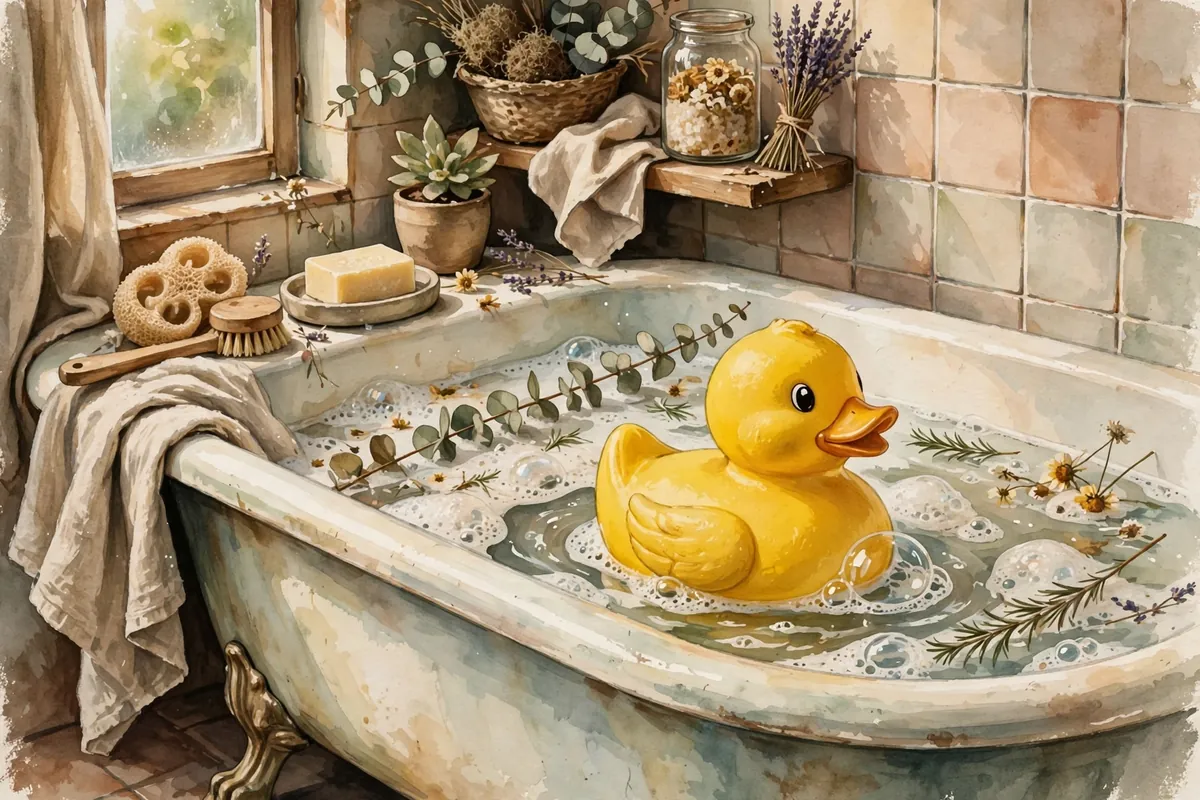
Few toys are as instantly recognizable as the rubber duck. Bright yellow, round, with a little orange beak, it bobs in bathtubs all over the world. Generations of kids have splashed with one, and plenty of grown-ups still keep one on the edge of the tub. So how did this simple toy become a bath-time legend?
The short answer is a mix of new materials, good design, and a famous Muppet. Rubber ducks first appeared in the late 1800s, but those early ones were made of hard rubber and couldn't float, so they were chew toys. In the 1940s, a sculptor designed a floating toy duck that sold more than 50 million copies. Then in 1970, Ernie from Sesame Street sang "Rubber Duckie," and the duck became a pop culture star.
The Duck That Sank
The rubber duck's story starts with rubber itself. In the late 19th century, manufacturers began using vulcanized rubber, Charles Goodyear's invention, which made rubber much easier to shape into toys. The first rubber ducks were made from this harder rubber.
There was one big problem. These solid ducks couldn't float. Rather than paddling around a bathtub, they were meant to be chewed on. It would take later materials and designs to get the duck into the water where it belonged.
A Sculptor's Floating Duck
In the 1940s, a sculptor named Peter Ganine created a sculpture of a duck. He filed a U.S. design patent for a toy duck on December 29, 1947, and it was granted in 1949. He later turned the design into a floating toy, and more than 50 million were sold.
Around the same time, in 1948, a Hong Kong company called Winsome Plastic Works began producing rubber duck toys designed by its founder, L.T. Lam. Today's ducks are often made of vinyl plastic rather than true rubber, but the name stuck.
Ernie Makes It Famous
The duck's big break came on television. On February 25, 1970, Ernie the Muppet sang "Rubber Duckie" on Sesame Street. The song was so popular that it was released as a single and became a surprise hit, reaching No. 16 on the Billboard Hot 100 in September 1970.
Ernie often talked to his rubber duckie and carried it around in other segments, cementing the toy's link to bath time for a whole generation. In 2013, the rubber duck was inducted into the National Toy Hall of Fame in Rochester, New York, alongside the game of chess.
Ducks on the High Seas
Some rubber ducks have had real adventures. On January 10, 1992, during a storm in the North Pacific, shipping containers washed off a cargo ship. One held 28,800 plastic bath toys called Friendly Floatees, including yellow ducks, red beavers, blue turtles, and green frogs.
Oceanographers tracked where they turned up to study ocean currents. Some washed ashore in Alaska and Hawaii. Others drifted more than 17,000 miles, spent years frozen in Arctic ice, and reached the shores of the U.S. East Coast and Britain about 15 years later.
Rubber ducks have even gone giant. Dutch artist Florentijn Hofman built a huge floating duck in 2007, and his ducks have visited harbors around the world. So the next time you spot a little yellow duck in a tub, remember it's a toy with quite a résumé: chew toy, sculptor's dream, TV star, and ocean explorer.