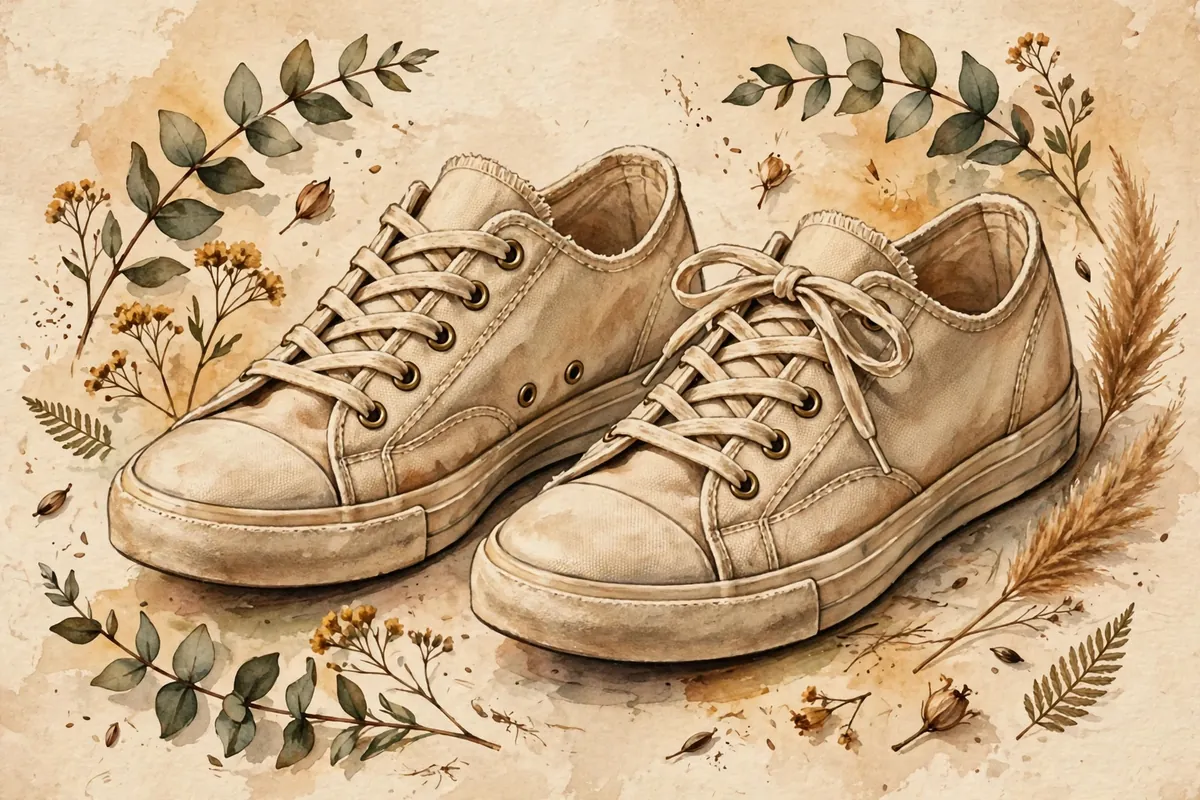
Americans say sneakers. The British say trainers. Others say tennis shoes, runners, or kicks. Whatever you call them, they're probably the most comfortable shoes in your closet. But the American name is a little odd when you stop to think about it. What exactly is sneaky about a pair of gym shoes?
Here's the short answer: sneakers are named for how quiet they are. Their soft rubber soles made almost no noise on the ground, unlike the hard leather soles of ordinary dress shoes. Someone wearing them could sneak up on you, and someone in regular shoes could not. The word was already in use by 1887, when a Boston newspaper called "sneakers" the name boys gave to tennis shoes.
Who Coined the Word?
Credit is often given to Henry Nelson McKinney, an advertising agent for the firm N. W. Ayer & Son. In 1917, he used the word "sneakers" because the rubber sole made the wearer stealthy.
But as that 1887 newspaper shows, kids were already using the word decades earlier. McKinney may have helped make it popular, but he didn't invent it. Even before that, prison inmates reportedly called their guards "sneaks" because of the rubber-soled shoes the guards wore.
The Rubber Revolution
One early ancestor of the sneaker came from Britain. The plimsoll, a low, canvas-topped shoe with a rubber sole, was first known as a "sand shoe" until the 1870s. Vacationers wore them widely, and players wore them on tennis and croquet courts for comfort. Plimsolls even turned up with the ill-fated Scott expedition to Antarctica in 1911.
In America, the U.S. Rubber Company introduced the country's first rubber-soled shoes in 1892, setting off a boom in demand. In 1916, the company combined 30 different shoe brands into one, called Keds. It first wanted the name "Peds," from the Latin word for feet, but that name was already taken.
Keds' original design, the Champion, was the first mass-marketed canvas-top sneaker. People quickly called them sneakers because the soft soles let you sneak around silently.
From the Gym to Everywhere
Sneakers caught on fast, and companies like Converse, Nike, and Spalding helped make them hugely popular by the mid-20th century. Spalding designed the first basketball shoes as early as 1907. After World War I, sports became a popular way to show strength of character and patriotism, and the sneaker market grew right along with them. Young boys lined up to buy Converse All Stars, endorsed by basketball player Chuck Taylor.
Since the 1970s, sneakers have been a big part of hip hop and rock 'n' roll culture. Today, collectors called sneakerheads hunt for rare pairs, and some artistically modified sneakers sell for more than $1,000 at upscale stores like Saks Fifth Avenue.
What You Call Them Depends on Where You Live
Even within the U.S., the name varies. "Sneakers" is most common in the Northeast and in Central and South Florida. Elsewhere in North America, you'll also hear tennis shoes or kicks. In Britain, rubber-soled canvas shoes might be called plimsolls, daps, or pumps.
So the next time you lace up a pair and pad quietly across the kitchen, you're living up to the name. A shoe that started as a schoolboy nickname has carried generations of us through gym class, ball games, and long walks around the block.