Most of us think of our bodies as fairly permanent. The stomach you had last week is the same stomach you have today, right? Well, mostly. But the thin layer of cells lining the inside of it has quietly been swapped out, and it will be replaced again within days.
Here's the short answer. The cells covering the surface of your stomach lining, in tiny dimples called gastric pits, are replaced every 2 to 4 days. This rapid turnover is a protective strategy. Those cells sit closest to the acid and digestive enzymes, so the body keeps replacing them before damage can build up. Not every stomach cell renews this quickly, though. Some deeper cells live much longer.
Why the Stomach Needs a Fresh Coat
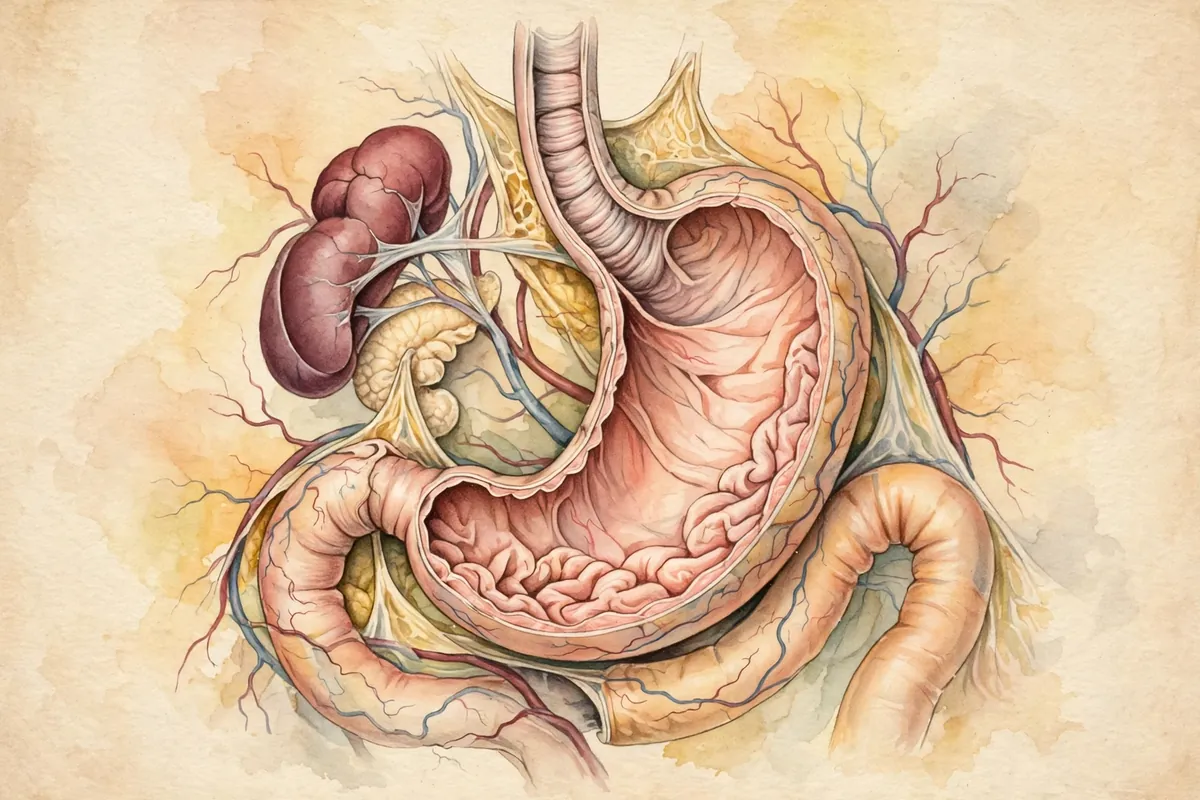
The inside of the stomach is a tough place to work. Stomach acid has a pH between 1 and 3, and the enzyme pepsin is built to break down proteins. The stomach wall is made of protein too, so its surface is under constant attack.
The body has several defenses. Surface cells release a thick layer of protective mucus and bicarbonate, which helps neutralize acid. But even with that shield, the outermost cells take a beating. Rapid replacement is the backup plan. Scientists describe the high turnover of these cells as a mechanism designed to protect the lining from both pepsin and acid.
Where New Cells Come From
The stomach lining is dotted with tiny pits that lead down into glands. Partway down sits a zone called the isthmus, home to stem cells, the body's all-purpose starter cells.
Stem cells like these are how the lining keeps restocking itself. Scientists believe that some of the cells they produce travel down into the glands and become specialized workers. For example, some become mucous neck cells and then gradually turn into chief cells, which make the enzyme pepsin. Chief cells live much longer than the surface cells.
Your Gut Is a Busy Construction Site
The stomach isn't alone. The lining of your intestines renews itself every 4 to 5 days. Stem cells at the base of tiny pockets called crypts produce new cells, which travel upward, mature along the way, and are eventually shed into the intestine. The number of cells stays about the same, but the cells themselves are constantly changing.
Not all body cells work this way. Some cells, including certain stomach cells, rarely divide once they're fully developed. Others, like the cells that line surfaces, keep dividing throughout life.
When the System Struggles
Because the lining is protected by mucus, bicarbonate, and fast renewal, it usually holds up remarkably well. But certain things can weaken the protective barrier, including alcohol, some anti-inflammatory pain relievers, and infection with a bacterium called Helicobacter pylori. When the barrier breaks down, acid can damage the stomach wall.
If you have ongoing stomach pain or other digestive symptoms, talk to your doctor. They can help figure out what's going on.
A few more stomach surprises: it can stretch to hold about a liter of food at a time, yet a newborn baby's stomach holds only about 30 milliliters, roughly two tablespoons. So the next time you sit down to a good meal, give a small thank-you to the tireless cells that are being born, working hard, and retiring inside you every few days.