In the depths of winter, the backyard can seem quiet. Then spring arrives, and suddenly the birds are singing before sunrise, sometimes loudly enough to wake you up. Why does the music switch on with the seasons?
The short answer is breeding season. In much of North America, Europe, and northern Asia, songs are mainly about two things: attracting a mate and defending territory. As days grow longer in spring, changes in daylight, hormones, and even the brain areas that control singing ramp up a bird's song for the busy months ahead.
Love Songs and Keep-Out Signs
Scientists separate bird sounds into calls and songs. Calls are short and handle everyday jobs like warning of danger or keeping a flock together. Songs are longer and more complex, and they're tied to territory and courtship.
A good song works like a resume. Experiments suggest song quality can signal a bird's health and fitness, and illness or parasites may affect how often a bird sings. In some species, females may choose males based on the quality of their songs and the size of their repertoire.
Songs also mark property lines. Neighbors use song to negotiate territory boundaries, which can help them size each other up without a costly fight. More complex songs are seen as a greater territorial threat.
The Spring Dawn Chorus
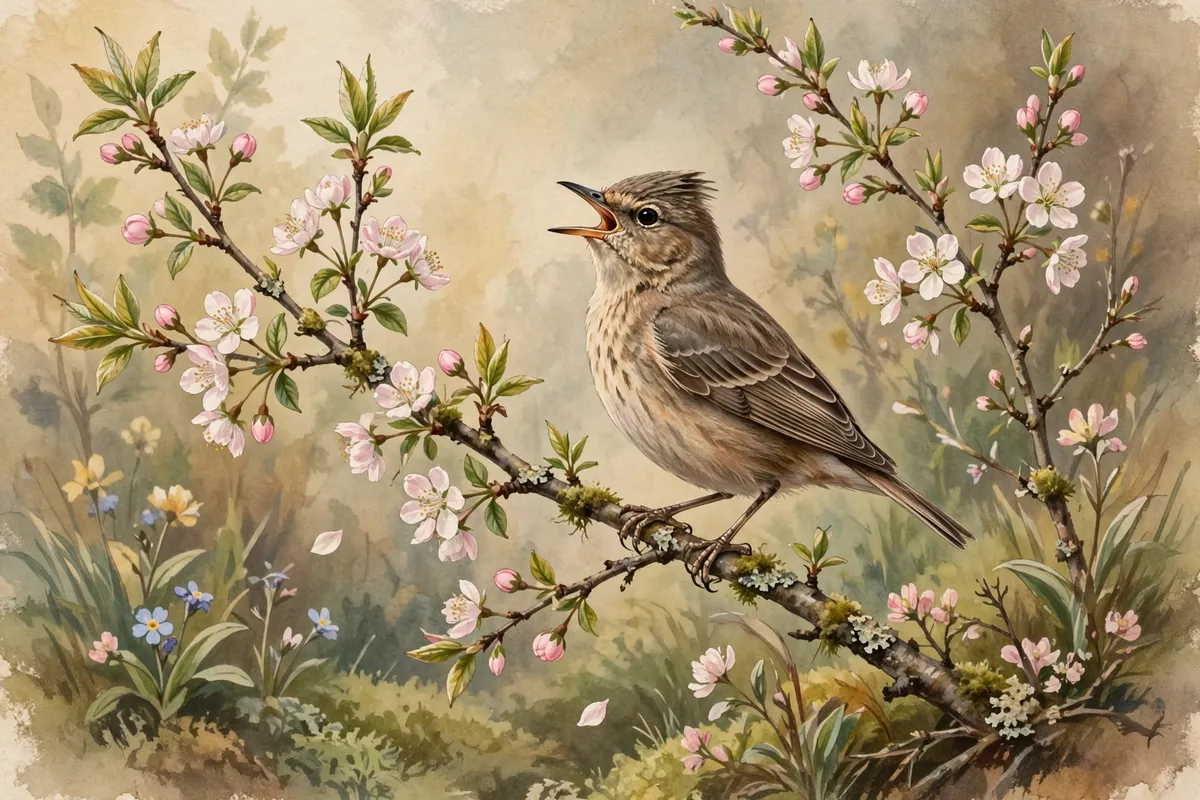
The most famous seasonal performance is the dawn chorus, the outburst of birdsong at the start of a new day. In places with distinct seasons, it's most noticeable in spring, when birds are defending breeding territories, trying to attract mates, or calling to their flock.
Different species often take turns. One study in an Ecuadorian forest found that birds perched higher in the trees and birds with larger eyes tend to start singing first, possibly because they notice the morning light sooner. There's even an International Dawn Chorus Day, held on the first Sunday in May.
A Brain That Changes With the Calendar
Here's the truly surprising part. In many songbirds, the brain regions that control singing actually change through the year. Studies have found that these seasonal changes, including the growth of new brain cells in adults, are driven by day length, hormones, and behavior.
Hormones make a big difference. Female canaries usually sing less often than males, but when given male hormones, they sing almost as often as males, and their song-control brain areas grow larger. Melatonin, a hormone tied to darkness, may also play a role in seasonal singing in birds that live where daylight changes a lot through the year.
Learning New Tunes
Not every bird can learn new songs as an adult. Zebra finches learn their song in the first year and stick with it. Canaries are open-ended learners and can develop new songs even as grown adults. A gene called FOXP2, which is linked to human speech, becomes highly active in a song-learning brain area while young zebra finches and adult canaries are mastering new songs.
Young birds need teachers, too. Chaffinches raised alone produce abnormal, simpler songs, and one chaffinch raised by canaries picked up canary-like notes in its song.
Some birds keep singing after the breeding season. Male black-throated blue warblers that raised young successfully sing to their chicks, while unsuccessful males usually go quiet. So the next time a spring chorus wakes you early, smile. Those little singers are working hard, with brains built for the season.