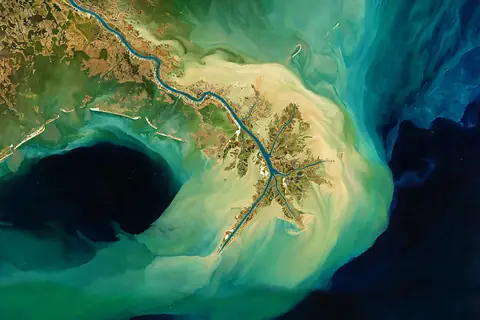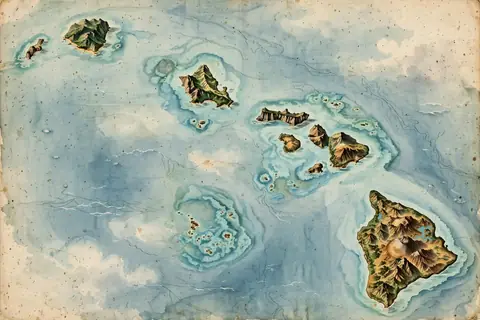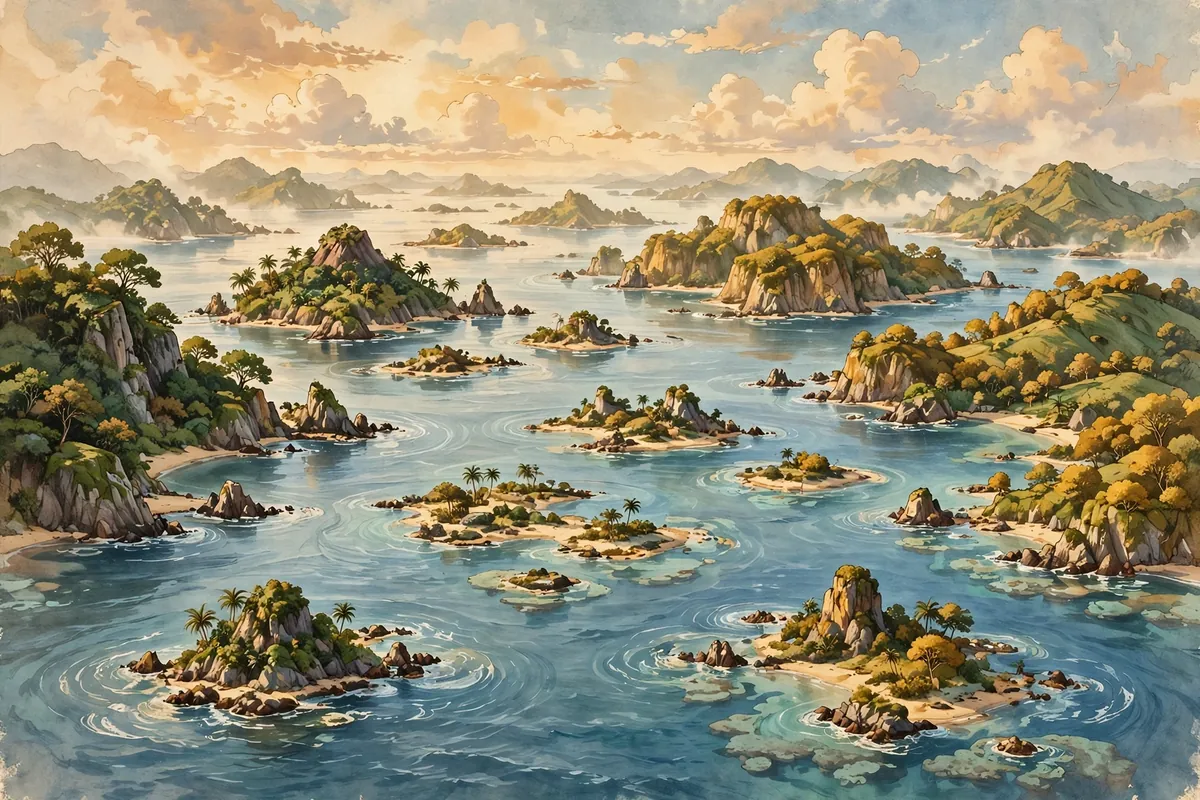
When we think of island nations, most of us picture warm, tropical places. White beaches, palm trees, and turquoise water stretching to the horizon. So it seems obvious that the country with the most islands must be somewhere near the equator. Surprisingly, it isn't.
The countries with the most islands are in chilly northern Europe. Sweden is often named the champion, with a 2013 report counting 267,570 islands. But neighboring Norway counts 239,057 islands plus 81,192 smaller islets, for a total of more than 320,000. Which one wins depends on how you define an island.
Sweden's Quarter-Million Islands
Sweden's islands are mostly small, and most are uninhabited. Of the 267,570 counted in 2013, fewer than 1,000 have people living on them. All together, they make up only about 3 percent of Sweden's land area. Most are found in the Baltic Sea, especially in the Gulf of Bothnia.
The Stockholm Archipelago alone has slightly over 24,000 islands, islets, and rocky outcrops called skerries, stretching roughly 37 miles out from the capital. Around 10,000 permanent homes and 50,000 holiday homes are scattered across it, and ferries and passenger boats connect many of the islands. Sweden's two largest islands, Gotland and Öland, are made of limestone and have rare landforms like sea stacks and big cave systems.
Norway's Rugged Coast
Norway has one of the longest and most rugged coastlines in the world, carved by deep fjords. According to the country's official mapping agency, 320,249 islands and islets sit along that much-indented shore.
The numbers are staggering. Norway's mainland coastline runs about 15,626 miles. Add in all the islands, and it stretches to about 51,748 miles, more than twice the distance around the Earth.
Why Counting Islands Is So Tricky
You'd think counting islands would be simple. It's not. Some countries count tiny islets and rocks, others don't. Some islands are covered by the tide part of the day. And different languages use different words for small islands, such as islet, skerry, or cay, which can cause confusion over what counts.
One common definition says an island is a landmass permanently above sea level, completely surrounded by water, that isn't a continent. Even with that rule, experts note that island counts from different countries can't always be compared directly. Where sources disagree, lists of island counts often go with the highest reliably sourced figure, so rankings can shift as new surveys come in.
What About the Tropical Islands?
The tropical favorites have impressive numbers, too, just smaller ones. Indonesia, the world's largest archipelagic state, has somewhere between about 13,000 and more than 17,500 islands, depending on the count, and about 922 are permanently inhabited. Its five main islands are Sumatra, Java, Sulawesi, Borneo, and New Guinea. The Philippines has about 7,641 islands, grouped into three main regions: Luzon, the Visayas, and Mindanao.
Finland deserves a mention as well. It has about 179,000 islands, and off its coast lies what's described as the world's largest archipelago, with more than 50,000 islands. Even a single Finnish lake, Lake Inari in Lapland, holds some 3,318 islands.
So the next time someone asks which country has the most islands, skip the palm trees and think of pine trees instead. The answer is way up north, where the coast breaks into countless little pieces of rock and forest.