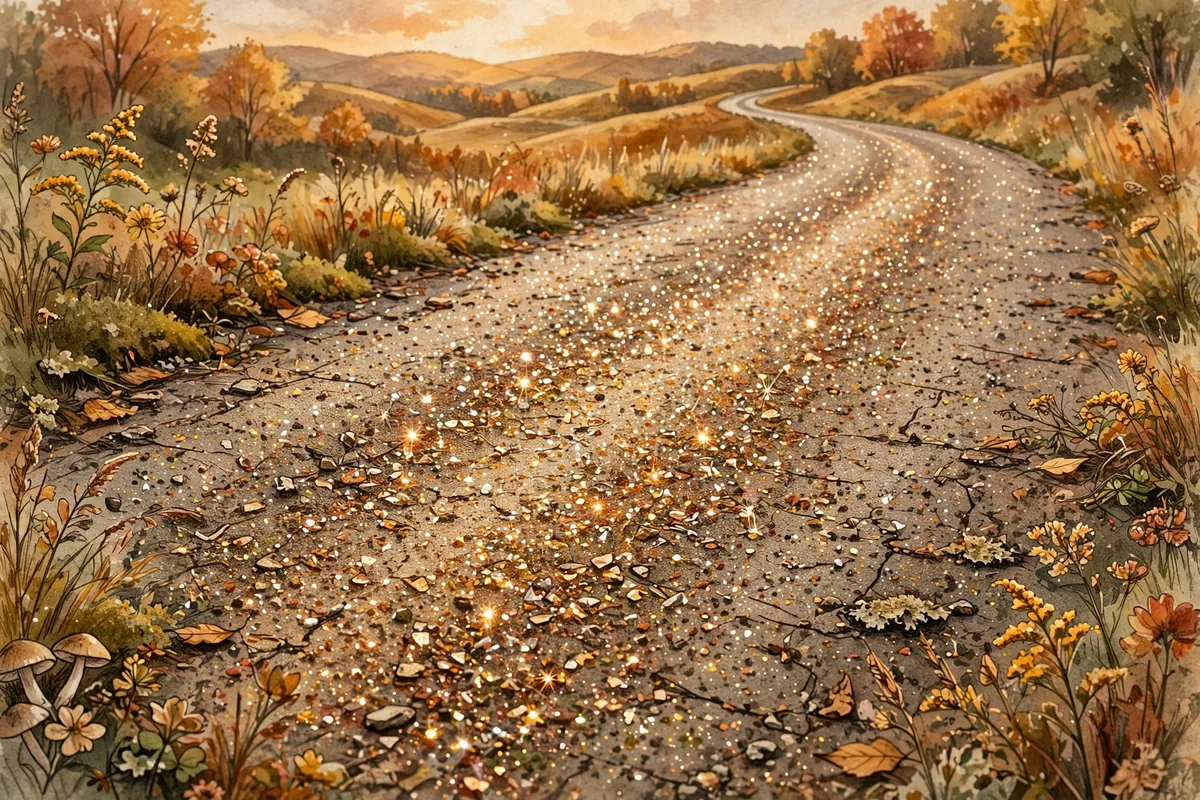
Picture a dazzling road paved entirely in glass beads, sparkling from end to end. It's a lovely image, but roads aren't built that way. The real story is hiding in plain sight on the highways we drive every day, and it's arguably even more impressive.
Here's the short answer: the painted lines on roads are sprinkled with tiny glass beads. When your headlights hit them, the beads bend the light and bounce it straight back toward your eyes, which makes the lines glow at night. In North America alone, roughly 500 million pounds of glass beads were used on road markings each year in the 2010s.
How a Tiny Bead Lights the Way
The trick is called retroreflection. Most surfaces scatter light in every direction, so only a little makes it back to you. A retroreflector sends light back toward where it came from, which is exactly where the driver sits.
Each glass bead works like a miniature lens. Light from your headlights enters the bead, bends as it passes through, reflects off the back, and heads back out toward the car. The beads are pressed into the paint so they stick up, with a diameter about twice as thick as the paint layer. That way, part of each bead is exposed to catch the light.
The same idea is used on traffic signs, which are made with glass beads or tiny prisms embedded in their surface. It matters, too. Federal traffic safety figures have shown fatal crashes are three to four times more likely at night than during the day.
Mountains of Beads
The amounts involved are staggering. Repainting just one mile of a five-lane highway can use about 1,150 pounds of glass beads. In Europe, beads are typically spread at a set amount for every square meter of marked road.
Most of these beads are made from crushed recycled glass. The shards are dropped through special furnaces at about 2,400°F, where they melt and form perfect little spheres in a split second. Older beads sometimes contained lead or arsenic, but regulations in many countries have pushed those out, and recent tests in Europe found modern beads free of those harmful elements. Similar glass beads also do industrial jobs such as blasting surfaces clean, filtering liquids, and filling plastic materials.
Where Road Lines Came From
The painted center line itself has a fun origin. In 1911, Edward N. Hines, who chaired the Wayne County Board of Roads in Michigan, reportedly got the idea after watching a leaky milk wagon leave a white trail down the road. The first documented painted center line in the U.S. appeared that year on River Road near Trenton, Michigan.
Cat's Eyes and Botts' Dots
Glass beads aren't the only way roads talk back to headlights. In 1933, Englishman Percy Shaw invented cat's eyes, metal road studs with reflectors that became the earliest retroreflective pavement markers. In parts of the U.S., you'll also find Botts' dots, the round white or yellow bumps glued to highways in place of painted lines.
So while roads aren't paved in glass beads, the lines that guide you home at night are full of them. The next time those lines shine back at you on a dark country road, you'll know a tiny bit of glass is keeping you on track.