Some people complain that their town is in the middle of nowhere. The residents of Tristan da Cunha could tell them a thing or two. Their home is a speck of volcanic rock in the South Atlantic Ocean, and getting there takes nearly a week.
Here's the short answer. Tristan da Cunha is considered the most remote inhabited place in the world. The island has no airstrip, so the only way to get there is by ship, typically a six-day journey from Cape Town, South Africa. As of September 2026, it had 222 permanent residents, all living in one small settlement.
An Island Shaped by a Volcano
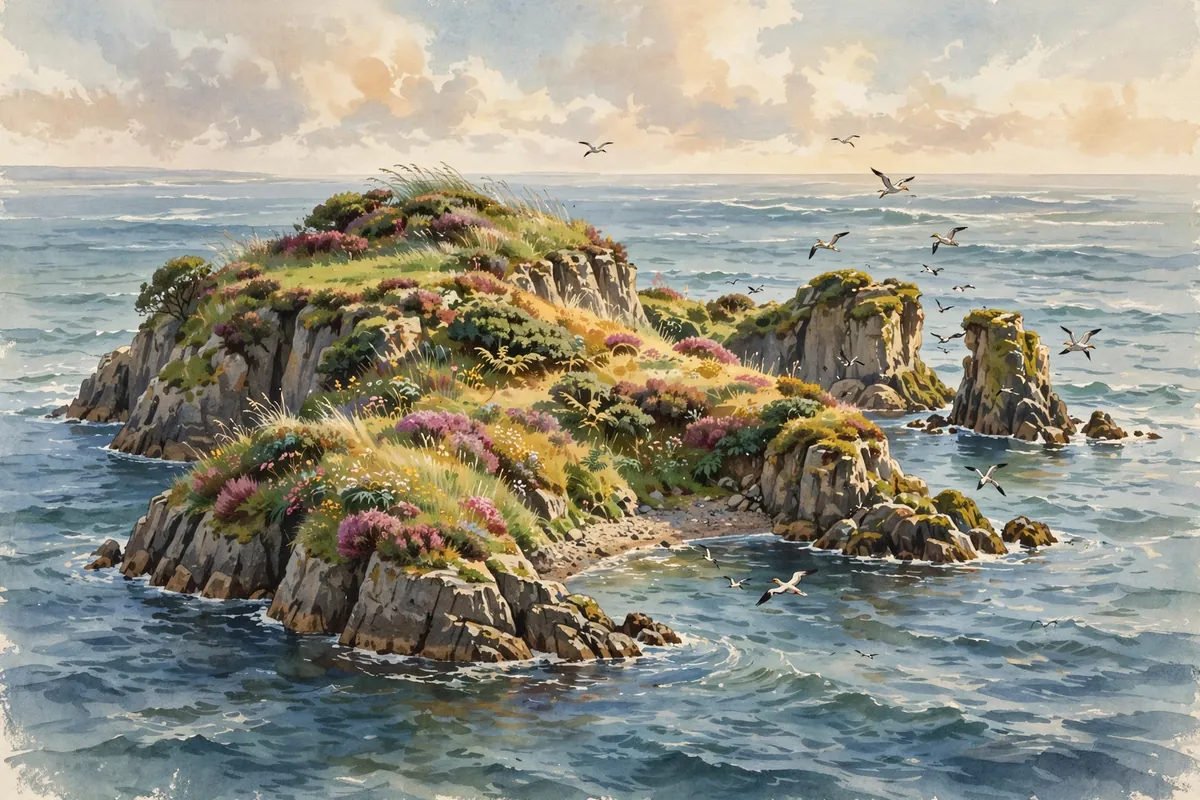
Tristan is part of a British Overseas Territory. The main island is only about 6.8 miles across. It's mostly mountainous, rising to Queen Mary's Peak, an active volcano 6,765 feet high, tall enough to get snow in winter.
The only flat land is on the northwest coast. That's where you'll find the one village, Edinburgh of the Seven Seas, which locals simply call "The Settlement," and the farming area known as the Potato Patches. The village takes its name from Prince Alfred, Duke of Edinburgh, a son of Queen Victoria, who visited in 1867.
Who Lives There?
Portuguese explorer Tristão da Cunha first sighted the islands in 1506 and named the main one after himself, though rough seas kept him from landing. The settlement was founded in 1816 by a Scottish sergeant named William Glass.
Today's islanders are thought to descend from just fifteen ancestors who arrived between 1816 and 1908. The founding men shared seven surnames: Glass, Green, Hagan, Lavarello, Repetto, Rogers, and Swain. An Italian shipwreck survivor, Gaetano Lavarello, helped the community survive with his boat-building skills. Self-reliance runs deep. In 1906, a dry year ruined the potato crop and about 400 cattle were lost, yet the community didn't starve.
Life is built around sharing. All resident families farm, and all land is owned communally. Outsiders aren't allowed to buy land or settle there. The main exports are Tristan rock lobster, postage stamps, coins, and a little tourism.
The Day Everyone Had to Leave
On October 10, 1961, part of the volcano erupted very close to the village. All 264 residents were evacuated in open boats to nearby uninhabited Nightingale Island, and later spent time in England.
Most came home in 1963. Four island women returned with new English husbands, bringing new surnames, Collins and Squibb, which are still used today. The island's harbor is named Calshot Harbour, after the place in England where islanders stayed during their exile.
Help From the Sky
Remoteness makes emergencies tricky. In May 2026, a British military team parachuted onto the island to help with a suspected hantavirus case. An RAF transport plane flew from England to Ascension Island, then on to Tristan with mid-air refueling. A doctor and an intensive care nurse made tandem jumps strapped to paratroopers, and the doctor had never jumped before.
Some of the team landed on the island's nine-hole golf course. The plane then dropped more than three tonnes of medical supplies and oxygen.
Tristan da Cunha may be far from everywhere, but its people have built a close, resilient community. It's a reminder that home isn't about how close you are to the rest of the world. It's about the people right next to you.