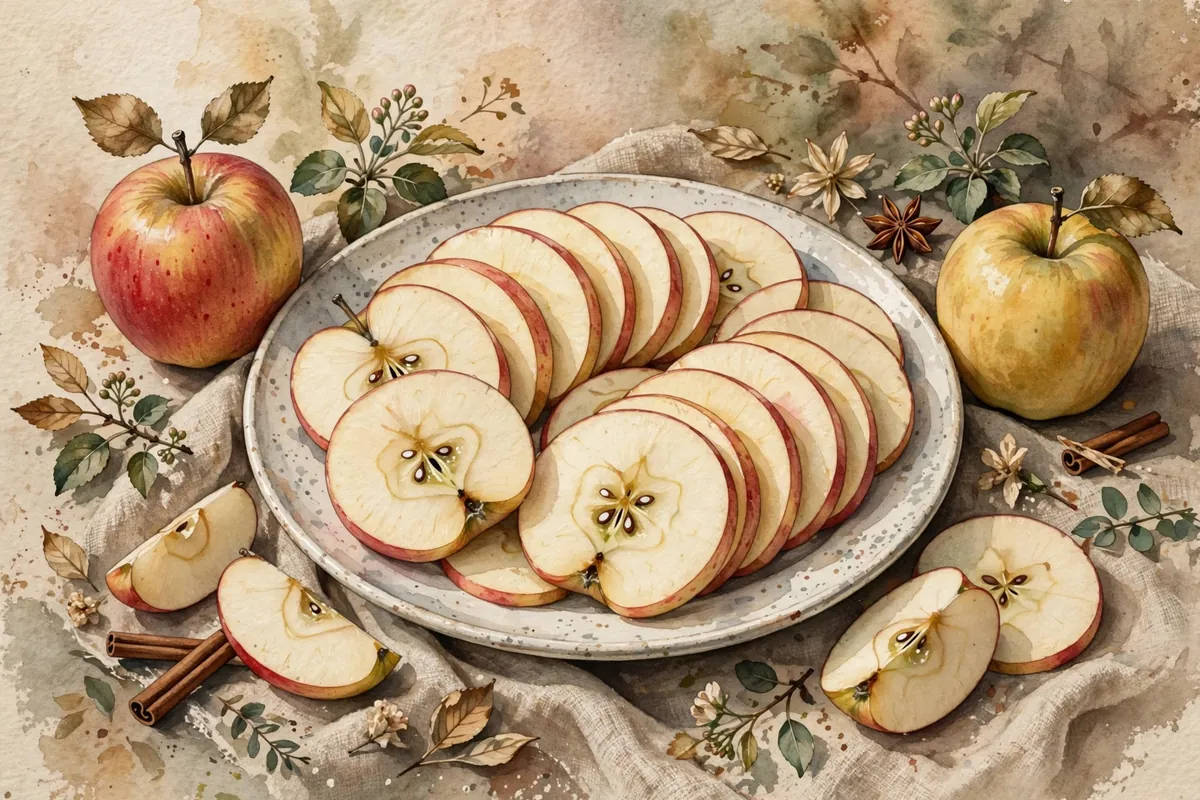
There's nothing quite like a crisp, freshly sliced apple. But leave those slices on the counter for a little while and the bright white flesh starts to look tan, then brown. It happens so reliably that we hardly think about it. So what's going on inside that fruit?
Here's the short answer: it's a chemical reaction called enzymatic browning. Apple cells contain an enzyme called polyphenol oxidase, or PPO, along with natural compounds called phenols. When you cut an apple, you break open cells and expose them to air. With oxygen present, the enzyme turns the phenols into compounds that link together to form brown pigments.
What Happens When You Slice
PPO is found throughout the apple, and it's the main enzyme behind apple browning. In a whole, uncut apple, things stay calm. Slicing sets off PPO activity, which is why browning shows up on the cut surfaces.
The reaction happens in steps. First, PPO uses oxygen to change phenols into molecules called quinones. These are very reactive, and they join together in a chain of reactions that eventually produces brown pigments called melanins.
Apples are especially prone to browning because they are rich in phenols. Studies have found that apples with more phenols tend to show more enzyme activity too. The same kind of browning happens in potatoes, bananas, avocados, mushrooms, and lettuce. Browning can even show up in apple juice and applesauce when they're poorly handled or processed.
Kitchen Tricks That Work
Because the reaction needs oxygen and an active enzyme, anything that slows either one helps. Cold is a simple fix. The browning enzymes work more slowly at low temperatures, which is one reason refrigeration helps fresh fruit keep its look and flavor.
A squeeze of lemon is a classic trick. Lemon juice contains citric acid and ascorbic acid, also known as vitamin C, and both are thought to help fight browning. Pineapple juice has also been shown to slow browning on apples and bananas. Even onion extract has anti-browning powers, though few people want onion-flavored apple slices.
Heat is another option. Briefly blanching food in hot water breaks down the enzymes responsible. It's used when preparing vegetables for the freezer, but it's not much help if you want crunchy raw apple slices.
Food companies have their own toolkit. They often add antioxidants, such as ascorbic acid or L-cysteine. These react with oxygen to keep browning from getting started, and they also interfere with the later steps that would form brown pigments.
The Apple That Doesn't Brown
Food scientists have even tackled the problem at the source. Arctic apples are a line of genetically engineered apples in which the PPO gene has been silenced. With far less of the enzyme at work, browning is delayed. They were developed partly because pre-sliced apples are popular, but browning makes them look less appealing.
Not All Browning Is Bad
Browning isn't always a problem. Controlled browning helps develop the flavor and color of coffee, cocoa, and tea. A different browning process, the Maillard reaction, gives toasted bread, seared steaks, and roasted potatoes their delicious color and taste.
A brown apple slice is still perfectly good to eat. It just looks a little less fresh. So the next time your snack starts to blush brown, you'll know it's just a bit of chemistry happening right on your plate.