When a couple gets married, we often say they tied the knot. It's warm, cheerful, and a little old-fashioned. But it's also a strange phrase if you stop to think about it. Most weddings don't involve rope. So where does the knot come in?
The honest answer is that the phrase's exact starting point is hard to pin down. What's clear is that the knot has long stood for a bond that's hard to undo, and many wedding traditions around the world literally tie couples together with cords, threads, or joined hands. One popular explanation, that it comes from an ancient Celtic ribbon ritual, doesn't hold up well against the historical record.
Weddings That Really Tie Knots
In many Hindu weddings, a key moment comes when the groom ties the mangalasutra, meaning "auspicious thread," around the bride's neck. She wears it for the rest of the marriage as a sign that she's married. When the knot is tied, family and friends shower the couple with flower petals and rice. In some ceremonies, the priest also ties the ends of the couple's garments together to signify the marriage knot.
In some Catholic weddings, especially in Mexico, the Philippines, and Spain, couples are wrapped in a wedding cord, sometimes called a wedding lasso. Shaped into a figure eight, it's placed around the bride and groom after their vows, and in some ceremonies it's tied around their wrists. It symbolizes their lifelong union. In a related ritual called the cord of three strands, the bride braids the strands together while the groom holds one end.
The Truth About Handfasting
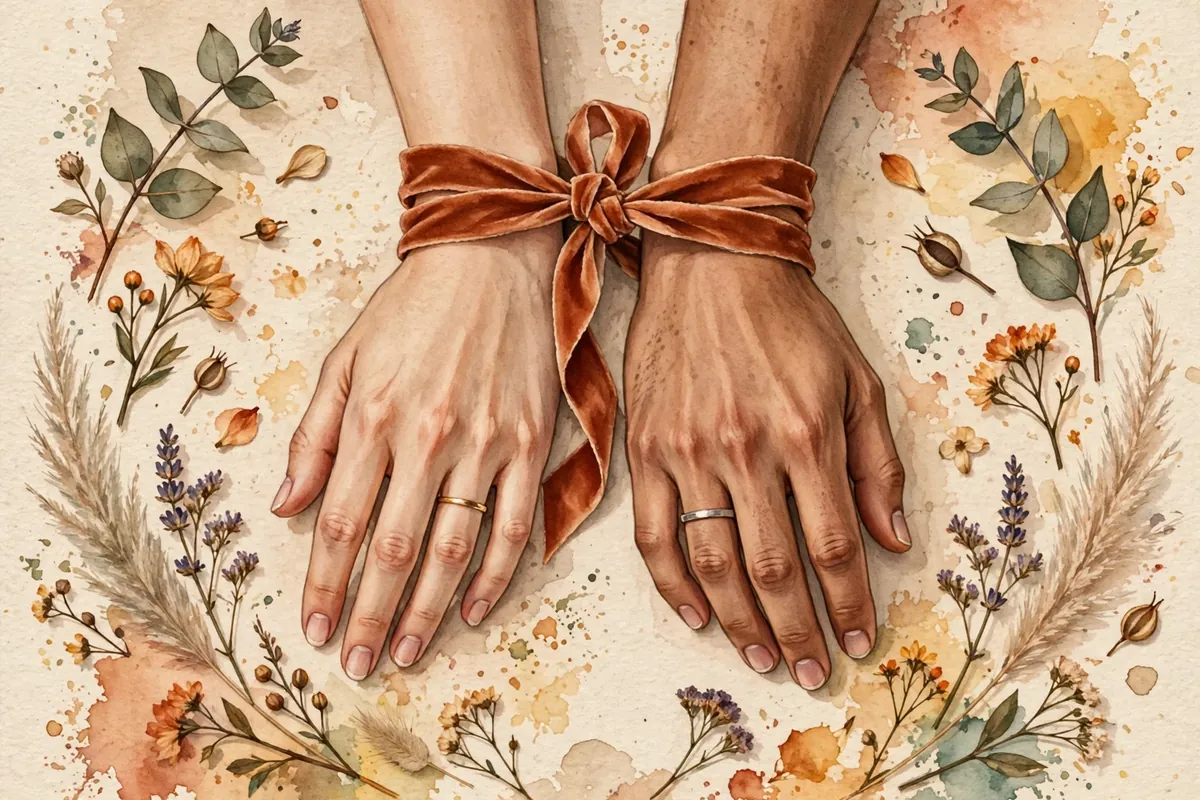
You may have heard that tying the knot comes from handfasting, supposedly an ancient Celtic ceremony where a couple's hands were bound with ribbon. History tells a more complicated story.
The word handfasting comes from Old Norse and meant striking a bargain by joining hands. In England, from roughly the 12th to the 17th century, it simply meant a formal engagement, a ceremony where a couple pledged themselves to each other. It was legally binding, and in 17th-century Scotland the term was also used for a temporary marriage.
The idea of wrapping a couple's hands together as an old pre-Christian rite appears to be largely a modern invention. The term entered the mainstream mostly through neopagan weddings in the early 2000s, when wedding planners began wrongly describing it as pre-Christian. The practice is also often credited to the Celts when its roots lie more with Danes and Anglo-Saxons.
Why a Knot Makes Sense
Even without a single origin story, the image is easy to understand. A good knot holds tight, it joins two separate pieces into one, and it isn't meant to come undone easily. That's a pretty fair description of what most couples hope for on their wedding day.
Medieval law took that binding very seriously. In England, once a handfasted couple made their vows to each other, they were validly married, and the union could only be ended by death, just like a church wedding of the time.
A Phrase That Holds
Today you'll find couples tying cords, braiding strands, or wrapping ribbons at ceremonies of all kinds, some old and some newly invented. Whatever its true starting point, "tie the knot" has stuck around because it captures something real. So the next time you hear that a couple has tied the knot, picture it as a promise meant to hold.