As a rule of thumb, you add a little extra flour on humid days. As a rule of thumb, you leave 20 minutes early when it rains. We use the phrase constantly to mean a handy, practical guideline. But where did it come from, and why the thumb?
The short answer: the phrase goes back at least to the 1600s and is linked to trades where people measured things using the width or length of a thumb. Its exact origin is uncertain. A widely repeated story that it came from an old law about husbands beating their wives is false. No such law ever existed.
A Practical Measure
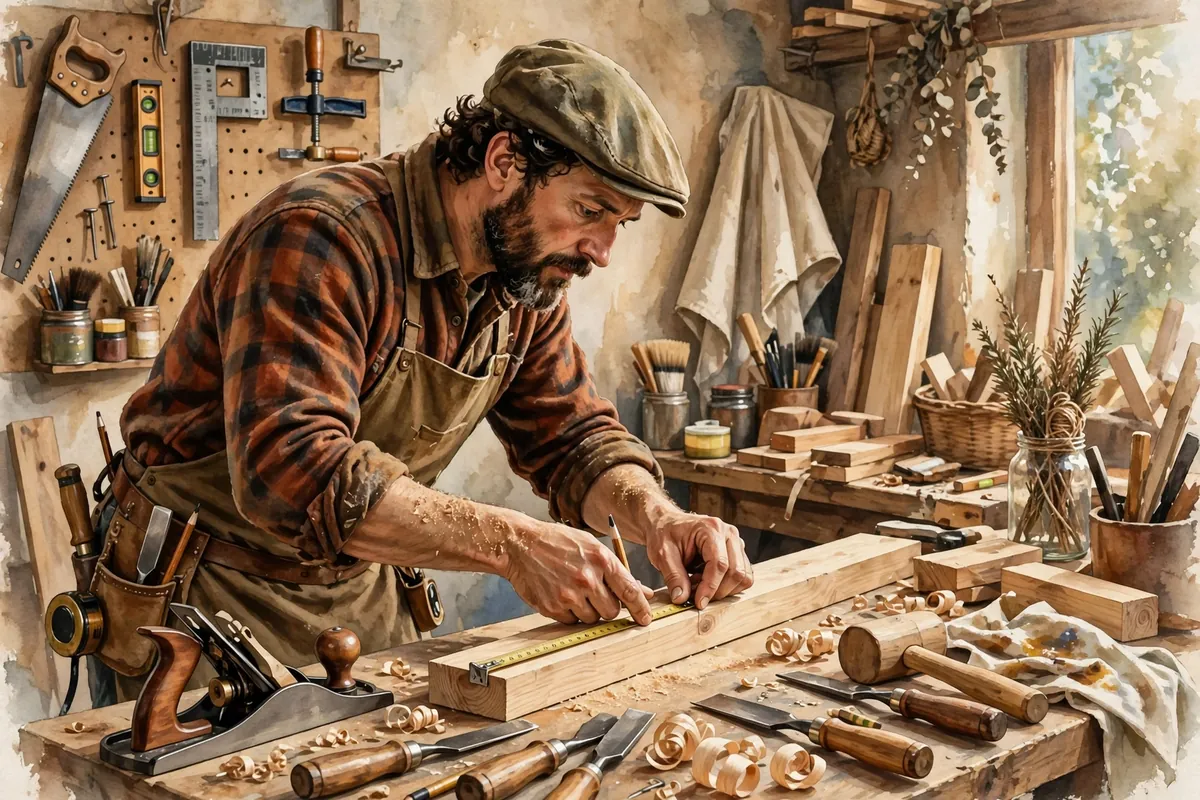
Before rulers and measuring tapes were everywhere, people used what they had on hand, and a thumb was always handy. In the cloth trade, the width of a thumb, called a thumb's breadth, served as the equivalent of an inch. Similar expressions existed in Latin and French.
Brewers also used their thumbs to judge the heat of a brewing vat. A 19th-century writer, Ebenezer Cobham Brewer, noted that ladies often measured yard lengths by their thumb, and that countrymen always measured by their thumb. Brewer summed up the phrase rule of thumb simply as a rough measurement.
The Earliest Uses in Print
The oldest known printed example dates to 1685, in a collection of sermons by the Scottish preacher James Durham. He compared careless Christians to foolish builders who build "by guess, and by rule of thumb," rather than with proper tools.
In 1692, a fencing manual described someone who did things "by rule of Thumb, and not by Art." And a 1721 collection of Scottish proverbs included the line "No Rule so good as Rule of Thumb, if it hit," meaning a practical approximation that works.
The False Story
A modern folk tale claims the phrase came from an old English law allowing a man to beat his wife with a stick no wider than his thumb. There was never any such law.
The rumor may trace back to an 18th-century English judge, Sir Francis Buller, who was said to have made such a statement. There's no record he ever did, but the rumor led to jokes and cartoons mocking him as "Judge Thumb." The legal scholar William Blackstone wrote about an "old law" permitting moderate beatings, but he never mentioned thumbs.
The phrase only became tied to domestic abuse in the 1970s. After that, the false origin was cited as fact in a number of law journals, and some people avoided the phrase entirely. In the 1990s, several authors showed the story was wrong, though it kept turning up in some legal sources into the early 2000s.
Still a Bit of a Mystery
Language experts admit they may never pin down the exact first use. One phrase-history source puts it in the same category as the whole nine yards: a saying that probably comes from some kind of measurement but is unlikely ever to be traced for certain.
What we do know is that rule of thumb has meant a rough, experience-based method for more than three centuries. So the next time you use it, you can do so with a clear conscience. You're borrowing the wisdom of old builders, brewers, and tailors who trusted the tool they always had on hand.