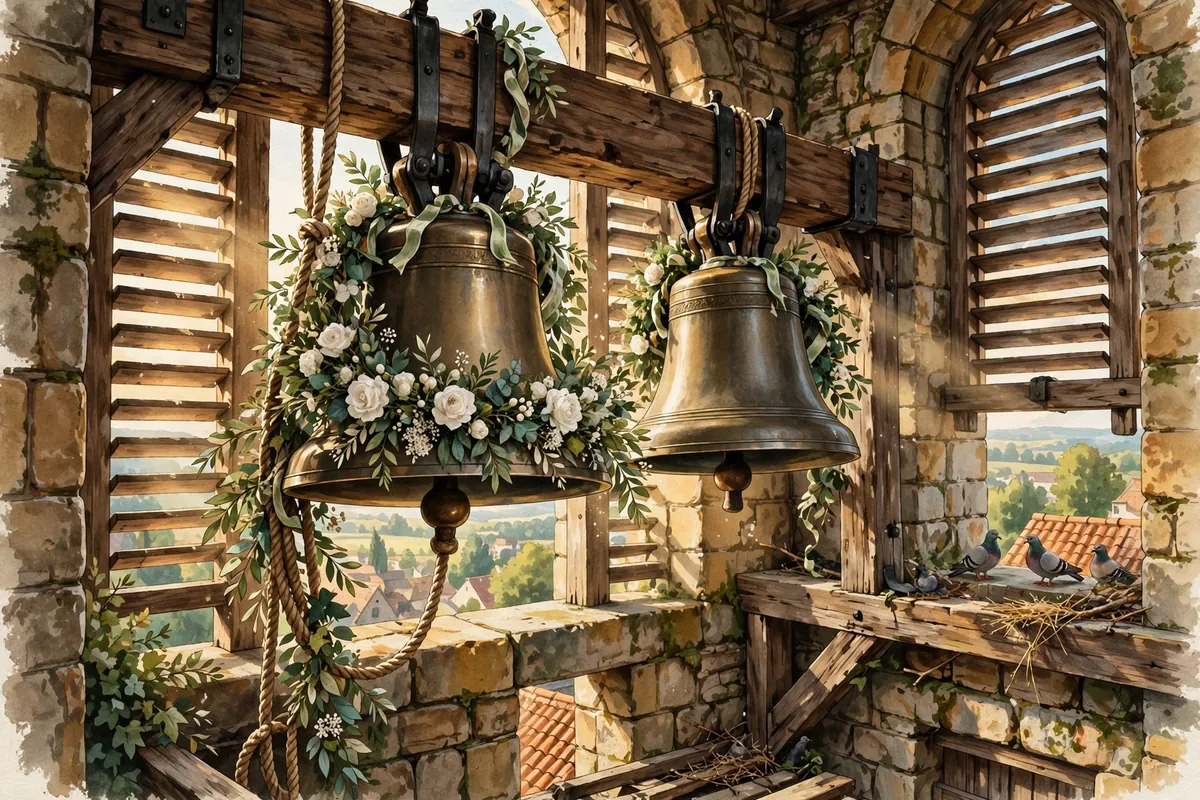
The ceremony ends, the couple shares a kiss, and they walk out into the sunshine as bells peal from the church tower. It's one of the most romantic sounds there is. We even talk about hearing wedding bells when we sense a couple is getting serious. But why did bells become part of weddings in the first place?
Here's the short answer. Church bells have long been rung for special occasions, including weddings and funerals, to share the news with the whole community. On top of that, many Christians traditionally believed that ringing bells drove away demons and evil spirits. An old Irish superstition holds that bells rung at a wedding keep evil spirits away and bring the couple a happy, lucky marriage.
The Town's Loudspeaker
Before telephones, radio, or text messages, church bells were one of the main ways to call a community together, for both religious and everyday purposes. Their main job was to summon people to worship, but they also marked important moments in people's lives.
Bells even announced deaths. There was a passing bell to warn that someone was dying, a death knell to announce the death, and a bell rung as the funeral procession approached the church. A wedding peal was the joyful flip side, telling everyone within earshot that something happy had just happened.
Bells Against the Darkness
The belief in bells as protection runs deep. In Christianity, the ringing of church bells was traditionally thought to drive out demons and other unclean spirits. Some old bells even carried inscriptions saying so, such as one declaring that the sound of the bell vanquishes storms, repels demons, and summons people.
Some churches reasoned that more bells were better. The more bells a church had, and the louder and farther they rang, the less likely evil forces would trouble the parish. In France, since at least the 11th century, new bells have been ceremonially blessed with holy water and oil, with prayers that their sound would put demons to flight and protect against storms.
With beliefs like that, it's easy to see why ringing bells over a newly married couple felt like a blessing and a safeguard. Some modern brides keep the tradition by tucking little bells into their bouquets or table decorations.
How Church Bells Began
Early Christians didn't always have bells. They called worshippers with trumpets, wooden planks struck like drums, shouting, or messengers. In AD 604, Pope Sabinian officially approved the use of bells. Larger cast bells followed in the late 600s and 700s, and by the early Middle Ages church bells were common across Europe. Some bell customs grew from happy accidents. Europe's noon bell dates to 1456, when bells called people to pray for the defenders of Belgrade. News of their victory often arrived first, so people took the ringing as a celebration.
The English Art of Ringing
In England, a style of ringing called change ringing is still a familiar sound before or after services and weddings. Teams of ringers work through sequences of bells in shifting patterns. For weddings, ringers sometimes fire the bells, ringing them all at once or deliberately out of order for a joyous clatter.
For big occasions, they may attempt a full peal, which can take about three hours. More than 4,000 peals are rung each year. So the next time wedding bells ring out, you're hearing a sound that once announced news, chased away evil, and blessed new beginnings, all at the same time.