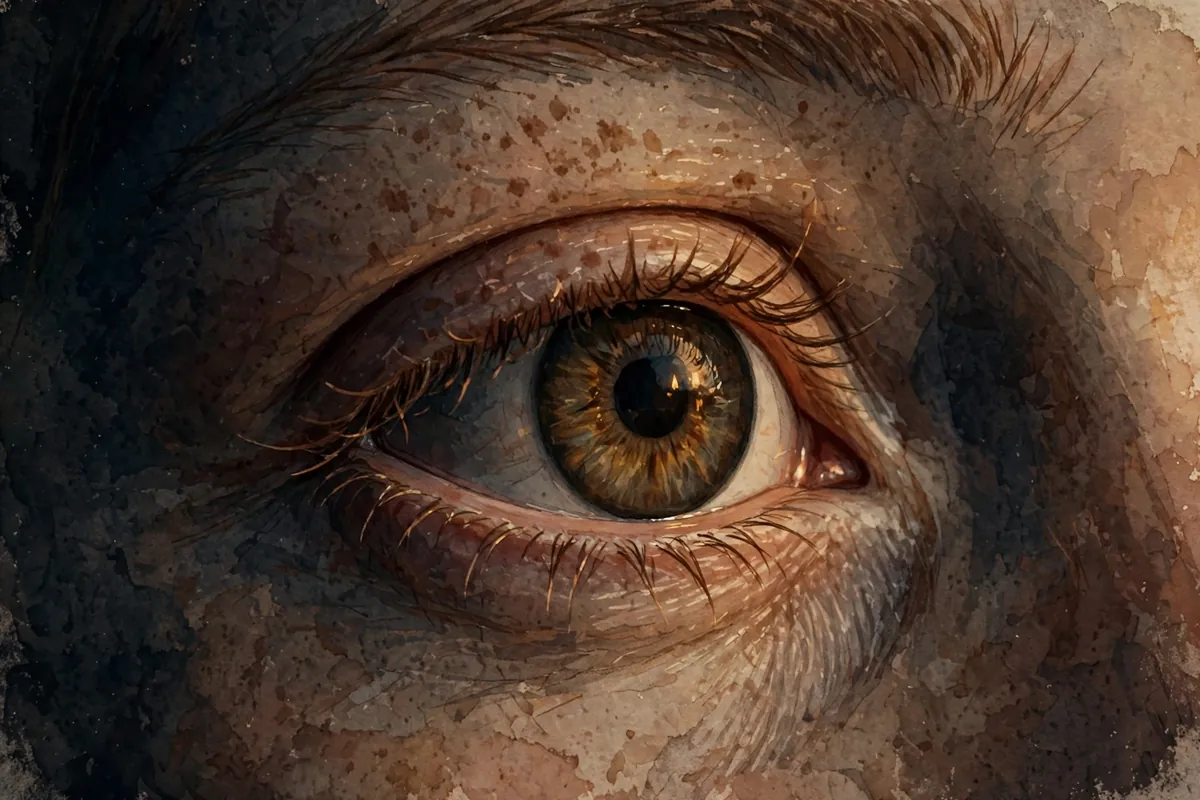
Look in a mirror in a dim room, then flip on the light, and you can watch the black centers of your eyes shrink. Those little black circles are your pupils, and they're busier than most of us realize. They grow and shrink all day long. So what makes them get bigger?
The short answer is that pupils widen mainly to let more light into the eye when it's dark. But light isn't the only trigger. Pupils can also widen when we see something interesting, when we're excited or aroused, when we're uncertain, and when we're thinking hard. Scientists have studied these subtle changes for decades because they offer a quiet window into what the brain is doing.
Two Tiny Muscles in a Tug-of-War
The colored part of your eye, the iris, contains two sets of small muscles. One is a ring that squeezes the pupil smaller. The other runs outward like the spokes of a wheel and pulls the pupil wider. The size of your pupil comes down to how hard each set is pulling at any moment.
The two muscles answer to different parts of the nervous system. The ring that shrinks the pupil is run by the system that handles rest and digestion. The muscle that widens it is run by the sympathetic system, the same one that kicks in during excitement or stress. That's a big clue to why emotions show up in our eyes.
The Light Reflex
When bright light hits the eye, light-sensing cells in the retina send a signal that makes the ring muscle tighten, and the pupil shrinks. This is called the pupillary light reflex. Doctors check it with a penlight because it's an important test of how well the brainstem is working.
In the dark, the opposite happens and the pupil opens up to gather every bit of light it can. In humans, pupil size can range from about 1.5 millimeters to 8 millimeters across. That's a big change for such a small opening.
When Your Eyes Give You Away
Here's the surprising part. Your pupils can widen in perfectly steady light, simply because of what's going on in your head. Researchers have linked wider pupils to interest, arousal, uncertainty, decision conflict, making mistakes, physical activity, and heavy mental effort. Working on a hard problem can literally open your eyes a little wider.
These changes track closely with activity in a small brain region involved in alertness, called the locus coeruleus. Pupils even shrink right before the dreaming stage of sleep, known as REM sleep, begins.
Beauty, Age, and Animal Eyes
People have long found wide pupils attractive. The plant called belladonna gets its name from the Italian for "beautiful woman," and it has been widely claimed that drops made from it were once used to widen women's pupils. The plant is also known as deadly nightshade, and it is poisonous, so that's one beauty trick best left in the history books.
Pupils change with age, too. After about age 25, the average pupil size gets smaller. And not every creature has round pupils like ours. Some cats, foxes, and reptiles have vertical slits, while goats and sheep have horizontal ones.
So the next time you catch someone's pupils growing wide across the dinner table, it may not be the candlelight. Those little black circles might just be showing that they're interested in the conversation. If you ever notice your pupils looking unusual or uneven, talk to your doctor.