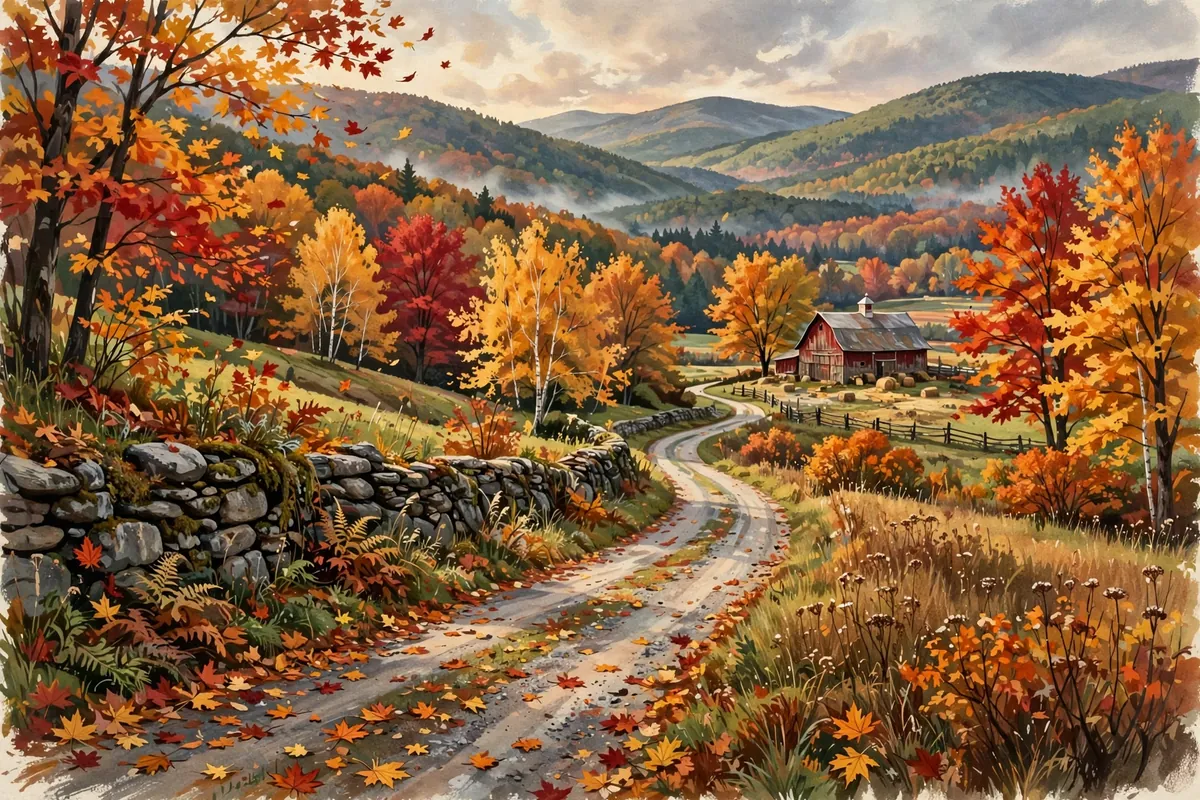
Most American road trips come with a steady parade of billboards. Fast food, car dealers, personal injury lawyers, all shouting from the shoulder. But cross into Vermont and something feels different. The hills, farms, and forests are just there, with nothing standing in front of them.
That's on purpose. In 1968, Vermont outlawed billboards along its roads, and by 1974 every roadside billboard in the state was gone. The reason was scenery. State officials agreed that billboards block and distract from the countryside views that are so central to Vermont's character. Only signs on a business's own property are still allowed.
Only Four States Did It
Vermont isn't completely alone, but it's in small company. Only four states ban billboards: Vermont, Alaska, Hawaii, and Maine. Hawaii was first, with a law that took effect in 1927. Alaska's ban began when it became a state in 1959. Vermont's came in 1968, and Maine's followed in 1977.
Vermonters are proud of it. The ban is considered a point of state pride, a sign that people there value their landscape more than the ad revenue. Many visitors notice the difference right away, even if they can't quite put their finger on what's missing.
Lady Bird Johnson's Push
Vermont's move came right after a national push to clean up America's highways. In 1965, President Lyndon B. Johnson signed the Highway Beautification Act. It was nicknamed "Lady Bird's Bill," because it was the pet project of First Lady Lady Bird Johnson, who believed that beauty and clean roadsides would make the country a better place to live.
That law called for controlling billboards and other outdoor ads along the Interstate highways and major federal roads. It also required some junkyards near those highways to be removed or hidden from view. Vermont took the idea further and banned off-site billboards outright. Even earlier, a 1958 federal law known as the Bonus Act had offered states extra highway money if they controlled advertising within 660 feet of the Interstates.
A State That Guards Its Views
The billboard ban fits a pattern. In 1970, Vermont passed a land use law called Act 250 to discourage suburban sprawl and keep major growth in places that were already developed. It was the first law of its kind in the nation.
One result: Vermont was the last state to get a Walmart. As of 2017, it had only six, and just three of those were built from the ground up. Vermont is also the second-least populous state in the country, and its capital, Montpelier, is the smallest state capital by population.
Those views are worth protecting. Vermont is known for colorful autumns, when its hills turn red, orange, and gold. It also produces about half of the nation's maple syrup.
A Big City Tried It Too
Vermont isn't the only place to give billboards the boot. In January 2007, São Paulo, Brazil, a city of about 12 million people, banned billboards and advertising on vehicles. It also limited the size of signs on shop fronts. Officials there have since worked with advertising companies on a more controlled approach.
So if you've ever felt a little calmer driving through Vermont, it isn't your imagination. Decades ago, the state decided its mountains and maples were the only advertising it needed. Next leaf-peeping season, you can thank those 1960s lawmakers for an uncluttered view.