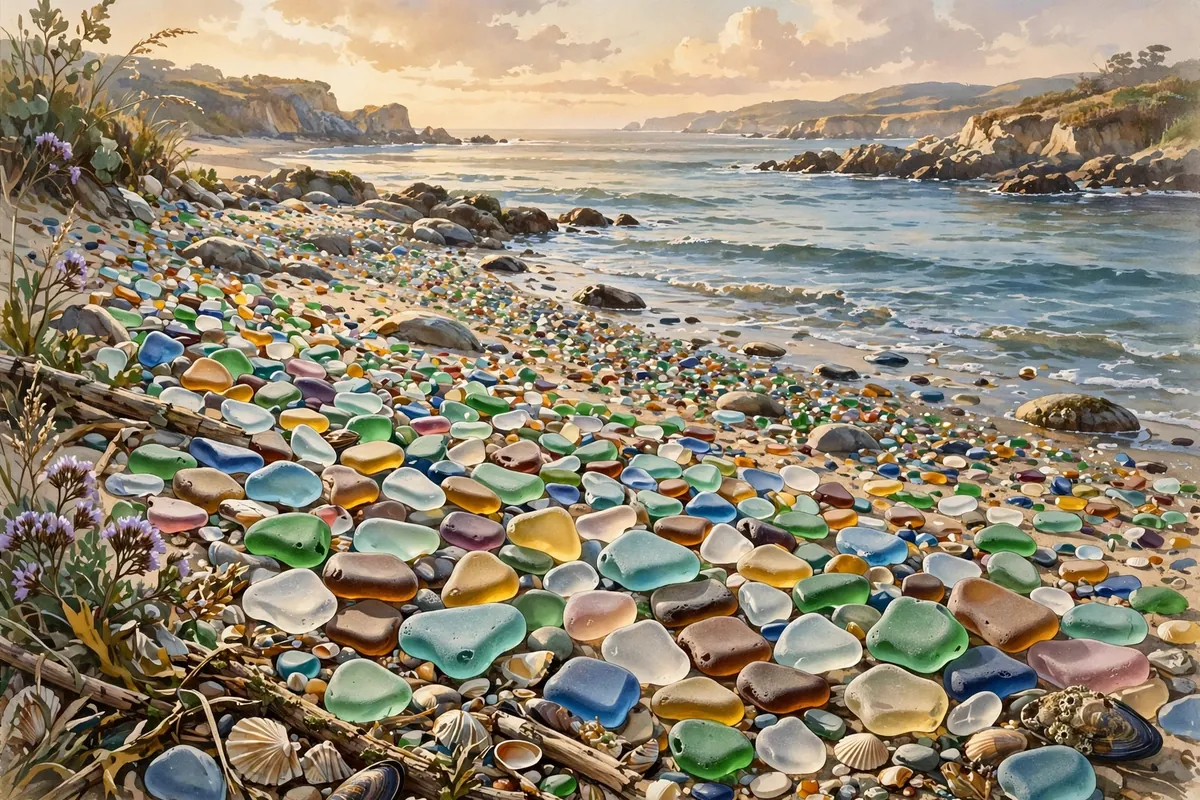
Picture a beach where the sand sparkles with smooth little jewels of green, white, and amber. They catch the sun as the waves roll in, and people crouch for hours picking through them. It looks like a pirate's treasure spilled across the shore. So where did all that glass come from?
The short answer is garbage. Glass Beach, near Fort Bragg, California, was once a dump site where residents threw trash straight onto the shoreline. After dumping stopped in 1967, the metal and other junk were cleared away and anything biodegradable broke down. The pounding waves then tumbled the broken glass and pottery into small, smooth, colored pieces, some of them jewelry quality.
When the Shore Was "The Dumps"
In 1906, Fort Bragg residents set up an official dump site on the coast behind the Union Lumber Company. Locals simply called it "The Dumps." People threw away glass, appliances, and even cars. Fires were sometimes set to shrink the growing pile of trash.
When that first site filled up in 1943, dumping moved to a second spot. When that one filled in 1949, it moved north again to the site now known as Glass Beach, which stayed in use until 1967. That year, state water officials and city leaders shut it down.
Waves as a Rock Tumbler
Over the following decades, the ocean went to work. Cleanup programs removed metal and other items, which were sold as scrap or turned into art. The waves kept crashing over the leftover glass and pottery, grinding off sharp edges and frosting the surfaces.
Sea glass like this forms slowly. It typically takes 20 to 40 years, and sometimes as long as 100 to 200 years, to get its smooth, frosted look. Today, three former dump sites in Fort Bragg are all glass beaches. The land next to Glass Beach became part of MacKerricher State Park in 2002.
A Rainbow of Old Bottles
The color of each piece tells a story about where it came from. The most common colors of sea glass are kelly green, brown, white, and clear, mostly from bottles for beer, juice, and soft drinks. Amber often came from whiskey and medicine bottles.
Some colors are true finds. Cobalt blue may have come from old medicine bottles or jars of Vicks VapoRub, and aqua from Ball Mason jars. Those turn up only once in every 200 to 1,000 pieces. Red sea glass, from things like old Schlitz bottles and car tail lights, is extremely rare.
A Treasure That's Disappearing
Glass Beach has become a popular attraction, visited by tens of thousands of tourists a year. In summer, about 1,000 to 1,200 people a day visit Fort Bragg's glass beaches, and most take a little glass home. Between collecting and the waves steadily grinding the glass down, the supply is slowly shrinking. Park rangers ask visitors to leave what's left for others to enjoy.
Some locals have pushed to replenish the beaches with discarded glass, but in 2012 the city council declined, citing costs and the slim chance of getting permits. Similar glass beaches exist in Benicia, California, and Eleele, Hawaii.
It's a funny kind of happy ending. A place people once used to get rid of their trash became a spot they now travel hundreds of miles to admire. Just remember, if you visit, to look with your eyes and leave the treasure for the next beachcomber.