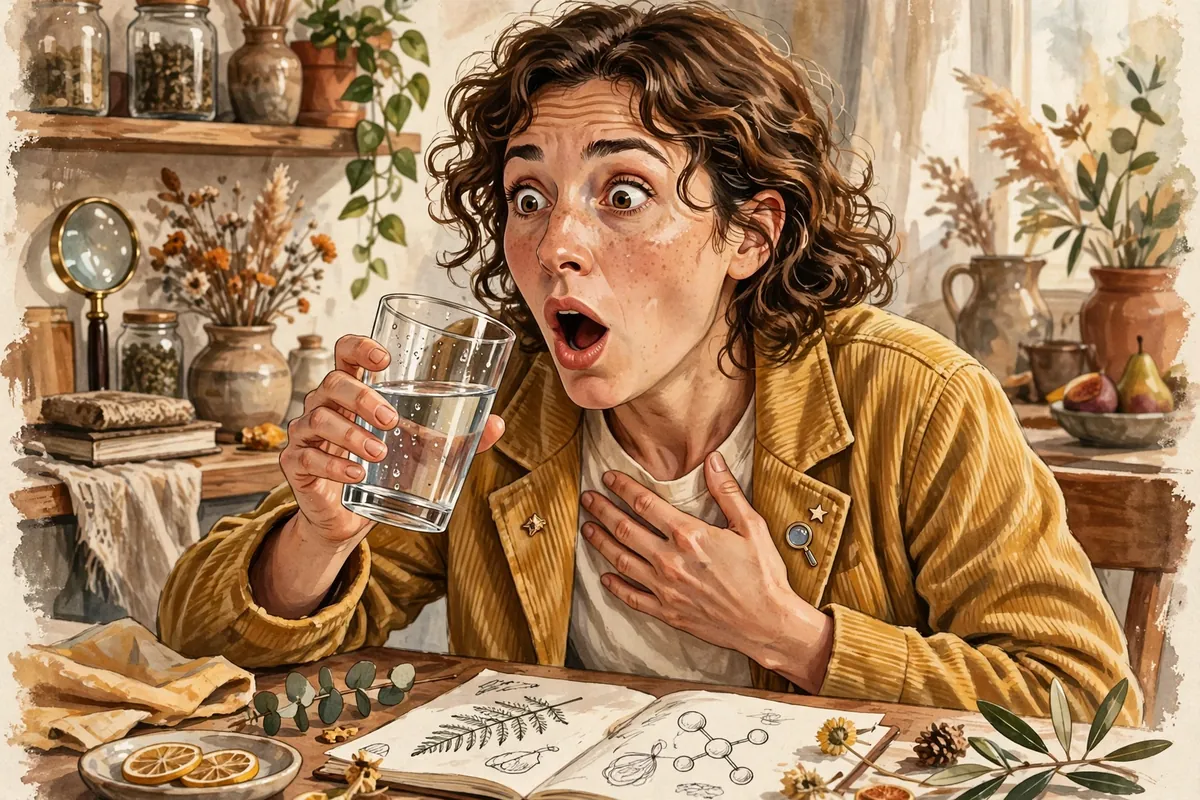
It always seems to strike at the worst moment. You're in the middle of a sentence, or a quiet church service, and suddenly: hic. Then another. Then another. Nearly everyone has had a bout of hiccups, but what exactly is going on in there?
Here's the short answer. A hiccup is an involuntary spasm of the diaphragm, the big dome-shaped muscle under your lungs that helps you breathe. The spasm pulls air in sharply, and about 35 thousandths of a second later, the space between your vocal cords snaps shut. That sudden closure is what makes the 'hic' sound. As for why we have this reflex at all, scientists have a couple of intriguing ideas, but no final answer.
What Sets Them Off
Hiccups are a reflex, meaning they happen without you deciding to do anything. Some common triggers will sound familiar: eating too fast, swallowing a lot of air, drinking carbonated drinks or alcohol, spicy food, and even laughing hard or for a long time.
Once a bout starts, the hiccups tend to come at a fairly steady rhythm. The good news is that most bouts go away on their own without any help. Hiccups that last for days are a different matter. They can sometimes be linked to other health problems, so if you have hiccups that won't quit, talk to your doctor.
Theory One: A Built-In Burp for Babies
One leading idea is that hiccups evolved to help young mammals drink more milk. Nursing is tricky. A baby has to breathe and swallow at the same time, and some air inevitably ends up in the stomach, taking up room that could hold milk.
According to this theory, an air bubble in the stomach triggers the hiccup reflex. The breathing muscles contract sharply while the vocal cords close, creating suction in the chest that pulls air up out of the stomach. When the muscles relax, the air comes out of the mouth. In other words, a hiccup may be a kind of automatic burp.
Some clues fit this idea nicely. Babies hiccup a lot, and the reflex becomes less frequent as we get older. The nerves that trigger it also sit in places that suggest it responds to something going on in the stomach.
Theory Two: A Leftover From Tadpoles
The other idea goes much further back in time. Some scientists have proposed that the hiccup is a leftover from the way ancient amphibians breathed. Tadpoles gulp water and air across their gills using a simple reflex that looks a lot like a hiccup.
There's some intriguing support for this. The nerve pathways for hiccuping form early in a developing baby, before the pathways for normal breathing. Hiccups and tadpole gulping can also both be calmed by higher levels of carbon dioxide. Premature babies, whose lungs aren't fully developed, spend about 2.5 percent of their time hiccuping.
The Man Who Hiccuped for 68 Years
Most of us get over hiccups in a few minutes. Charles Osborne of the United States was not so lucky. He hiccuped for 68 years, from 1922 to 1990, and landed in the Guinness World Records with an estimated 430 million hiccups.
Folk cures are everywhere: standing on your head, drinking water upside down, getting a scare, breathing into a paper bag, eating a big spoonful of peanut butter, or putting sugar on your tongue. Holding your breath works on the idea of raising carbon dioxide in the body. The honest truth is that no single treatment has strong evidence behind it.
So the next time a hiccup sneaks up on you, you can take some comfort in knowing it's a very old reflex, shared with plenty of other creatures. It may be a little burp helper or a souvenir from our watery past. Either way, it'll probably be gone before you know it.