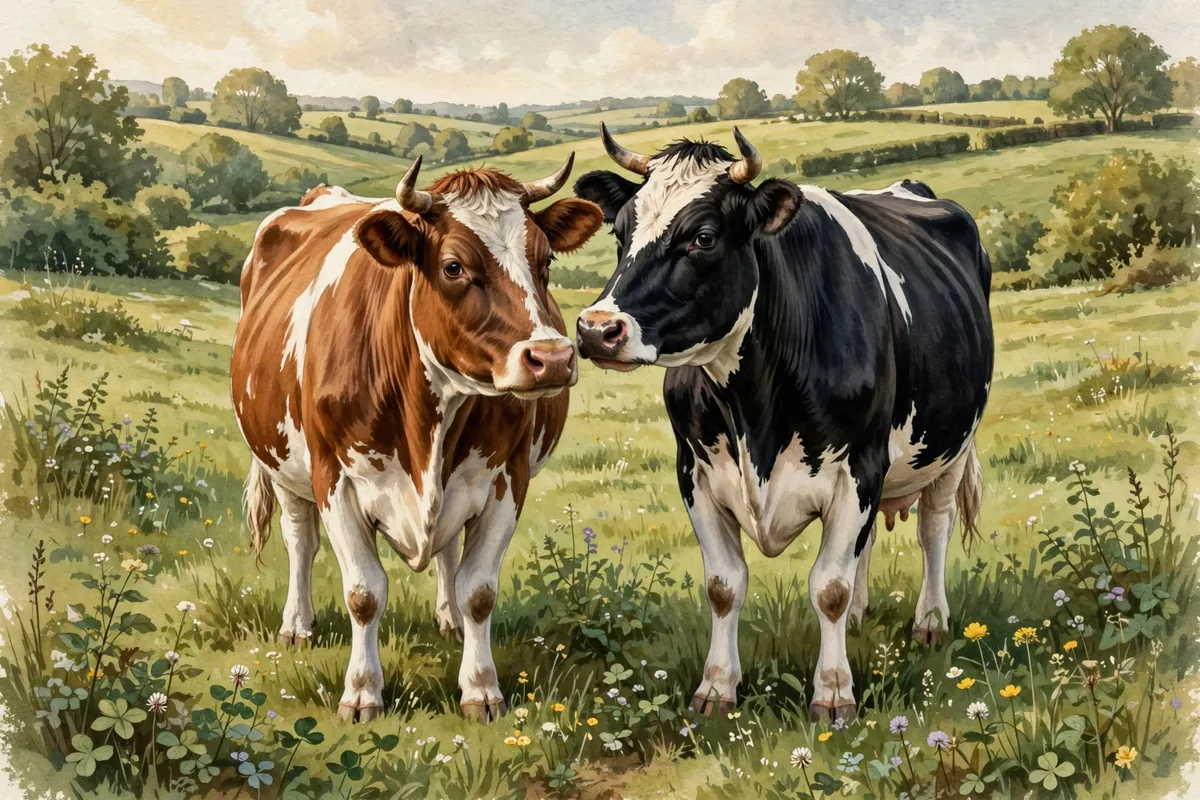
Drive past any pasture and the cows seem to be doing the same thing all day: chewing, standing, and chewing some more. It's easy to assume they barely notice each other. But look closer and you'll often see two cows grazing side by side, or one gently licking another's neck.
The short answer is that cows are deeply social animals, and familiar companions matter to them. Cattle are gregarious by nature, and even short-term isolation causes them real stress. Whether we call those companions "best friends" is a human way of putting it, but the evidence shows cows feel better when the cattle they know are close by.
What Happens When a Cow Is Alone
Researchers have measured what isolation does to young female cattle, called heifers. When a heifer is separated from the group, she calls out more, her heart rate climbs, and the stress hormone cortisol in her blood rises.
The interesting part is what happens when she gets company back. Once she can see other cattle again, her calling drops off quickly. And her heart rate settles faster if the returning animals are ones she already knows. In other words, a familiar face does more good than a stranger.
Farmers have even found a clever workaround for cows that have to be kept apart. Mirrors have been used to reduce stress in isolated cattle, giving them the sense of another animal nearby.
The Power of a Good Lick
One of the clearest signs of a bond between cows is social licking, which scientists call allogrooming. It's common in both dairy and beef cattle. A cow will lick a herd mate's head or neck, places that are hard to reach on your own.
This licking does several jobs at once. It helps keep the animals clean and can reduce parasites. It also helps emphasize companionship and ease social tension, including competition at the feed trough. Researchers think regular licking promotes positive emotions and a more relaxed herd.
Herds Have a Pecking Order Too
Cow friendships happen inside a structured society. Cattle live in a dominance hierarchy, and they keep it in place in surprisingly gentle ways. They often hold mock fights, testing each other's strength without real aggression.
Licking plays a role here too. It's mostly done by lower-ranking cows and received by higher-ranking ones, a bit like a polite gesture toward the boss. Calves also play by mounting each other, which, unlike in some other species, isn't about dominance.
Space matters for keeping the peace. Among adult cattle, the number of squabbles rises as the group gets bigger. Horned cattle tend to keep more distance from each other, which leads to more stable relationships.
Cows Notice More Than We Think
Cattle have rich inner lives in other ways, too. Researchers have found many signs of emotion in them. Holstein-Friesian heifers that clearly improved in a learning experiment had higher heart rates, as if they were excited by figuring it out.
Smell is a big part of how they read each other. Cattle can tell when another animal is stressed by smelling alarm chemicals in its urine. They can even be trained to recognize other individual cattle by smell alone. Scientists also watch ear position as a clue to how a cow is feeling.
So the next time you see two cows grazing nose to nose, there's a good chance it isn't a coincidence. They may not swap secrets, but they clearly take comfort in each other's company. That's something most of us can understand.