It sounds like the setup to a joke: a city flooded with syrup. But on January 15, 1919, the people of Boston's North End lived through something no one there would ever laugh about. A wall of thick brown molasses tore through their neighborhood in the middle of the day.
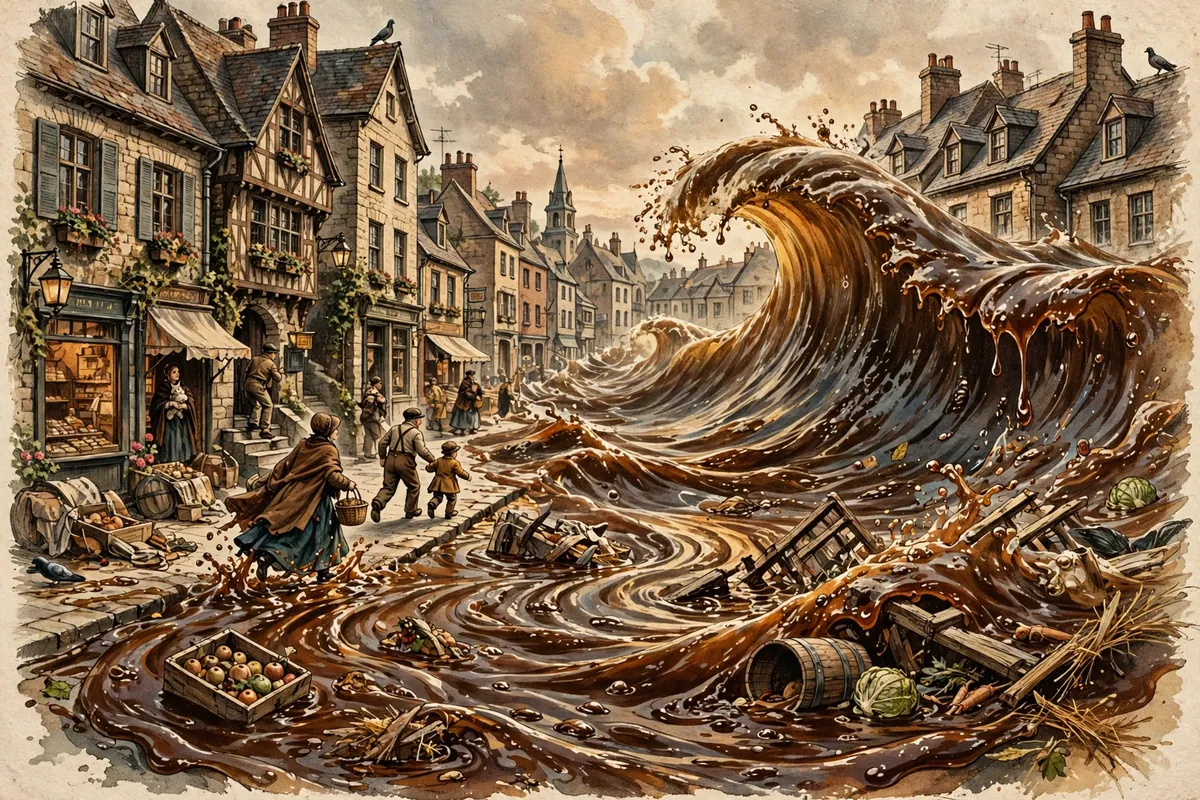
Here's what happened. A huge storage tank holding about 2.3 million gallons of molasses burst open around 12:30 p.m. The wave that poured out reached about 25 feet high and moved at an estimated 35 miles per hour. It killed 21 people, injured about 150, and left several blocks buried under sticky goo.
A Giant Tank by the Harbor
The tank belonged to the Purity Distilling Company and stood on Commercial Street, right beside Boston Harbor. It was 50 feet tall and 90 feet across. Ships unloaded molasses there, and it was later piped to a plant in Cambridge to be turned into ethanol, which was used in alcoholic drinks and in making munitions.
The day before, a ship had delivered a fresh load of warmed molasses. Temperatures had also jumped from frigid to above 40 degrees. The tank gave way with what witnesses described as a roar, a thunderclap-like bang, and a rattle like a machine gun as its rivets shot out.
Why a Syrup Wave Was So Deadly
Molasses is about 40 percent denser than water, so a wave of it carries enormous force. It knocked buildings off their foundations, bent steel against the elevated railway, briefly tipped a streetcar off its tracks, and tossed a truck into the harbor.
Then came a cruel twist. Molasses flows faster under pressure and warmth, but it thickens as it cools. A 2016 Harvard study found that once the molasses spread into the cold winter air, it stiffened quickly, trapping people and making rescue far harder.
Rescuers did their best. Among the first to arrive were 116 cadets from a nearby training ship, who waded into knee-deep molasses to pull out survivors. Red Cross nurses, police, and soldiers soon joined them, and many worked through the night.
A Disaster That Didn't Have to Happen
Investigations pointed to a badly built tank. It may have leaked from the day it was first filled in 1915, and it leaked so much that it was painted brown to hide the drips. The man who oversaw its construction had no engineering experience and skipped basic safety tests. A 2014 analysis found the steel was only half as thick as it should have been.
More than 100 residents sued the tank's owner, the United States Industrial Alcohol Company. The company blamed anarchists, but after three years of hearings, a court-appointed auditor found the company responsible. It paid $628,000 in damages, and the case is considered a milestone in modern corporate regulation.
The Smell That Lingered
Cleanup took weeks, with crews spraying salt water from a fireboat and spreading sand to soak up the mess. The harbor stayed brown until summer. Molasses was tracked onto subway platforms, streetcar seats, and pay phones, and one report said that everything a Bostonian touched was sticky.
For decades afterward, residents said the North End still smelled of molasses on hot summer days. Today the site is a city park with a Little League field, a playground, and bocce courts. A small plaque nearby quietly remembers the 21 people who lost their lives on one of the strangest days in American history.