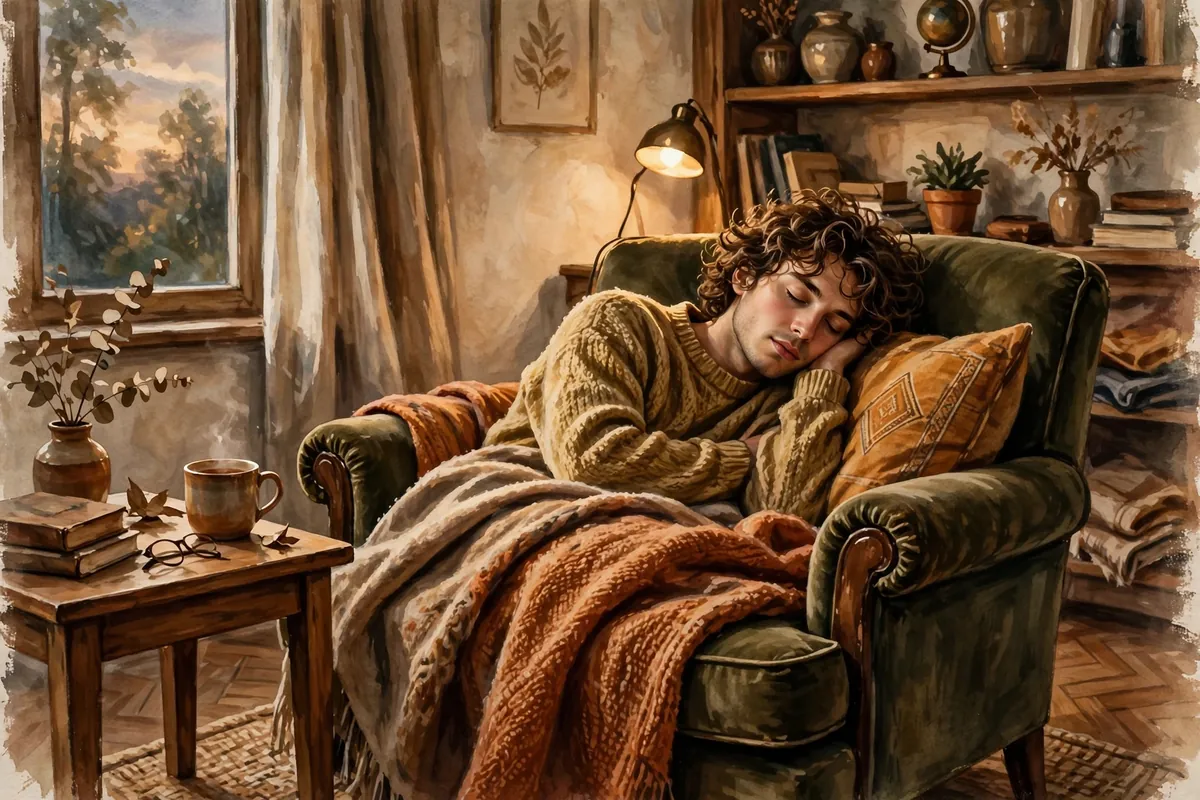
You've had a long day. You sink into the couch or your favorite armchair, your eyes close, and you start to drift away. Then, out of nowhere, your body jerks as if you've stepped off a curb. Your heart is racing, and for a second you're wide awake. What just happened?
That jolt is called a hypnic jerk. It's a brief, sudden, involuntary tightening of the muscles that happens just as you're falling asleep, often with a feeling of falling. It's very common: around 70 percent of people experience one at least once, and about 10 percent get them daily. Scientists still aren't sure exactly why they happen, but they're usually harmless.
What a Hypnic Jerk Feels Like
A hypnic jerk looks a lot like the jump you make when someone startles you. It can come with a rapid heartbeat, faster breathing, and sweating. Some people describe a strange sensation of shock, or of “falling into the void.”
Sometimes it comes with a vivid dream image or a brief hallucination. Hypnic jerks belong to a family of involuntary muscle twitches doctors call myoclonus. They happen during non-REM sleep, right at the moment sleep begins, and they don't follow any regular rhythm.
Why It Happens: The Leading Theories
No single explanation has been fully accepted. One idea is that it's a reflex triggered by normal changes as you fall asleep, such as your blood pressure dropping and your muscles relaxing.
Another theory says your brain misreads that sudden relaxation as a sign that your body is actually falling. In response, it fires off a jerk to wake you up so you can catch yourself.
A researcher at the University of Colorado offered an intriguing twist. The jerk might be an ancient reflex left over from our primate ancestors, who slept in trees. Mistaking muscle relaxation for falling out of a tree, the brain may have jolted them awake to check their position on the branch. It's a fun idea, though evidence for it is lacking.
What Makes Them More Likely
According to the American Academy of Sleep Medicine, many things may play a role, including anxiety, stress, caffeine, nicotine, and strenuous activity in the evening. Being overtired or short on sleep can also make them more likely. People with irregular sleep schedules report them more often.
Certain medications, including some antidepressants, have also been noted as possible triggers. And for people who already worry about their sleep, the twitches themselves can add to the anxiety, which can make settling down even harder.
That said, most hypnic jerks happen essentially at random in healthy people. Cutting back on caffeine and nicotine and avoiding hard exercise right before bed are common-sense ways that may help reduce them.
When to Mention It to Your Doctor
For most people, hypnic jerks are just an odd quirk of falling asleep. They're usually benign and don't cause lasting harm to the nervous system. In rare cases, though, very frequent or severe jerks can make it hard to fall asleep, and some other sleep conditions can look similar. If the jolts are keeping you up at night or worrying you, talk to your doctor.
So the next time you jolt awake just as you're nodding off, don't worry. Your body may simply be running an old safety check. Settle back in, take a deep breath, and let yourself drift off again.