Two hundred years ago, getting goods from the East Coast to the Midwest was a slow, expensive ordeal. The Appalachian Mountains stood in the way, and wagons could only carry so much. Then New York built a waterway so ambitious that critics laughed at it. It ended up changing the course of American history.
That waterway was the Erie Canal. Completed in 1825, it ran 363 miles across upstate New York, from Albany on the Hudson River to Buffalo on Lake Erie. It was the first navigable waterway linking the Atlantic Ocean to the upper Great Lakes, and it slashed the cost of moving people and goods west. The canal sped up settlement of the Great Lakes region, fueled westward expansion, and helped make New York City the nation's leading port.
'Clinton's Big Ditch'
A canal to the Great Lakes was first proposed in the 1780s, but construction wasn't approved until 1817. Its biggest champion was New York Governor DeWitt Clinton. Opponents mocked the project as 'Clinton's Folly' and 'Clinton's Big Ditch.'
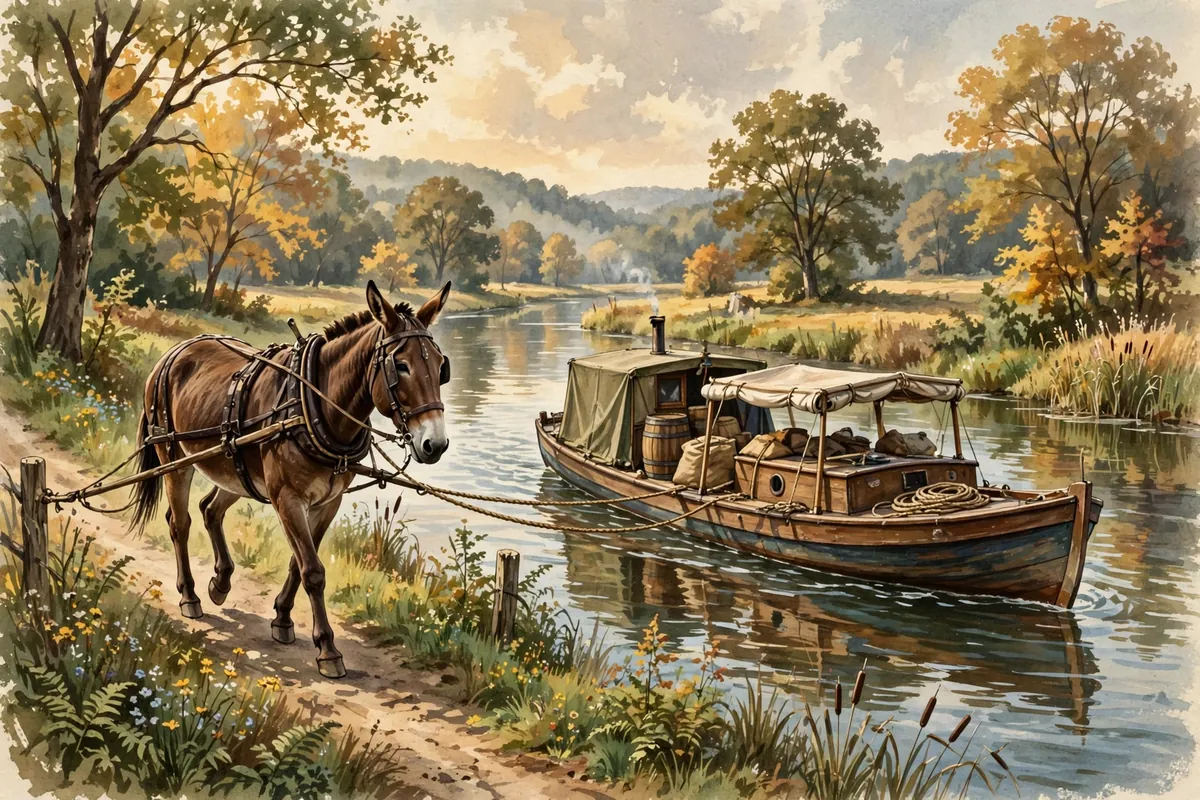
The idea made good economic sense, though. A mule can carry only about 250 pounds on its back, but it can pull a barge weighing as much as 60,000 pounds along a towpath. Overall, a canal could cut transport costs by about 95 percent.
Built by Amateurs and Muscle
Construction began on July 4, 1817, in Rome, New York. At first, progress was slow. Workers had to clear virgin forest, and they invented clever tools to help, including a giant stump puller with huge wheels that let a team of oxen rip stumps out of the ground. The canal was built by Irish laborers and German stonemasons, using only human power, animal power, and the force of water.
Remarkably, the men who planned it were novices. The United States had no trained civil engineers at the time. The two men who laid out the route were judges whose surveying experience came from settling boundary disputes. Yet they carried the canal up the Niagara Escarpment, an 80-foot wall of hard rock, using two sets of five locks. The town that grew up there is still called Lockport.
The Wedding of the Waters
The canal officially opened on October 26, 1825, with a statewide celebration. Cannons were fired in a chain along the canal and the Hudson, a 90-minute relay of booms from Buffalo to New York City. Governor Clinton led a flotilla of boats from Buffalo to New York City over ten days.
When he arrived, Clinton poured a keg of Lake Erie water into New York Harbor, a ceremony called the 'Wedding of the Waters.' On the return trip, a keg of Atlantic Ocean water was carried back and poured into Lake Erie.
A Runaway Success
The Big Ditch silenced its critics quickly. Tolls paid off the state's construction debt within the first year. Cities along the route, including Albany, Utica, Syracuse, Rochester, and Buffalo, boomed. The canal's busiest year was 1855, with 33,000 commercial shipments.
Railroads, trucks, and the St. Lawrence Seaway eventually took over most of the freight, and the last regularly scheduled commercial hauler ended service in 1994. Today the canal is mostly used by pleasure boats, and a popular bike trail follows it across the state.
The canal also lives on in song. 'Low Bridge, Everybody Down,' written in 1905, remembers the days when mules pulled the barges. So the next time you hear about fifteen miles on the Erie Canal, picture a mule on the towpath, and the big ditch that helped build a nation.